EN
EN 


Set across a chain of islands in the North Atlantic, the United Kingdom combines dense urban regions with long coastlines, rugged highlands, and extensive industrial and logistics corridors. Its temperate maritime climate brings frequent rain, wind exposure, and seasonal temperature swings—conditions that place real demands on building envelopes, corrosion protection, and reliable thermal performance.
With a diversified economy spanning financial services, advanced manufacturing, energy, ports, and a fast-moving construction sector, the UK increasingly values build methods that reduce on-site disruption and accelerate delivery. In this context, container solutions are gaining traction across commercial and industrial projects—ranging from container buildings for operational sites to adaptable container homes and modular construction programs that prioritize speed, predictability, and scalability.


United Kingdom container homes reflect a practical response to land constraints, planning complexity, and the need for faster housing delivery. By using modular container buildings and prefabricated container systems, much of the fabrication can be completed under controlled factory conditions, helping to improve quality consistency while shortening the overall project timeline. This approach is particularly relevant in regions where site access is tight, neighborhood disruption must be minimized, or schedules are limited by weather windows.
Sustainability is one of the strongest drivers behind container-based residential projects. Repurposing steel modules can reduce material waste, while modern insulation packages, high-performance windows, and airtight detailing support lower operational energy use. When paired with responsible finishes and efficient MEP planning, climate-resistant container buildings can align with durability expectations across the UK’s coastal and inland environments.
Affordability is another reason UK buyers and developers explore container homes, but value is not only about the initial unit cost. Predictable manufacturing, reduced on-site labor, and quicker commissioning can lower total project risk. For homeowners, the compact footprint encourages efficient layouts; for developers, modularity supports phased delivery, enabling additional units or amenities to be added over time without reworking entire structures.
Flexibility is where United Kingdom container homes stand out. Modules can be configured as studios, family homes, or multi-unit blocks, and later adapted for changing needs—home office zones, extensions, or ancillary units. This same modular logic also supports temporary and semi-permanent housing programs, where speed and repeatable performance are essential.
Climate suitability is central to success in the UK. Frequent rainfall and humidity require moisture-managed wall assemblies, controlled ventilation, and robust detailing around junctions. In coastal areas, salt-laden air increases the importance of anti-corrosion coatings and protective exterior finishes. Wind exposure influences anchoring and structural connections, while winter comfort depends on insulation continuity and thermal-bridge reduction. Well-designed UK container homes treat these requirements as engineering fundamentals rather than optional upgrades.


Across the UK, operational sites often need secure, weather-ready storage faster than conventional builds can provide. United Kingdom container storage solutions meet this need with transportable units designed for repeated relocation, reliable locking systems, and site-ready durability. For industries with shifting footprints—seasonal operations, staged construction, or temporary depots—this mobility is as valuable as the storage volume itself.
Mining and quarrying activities, while geographically concentrated, require rugged storage for tools, spares, consumables, and safety equipment. Container-based storage can be positioned close to active work zones, then moved as extraction areas change. With appropriate ventilation and interior fit-out, units can also support controlled storage for sensitive components.
In agriculture, storage needs fluctuate with harvest cycles, equipment maintenance schedules, and dispersed land parcels. Container units are frequently used for secure equipment storage, feed and supply protection, and seasonal overflow. Their modular nature allows multiple containers to be combined into a practical compound, with dedicated zones for tools, consumables, and machinery parts.
Logistics and port-adjacent operations rely on speed, security, and clear workflows. Container storage supports overflow warehousing, spare-parts hubs, last-mile staging, and returns processing—without waiting for long construction lead times. When integrated into a broader yard plan, modular container buildings can also include check-in points, dispatch offices, and sheltered handling areas.
On construction sites, storage is a daily operational requirement: secure materials, protect tools from moisture, and maintain organized access for multiple trades. United Kingdom container storage solutions can be deployed in phased sequences—adding units as the workforce grows—and relocated between projects, improving utilization across a contractor’s portfolio.
Durability and security are central advantages. Steel structures resist impact and attempted intrusion better than many temporary alternatives, while engineered doors, locking mechanisms, and optional access-control hardware strengthen site security. For UK weather conditions, properly specified coatings, roof drainage detailing, and sealed openings support long service life and minimize maintenance demands.
Choosing a container manufacturer for the UK market is rarely about aesthetics alone; it is a decision shaped by engineering discipline, predictable delivery, and performance under humid, windy, and coastal conditions. Karmod’s positioning in United Kingdom container buildings is tied to the fundamentals that matter in commercial and industrial procurement: structural integrity, repeatable production quality, and systemized detailing that supports reliable outcomes across different site types.
For climate-resistant container buildings, material selection and protective finishing are key. Corrosion exposure in coastal regions, repeated wetting cycles, and temperature variability place stress on the building shell. A manufacturer with established surface protection processes, robust panel systems, and consistent quality control reduces lifecycle risk—especially when units are expected to move between sites or remain operational year-round.
Customization is most valuable when it is executed within a proven system. Karmod’s approach to prefabricated container systems supports practical configuration changes—partitioning, openings, MEP routing, insulation upgrades, and interior finishes—while maintaining a stable production logic that helps protect schedule and cost predictability. For buyers, this typically translates into fewer on-site surprises, clearer commissioning steps, and a smoother path from specification to occupancy.
Reliability also includes logistics and installation readiness. In a market where access constraints and program timelines are common, a manufacturer that delivers modules engineered for transport, lifting, and rapid site connection can help keep projects aligned with operational targets. The result is not a “one-size-fits-all” product, but a consistent engineering baseline that can be adapted to UK project requirements.
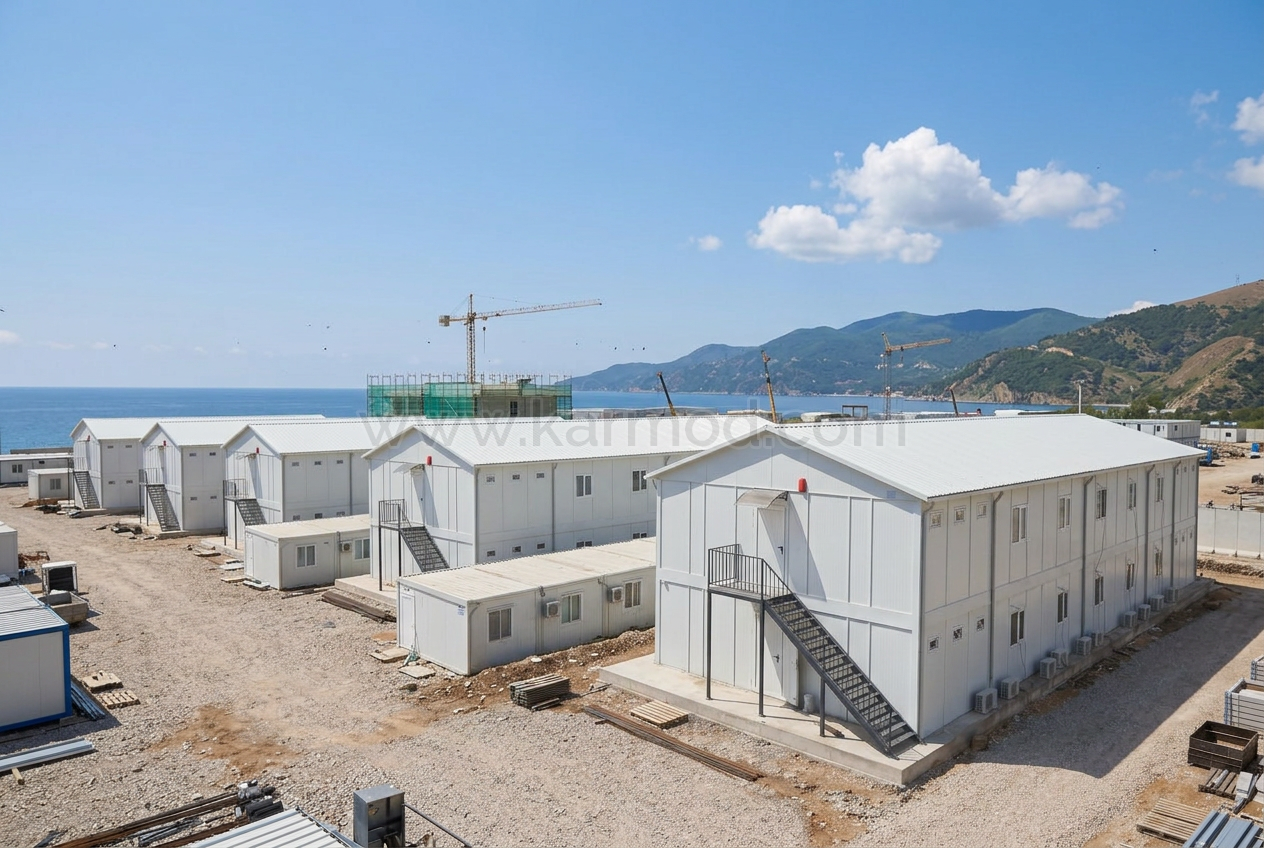
United Kingdom container offices are increasingly used to create professional workspaces on sites where speed, mobility, and compliance matter. Whether supporting infrastructure projects, logistics yards, energy facilities, or temporary business operations, modular office units can be delivered and commissioned quickly, helping teams establish a functional base without waiting for conventional building programs.
Modern container offices can be configured for individual managers, open-plan teams, meeting rooms, welfare areas, reception points, and IT-ready administration spaces. The advantage is flexibility: partitions, HVAC specifications, glazing ratios, and acoustic strategies can be aligned to the work being done, while exterior finishes can be selected to suit corporate or site standards.
Scalability is a practical strength of United Kingdom container offices. As headcount grows, additional modules can be added with minimal disruption, expanding from a single office into a multi-unit complex with corridors, stair cores, and shared amenities. This modularity supports phased budgeting and allows businesses to match space to operational demand rather than overbuilding from day one.
Cost advantage is most evident when office space is needed quickly or only for a defined period. Prefabricated container systems reduce the uncertainty tied to on-site trades, weather delays, and long material lead times. For many organizations, the ability to redeploy units to new locations improves total cost of ownership and turns the workspace into a reusable asset rather than a single-use build.


For commercial operators, United Kingdom container buildings provide a method to deliver customer-facing and operational spaces with shorter timelines and clearer cost control. Modular container buildings can function as standalone retail units, service counters, multi-purpose business pavilions, or larger commercial buildings assembled from repeated modules.
Because prefabricated container systems are manufactured in a controlled environment, fit-out quality and finishing consistency can be easier to manage across multiple sites. This matters for brands expanding across regions, franchise operators building repeatable layouts, and businesses that need consistent customer experience—without redesigning construction details for every location.
Modular expansion is especially useful for organizations planning staged growth. A commercial hub can begin as a small footprint—reception, sales, and storage—then expand with additional units for consultation rooms, extra service bays, or back-office capacity. Where lease terms, planning constraints, or operational uncertainty make permanent construction risky, container-based commercial solutions can offer a measured, adaptable pathway.
United Kingdom container shop concepts support modern retail realities: short launch windows, seasonal demand, and the need to test locations before committing to permanent premises. Pop-up shops benefit from quick deployment and the ability to move after a campaign, while maintaining a solid, secure structure that supports lighting, HVAC, and professional merchandising.
Retail clusters built from modular container buildings can create compact high-street-style experiences in emerging districts, waterfront developments, event spaces, and transport-adjacent zones. Operators can curate a mix of brands, food and beverage vendors, and service providers, then adjust tenant mix over time without major construction disruption.
Branding flexibility is another advantage. Exterior cladding, color systems, signage zones, and window configurations allow a container shop to match brand guidelines and stand out visually. Internally, layouts can be adapted for product categories—apparel, specialty goods, electronics, or local artisan retail—while maintaining the underlying benefits of durability and relocatability.
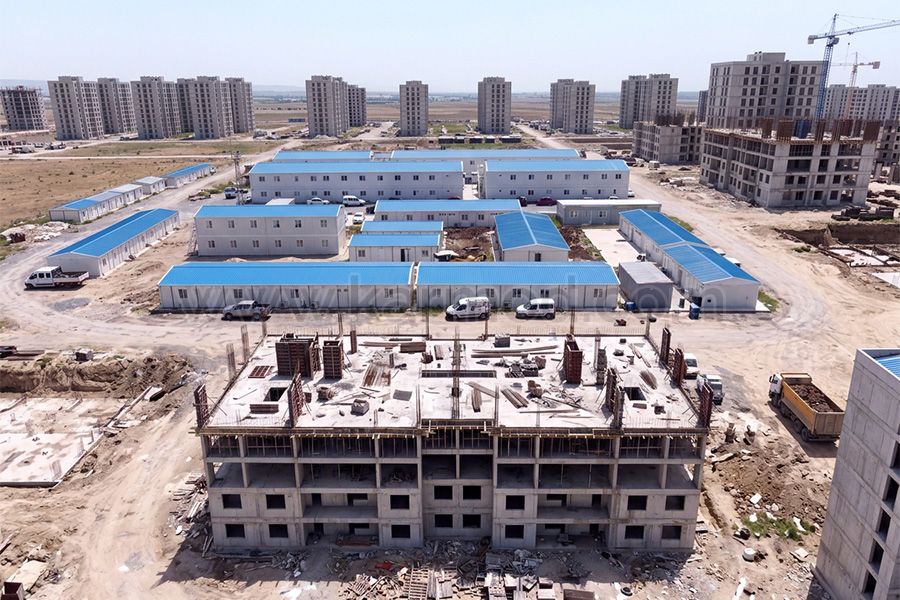
Urban housing pressure continues to shape how new residential capacity is delivered. United Kingdom container homes are not limited to single units; modular construction can also support apartment-style buildings where multiple modules form stacked or courtyard arrangements. This approach can be relevant for infill sites, regeneration zones, and projects where speed-to-occupancy is a priority.
Container apartment schemes can be designed with community layouts in mind—shared walkways, internal courtyards, rooftop terraces, or ground-level social spaces. The modular nature helps standardize unit planning while still allowing variation in façade treatment and layout types, supporting a balanced mix of studios, one-bedroom, and family units.
For developers and housing providers, prefabricated container systems can reduce schedule uncertainty, which is often one of the largest risks in urban builds. When climate-resistant container buildings are properly engineered for moisture control, acoustic comfort, and thermal performance, they can serve as a credible component of broader housing strategies—especially where the alternative is long delivery times and escalating build costs.
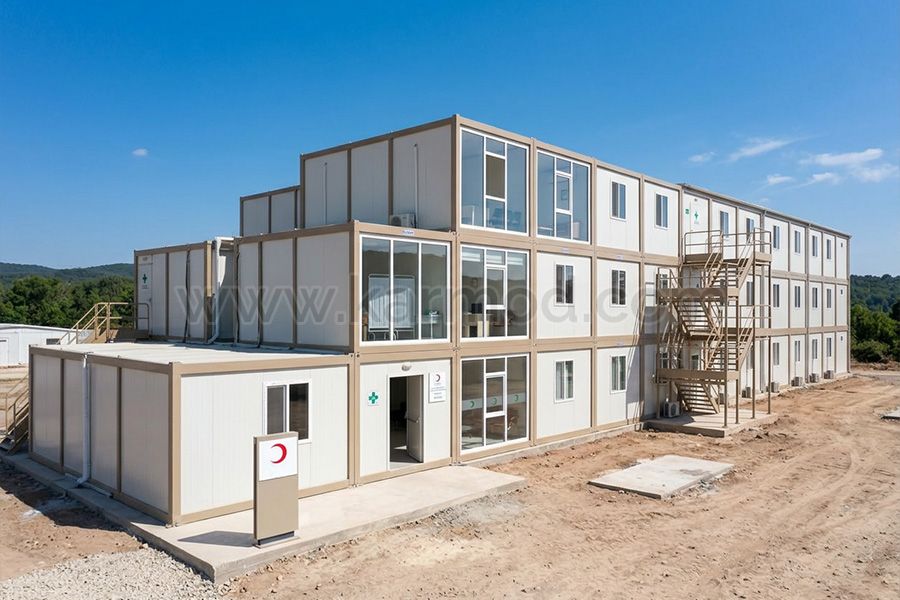
Beyond housing and commerce, United Kingdom container buildings support practical public and community applications where speed, budget discipline, and adaptability are essential. Modular container buildings can be configured into classrooms, training facilities, and temporary school extensions—useful when enrollment changes or refurbishment programs require swing space.
Clinics and healthcare support units can also benefit from prefabricated container systems, particularly for triage, testing, consultation rooms, or staff facilities that must be delivered quickly and remain operational in challenging weather. With appropriate hygiene finishes, controlled ventilation strategies, and clear zoning, container-based healthcare spaces can be engineered to meet demanding use cases.
Community centers, sports facilities, and cultural hubs can be developed in phases, starting with core functions and expanding as funding or participation grows. This staged approach reduces upfront risk and keeps projects aligned with real community demand. For municipalities and contractors, the relocation potential adds resilience: a facility can be moved or repurposed as local needs evolve.
Public infrastructure support is another strong fit. Site offices for transport upgrades, temporary control rooms, ticketing points, and maintenance hubs are common examples where United Kingdom container offices and storage units provide operational continuity with minimal lead time. When designed as climate-resistant container buildings, these solutions can perform reliably across the UK’s wet winters, coastal winds, and high-usage operational environments.
In order to serve you better, if you could kindly send an e-mail to info@karmod.com for questions and details about your theoretical and special architectural plans, projects, and product specifications, your request will be responded to as soon as possible.

From one end of the world to the other, we enable our customers to reach the ready-made construction sector produced with the new technology of the world. We guarantee reliability through technology and innovation, flexible commercial models and smart supply chain solutions that add value for you, following the project production network.
Discover
Karmod is one of the largest prefabricated construction companies in Turkey, with a production of 45,000 m2. produces high quality prefabs and prefab containers