EN
EN 


Sri Lanka sits at the heart of the Indian Ocean trade routes, linking South Asia with the Middle East and Southeast Asia. From the humid coastal belt around Colombo and Galle to the cooler central highlands, the country’s varied geography and monsoon-driven climate influence how buildings are designed, insulated, and protected against corrosion and moisture.
As logistics, manufacturing, tourism, agriculture, and infrastructure investment continue to shape the economy, demand is rising for fast, reliable space that can be deployed with less site disruption. This is where Sri Lanka container buildings stand out: adaptable solutions for accommodation, site facilities, storage, and commercial space. With modern container engineering and modular container buildings, businesses can expand using prefabricated container systems that suit local conditions, from high humidity to coastal salt exposure.


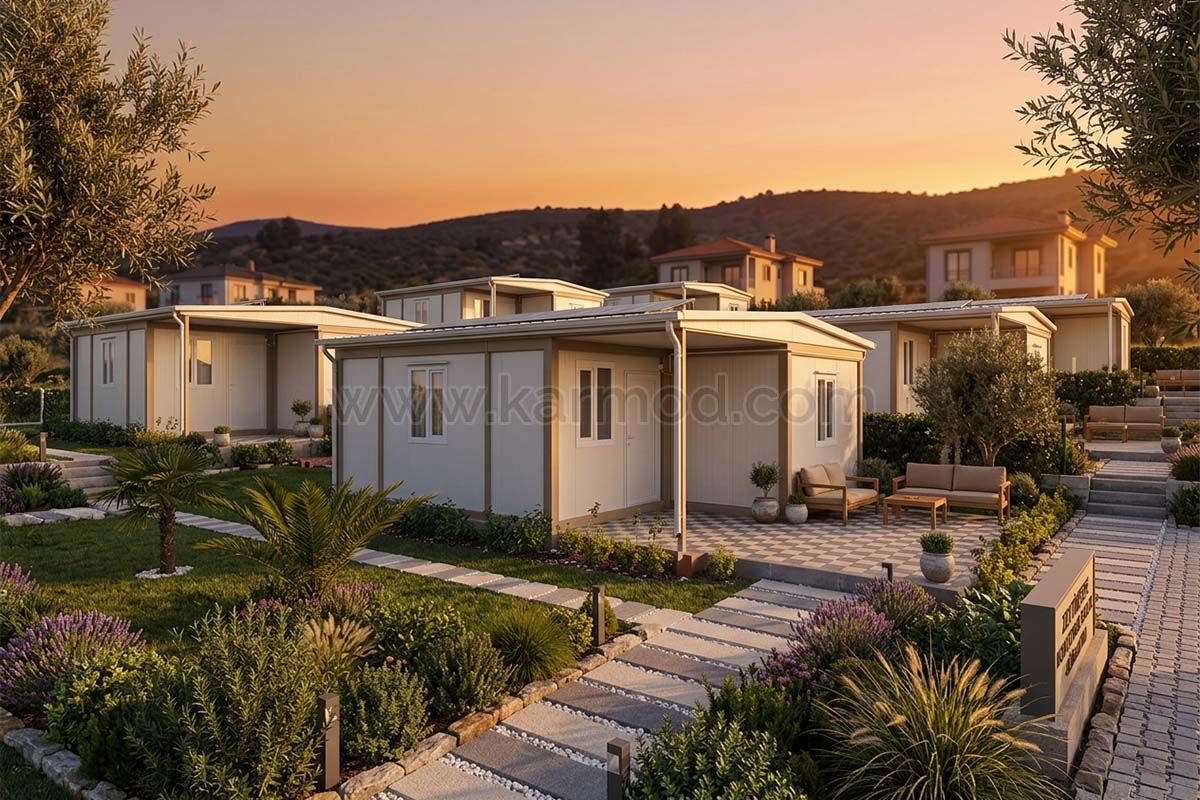
Across Sri Lanka, land values in urban corridors and tourism regions encourage compact, efficient planning. Sri Lanka container homes answer this need with designs that prioritize smart layouts, factory-controlled quality, and streamlined on-site installation. Unlike conventional builds that can be delayed by weather or complex site constraints, container-based modules are produced with predictable tolerances, helping projects stay closer to schedule.
Sustainability is a practical driver. Well-engineered prefabricated container systems can reduce material waste through standardized production, and they support energy-efficient detailing such as continuous insulation, controlled ventilation strategies, and daylight-focused interiors. In Sri Lanka’s climate, performance depends on the details: corrosion protection for coastal regions, moisture control for monsoon seasons, and heat-mitigation measures such as roof insulation, shading elements, and breathable wall build-ups. When these are specified correctly, climate-resistant container buildings can deliver comfortable interiors in hot, humid conditions while minimizing long-term maintenance.
Affordability is also linked to predictability. Modular planning allows phased deployment—starting with essential living spaces and expanding later as needs change. This flexibility is particularly valuable for staff housing near industrial sites, hospitality extensions in resort areas, and rapid housing solutions where speed and site logistics matter.


From port-linked logistics to plantation supply chains, storage is a constant operational need. Sri Lanka container storage solutions provide durable, lockable capacity that can be deployed where space is tight, access is limited, or timelines are compressed. For many industries, the value is not only in secure storage, but also in how quickly storage can be positioned close to work zones to reduce handling time and improve site organization.
Common applications include:
In Sri Lanka’s humid and coastal environments, durability depends on engineering choices: anti-corrosion protection, robust door hardware, secure locking points, and weather-resistant detailing. The relocation advantage is equally important—units can be repositioned as projects progress, supporting multi-site operations without repeating civil works each time storage needs shift.
Selecting a manufacturer for Sri Lanka container buildings is primarily an engineering decision. Performance is shaped by structural integrity, insulation strategy, corrosion protection, and the quality of junction details where moisture and heat typically find weak points. Karmod’s positioning in the market is built around standardized production discipline combined with project-specific customization—an approach that fits Sri Lanka’s mix of urban developments, industrial sites, and coastal projects.
For tropical conditions, material selection and surface protection are not optional. Climate-resistant container buildings should be specified with appropriate coatings, moisture-resistant interior finishes where required, and insulation assemblies designed for heat reduction and condensation control. Karmod’s manufacturing approach emphasizes repeatable quality in these components while allowing customization for layout, openings, electrical infrastructure, plumbing, and interior fit-out based on operational needs.
Rather than treating modular as temporary, well-designed container-based systems are engineered for long service life when correct detailing is applied—especially in humid environments where ventilation strategy, roof performance, and anti-corrosion measures define long-term outcomes.
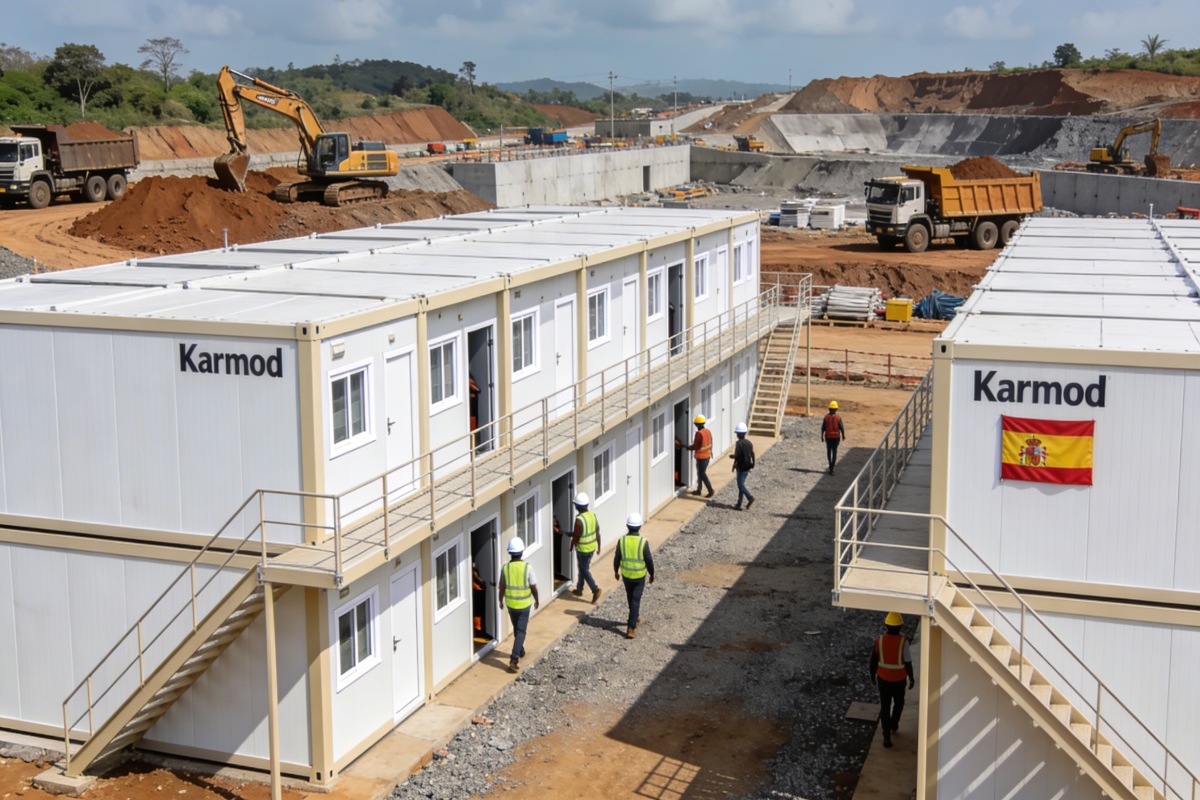
As project-based work expands across construction, energy, manufacturing, and infrastructure, companies increasingly need offices that can be deployed near operations. Sri Lanka container offices answer this with standardized modules that create professional work environments while reducing time spent on conventional site construction. A dedicated container office can be delivered with integrated electrical systems, lighting, HVAC readiness, and internal partitions aligned to team workflows.
Office flexibility is a core advantage. Modules can be planned as single units for site management or combined as multi-room layouts for engineering teams, meeting rooms, and client-facing spaces. Scalability supports growth: add offices as headcount increases, reorganize internal layouts as departments shift, or relocate to the next project phase without losing the investment in the structure.
Cost advantage comes from predictability and reduced site overhead. With modular container buildings, installation is streamlined and site disruption is minimized—especially valuable where access is constrained or where businesses need to remain operational during expansion.


Commercial projects benefit from modular thinking when speed-to-market matters. Sri Lanka container buildings are used to create customer-facing facilities, service centers, and operational hubs that can open faster than traditional builds. With prefabricated container systems, key building components are assembled under controlled conditions, improving consistency and reducing delays caused by weather or extended on-site trades.
Typical configurations include:
In coastal and high-humidity zones, specifying climate-resistant container buildings helps protect finishes and maintain a stable indoor environment. This matters for customer comfort, staff productivity, and the preservation of equipment or stock inside the building.
Retail formats are changing, and modular design allows businesses to test locations and scale quickly. Sri Lanka container buildings support pop-up concepts, compact specialty stores, and multi-unit retail clusters that can be planned as pedestrian-friendly destinations. Container shops can be designed with strong storefront visibility, controlled entry points, and adaptable interior layouts for fast merchandising changes.
Because units are modular, layouts can be reconfigured, additional modules added for back-of-house functions, or stores relocated to new sites as demand shifts.
Urban growth increases pressure on housing supply, especially where land is scarce and infrastructure must be used efficiently. Container-based apartments are an emerging approach for creating mid-density housing with repeatable unit layouts and faster project cycles. With modular container buildings, apartments can be planned as stacked configurations or community blocks with shared outdoor circulation and courtyards that encourage natural ventilation.
Sri Lanka container homes in apartment form can support workforce housing near industrial corridors, student accommodation near education hubs, or mixed-use projects where residential units sit alongside services. Practical community layouts may include:
When designed with insulation, ventilation, and moisture control suited to the monsoon climate, container apartment projects can deliver dependable comfort while helping address housing shortages with a repeatable, scalable model.
Beyond housing and commercial use, Sri Lanka’s development priorities—education, healthcare access, and resilient public services—create demand for buildings that can be delivered quickly and perform reliably. Prefabricated container systems can be configured as:
In each case, the goal is practical performance: durable structures, clear maintenance pathways, and climate-responsive detailing. With the right specifications, Sri Lanka container buildings become a dependable tool for organizations that need speed, scalability, and long-term reliability—without compromising on safety, comfort, or operational function.
In order to serve you better, if you could kindly send an e-mail to info@karmod.com for questions and details about your theoretical and special architectural plans, projects, and product specifications, your request will be responded to as soon as possible.

From one end of the world to the other, we enable our customers to reach the ready-made construction sector produced with the new technology of the world. We guarantee reliability through technology and innovation, flexible commercial models and smart supply chain solutions that add value for you, following the project production network.
Discover
Karmod is one of the largest prefabricated construction companies in Turkey, with a production of 45,000 m2. produces high quality prefabs and prefab containers