EN
EN 


Stretching from the Arabian Sea coastline to the snow-fed peaks of the Karakoram and Himalayas, Pakistan spans a wide range of geographies and climate zones. Coastal humidity in Sindh, arid heat across parts of Balochistan, monsoon-driven rainfall patterns, and cooler northern elevations all shape how buildings are designed, insulated, ventilated, and protected from corrosion.
As the economy continues to diversify across textiles, agriculture, logistics, energy, and industrial development, the need for fast, scalable, and reliable building solutions is growing. This is where container buildings, container homes, and modular construction stand out: they offer predictable timelines, controlled manufacturing quality, and adaptable layouts. Built from engineered containers and configured as prefabricated container systems, these structures suit both permanent and rapid-deployment requirements across Pakistan’s cities, ports, and remote project sites.


Pakistan container homes are increasingly considered for projects where speed, site constraints, and long-term performance matter. Unlike conventional builds that can be delayed by weather, labor availability, and on-site variability, modular container buildings are manufactured in controlled conditions, enabling consistent detailing in insulation, sealing, and structural reinforcement. This approach is especially valuable in regions exposed to heavy rainfall, high UV, dust-laden winds, or coastal salinity.
Sustainability is often a practical decision rather than a marketing claim. Prefabricated container systems reduce material waste through precise production planning and optimized steel usage. Thermal insulation packages can be adapted for hot plains or cooler northern provinces, improving interior comfort while lowering energy demand. From single-family Pakistan container homes to multi-unit residential clusters, flexibility remains a defining advantage.
Affordability is closely linked to lifecycle cost. With reduced foundation requirements, shorter construction timelines, and minimal on-site disruption, Pakistan container buildings offer measurable savings in labor and financing. Modular expansion also allows homeowners to start with a core unit and expand over time, aligning investment with evolving needs.


Across Pakistan’s mining zones, agricultural regions, ports, and infrastructure corridors, secure storage is essential. Pakistan container storage solutions provide durable, lockable, and weather-resistant units that can be deployed quickly to support operations in both urban and remote environments.
In mining and energy projects, container units are used for equipment storage, spare parts management, and technical workshops. In agriculture, they protect seeds, tools, and seasonal produce from moisture and theft. Logistics operators rely on modular container buildings for temporary warehousing and distribution hubs near highways and industrial estates. On construction sites, these units serve as secure material depots that can be relocated as projects progress.
Engineered as climate-resistant container buildings, these storage systems are designed to withstand heat, heavy rain, and dust exposure. Reinforced steel frames, anti-corrosion coatings, and high-security locking mechanisms enhance durability and asset protection. Their relocation advantage ensures that capital investment remains mobile rather than tied to a single site.
Delivering reliable Pakistan container buildings requires more than basic fabrication. It involves structural engineering expertise, material science knowledge, and a clear understanding of local climate challenges. Karmod approaches container manufacturing with a focus on long-term performance, precision production, and adaptable design.
Climate-resistant container buildings produced with insulated wall panels, corrosion-protected steel components, and engineered roofing systems are suited to Pakistan’s diverse environmental conditions. From coastal regions to inland industrial zones, material selection and detailing directly influence durability and operational efficiency.
Customization is central to effective modular construction. Whether for housing, industrial, or commercial use, prefabricated container systems can be configured in single units or multi-module complexes. Attention to structural integrity, transportation logistics, and on-site assembly ensures that each project meets international standards while adapting to local requirements.
Modern enterprises require agile workspace solutions. Pakistan container offices offer a structured yet flexible alternative to conventional buildings, particularly for project-based industries such as construction, oil and gas, infrastructure, and manufacturing. Designed within the framework of container office systems, these units combine durability with professional interior layouts.
Scalability is a defining advantage. Modular container buildings can begin as single administrative units and expand into multi-level office complexes as teams grow. Electrical systems, HVAC integration, acoustic insulation, and ergonomic layouts can be incorporated during production, reducing on-site fit-out time.
Cost control is another important factor. Predictable production schedules and minimized foundation work allow businesses to manage budgets effectively while maintaining quality standards. Pakistan container offices therefore support operational continuity in both temporary project sites and permanent industrial campuses.


Commercial development in Pakistan increasingly values speed, adaptability, and phased expansion. Pakistan container buildings meet these expectations by enabling business complexes, showrooms, service centers, and mixed-use developments to be delivered in structured modules.
Modular container buildings can be configured into single-story retail parks or multi-unit commercial clusters. As business needs evolve, additional modules can be integrated with minimal disruption. This approach supports both startups seeking efficient entry points and established companies planning strategic expansion.
Prefabricated container systems also allow for architectural customization, including façade treatments, glazing systems, shading solutions, and branded exterior finishes. The result is a commercial space that aligns with corporate identity while maintaining engineering reliability.
Retail formats are changing, and Pakistan container homes principles are now influencing commercial storefront design. Container-based retail units serve as pop-up shops, seasonal outlets, and permanent retail clusters in high-traffic urban areas.
Pop-up concepts benefit from rapid installation and relocation capabilities. Retail clusters built from modular container buildings can create cohesive shopping environments with shared infrastructure. Branding flexibility is enhanced through customizable façades, signage integration, and interior layout adaptability, allowing retailers to refresh their concepts without major reconstruction.
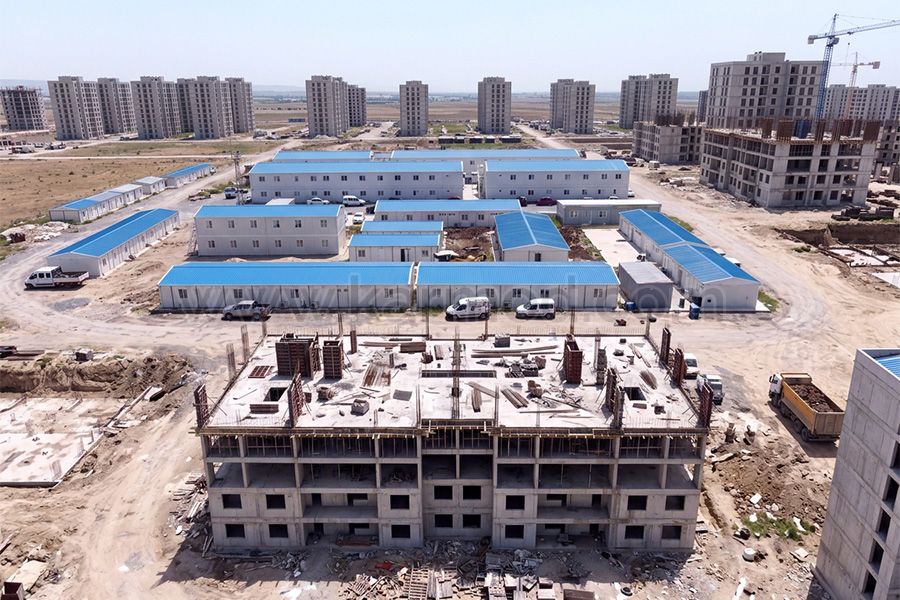
Urbanization in Pakistan continues to place pressure on housing supply. Pakistan container homes and apartment projects offer a structured response to housing shortages, particularly in rapidly expanding cities. Multi-unit residential developments built from modular container buildings provide faster delivery compared to traditional reinforced concrete construction.
Stackable prefabricated container systems enable the creation of vertical residential blocks with integrated staircases, corridors, and shared facilities. Community layouts can include green courtyards, shared services, and efficient parking solutions. Climate-resistant container buildings equipped with proper insulation and ventilation systems help maintain indoor comfort across varying seasonal conditions.
From workforce housing to student accommodation and mid-rise apartment concepts, container-based residential developments offer predictable construction timelines and scalable design strategies.
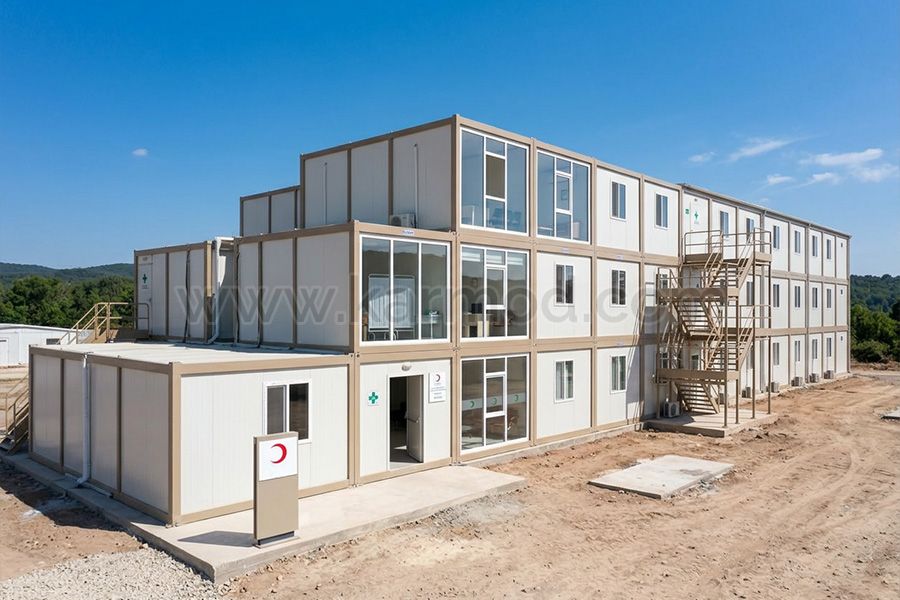
Beyond housing and commercial use, Pakistan container buildings are being implemented in educational, healthcare, and public infrastructure projects. Schools in remote regions can be delivered as modular container buildings with integrated classrooms and administrative spaces. Clinics and medical units benefit from rapid deployment and hygienic interior finishes suitable for controlled environments.
Community centers, training facilities, and municipal service units built with prefabricated container systems provide flexible public infrastructure solutions. Their ability to be expanded, reconfigured, or relocated supports long-term urban and rural development strategies.
As industries modernize and cities expand, Pakistan container storage solutions, offices, homes, and commercial complexes reflect a broader shift toward engineered, climate-responsive, and scalable construction. With careful planning and technical execution, container-based architecture continues to shape Pakistan’s evolving built environment.
In order to serve you better, if you could kindly send an e-mail to info@karmod.com for questions and details about your theoretical and special architectural plans, projects, and product specifications, your request will be responded to as soon as possible.

From one end of the world to the other, we enable our customers to reach the ready-made construction sector produced with the new technology of the world. We guarantee reliability through technology and innovation, flexible commercial models and smart supply chain solutions that add value for you, following the project production network.
Discover
Karmod is one of the largest prefabricated construction companies in Turkey, with a production of 45,000 m2. produces high quality prefabs and prefab containers