EN
EN 


Lithuania sits on the southeastern shore of the Baltic Sea, bridging Northern and Central Europe with strong road, rail, and port links through Klaipėda and a growing logistics backbone around Vilnius and Kaunas. The climate is distinctly seasonal—cold, windy winters, mild-to-warm summers, frequent rain and humidity in shoulder seasons—so buildings need dependable insulation, airtight detailing, and durable exterior finishes to stay comfortable and efficient year-round.
That’s why container buildings have become a practical option for Lithuanian projects that need speed, predictable quality, and flexible expansion. From compact Lithuania container homes to multi-unit commercial compounds, modular container buildings align well with modern procurement expectations: controlled production, clear specifications, and scalable planning for business growth.


Urban densification, regional workforce mobility, and the push for energy efficiency are changing how space is designed and delivered across Lithuania. Lithuania container homes respond well to these pressures because they are based on repeatable modules that can be configured into single-storey cabins, duplex-style layouts, or stacked forms where site conditions allow. This approach supports efficient planning, predictable delivery schedules, and consistent build quality—especially important when projects must meet strict performance targets and tight timelines.
Sustainability is often discussed in broad terms, but the practical gains are measurable when a project uses prefabricated container systems. Factory-based production reduces weather-related delays, improves material control, and limits on-site waste. For Lithuania, where damp seasons and freeze-thaw cycles can punish poorly protected assemblies, well-engineered detailing matters: insulated envelope options, thermal-bridge management, moisture control, and correctly specified windows and doors all contribute to long-term comfort and operating cost stability.


Across Lithuania, storage needs are increasingly tied to project speed and supply-chain resilience. Contractors, logistics operators, and agricultural businesses often need secure capacity quickly—without long permitting cycles or complex site work. Lithuania container storage solutions meet that requirement with durable structures that can be delivered, installed, and commissioned with minimal disruption.
For industrial sites, storage is rarely “one size fits all.” Mining and quarry operations require robust, lockable units for tools, spares, and consumables. Agriculture needs protected space for seasonal equipment, feed supplements, packaging materials, or maintenance stock. Logistics hubs and distribution points prioritize fast access and predictable organization, while construction sites rely on secure containers that can move as the project footprint changes. In each case, the relocation advantage is a core benefit: the same unit can support multiple phases or sites over its service life.
When specified correctly, storage units also contribute to site safety and continuity. Options such as reinforced flooring, controlled ventilation, and upgraded locking systems help maintain usable conditions even during Lithuania’s wet seasons and winter temperature swings.
Selecting a container partner is not only about supplying a unit; it is about controlling risk across design, production, delivery, and long-term performance. For Lithuania, that typically means consistent structural integrity, dependable insulation solutions, and corrosion protection that can handle moisture, coastal exposure, and seasonal freeze-thaw cycles. Karmod’s role in this space is often defined by engineering discipline: standardized manufacturing processes, repeatable quality checks, and the ability to configure units for different operational requirements without compromising reliability.
In practice, Lithuania container buildings used for business operations must protect people and assets in real-world conditions—wind loads, temperature variation, humidity, and intensive daily use. Climate-oriented specifications such as higher-grade insulation packages, moisture-resistant interior materials, and durable exterior coatings can be decisive for lifecycle cost. The advantage of a structured manufacturer approach is that these performance requirements can be defined early, documented clearly, and delivered consistently across multiple units—supporting both single-site projects and multi-location rollouts.
For procurement teams and technical stakeholders, customization should be practical rather than decorative. Layout adaptations, service integration, and fit-out choices (electrical, HVAC readiness, interior partitions, security upgrades) are most valuable when they stay aligned with operational needs and maintenance realities. That is where prefabricated container systems tend to perform best: they translate specifications into repeatable outcomes.
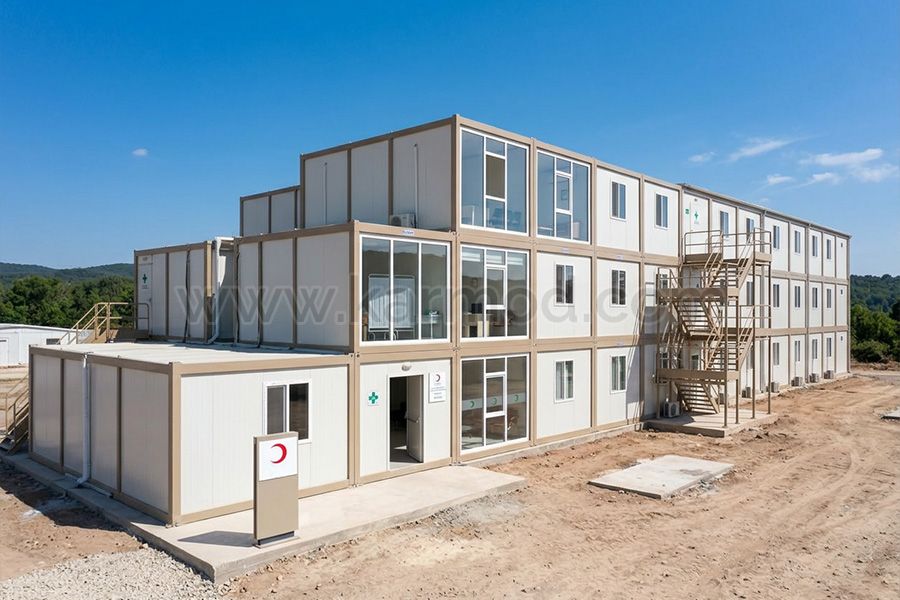
Modern project delivery in Lithuania often requires office space that can be deployed quickly, scaled easily, and maintained predictably. Lithuania container offices support that need by offering modular layouts for management rooms, meeting spaces, open-plan work areas, and welfare facilities—without the extended timelines typical of conventional site builds.
What makes office containers commercially attractive is their adaptability. A small site can start with a single unit and expand into a multi-room compound as teams grow. For contractors working across regions, relocation is equally important: a container office can move from one project to the next, preserving investment and reducing repeat procurement cycles. These advantages are amplified when modular container buildings are planned as a system—standardized units, consistent service routes, and clear expansion points.
Lithuania’s climate also influences office comfort expectations. Effective insulation, airtightness, and ventilation planning help maintain stable indoor conditions during winter cold and humid seasons. When specified as climate-resistant container buildings, office units can deliver dependable working environments for year-round operations.
container office solutions can be configured for single sites or scaled programs, supporting consistent brand presentation and standardized workplace conditions across multiple locations.


Commercial projects increasingly value flexibility—particularly when business models evolve quickly or when expansions are phased. Lithuania container buildings provide a clear route to modular commercial space: showrooms, service points, canteens, workshops, and multi-purpose facilities that can be extended as demand grows. For developers and operators, the ability to add modules without extensive demolition or disruption is a tangible operational benefit.
Container-based commercial buildings also support site constraints common in urban and semi-urban areas: limited footprints, restricted access, or the need to keep existing operations running during construction. With prefabricated container systems, much of the work is completed off-site, which reduces on-site coordination complexity and helps keep schedules stable. This can be particularly useful for projects that must align with seasonal construction windows or supply-chain timing.
Retail in Lithuania is increasingly experimental: seasonal activations, short-term leases, and neighborhood-scale clusters are common ways to test demand before committing to permanent premises. Lithuania container buildings suit this approach because shops can be set up quickly and adapted to different product categories—from boutique retail and food concepts to service counters and ticketing points.
Container shops also offer practical branding flexibility. Facades, canopies, signage, and interior zoning can be tailored to reflect a brand identity while keeping the building system consistent. Retail clusters can be planned as modular streetscapes—easy to expand, reconfigure, or relocate when footfall patterns change. For operators, that means lower risk and more control over capital expenditure, while maintaining the build quality expected in a professional commercial environment.
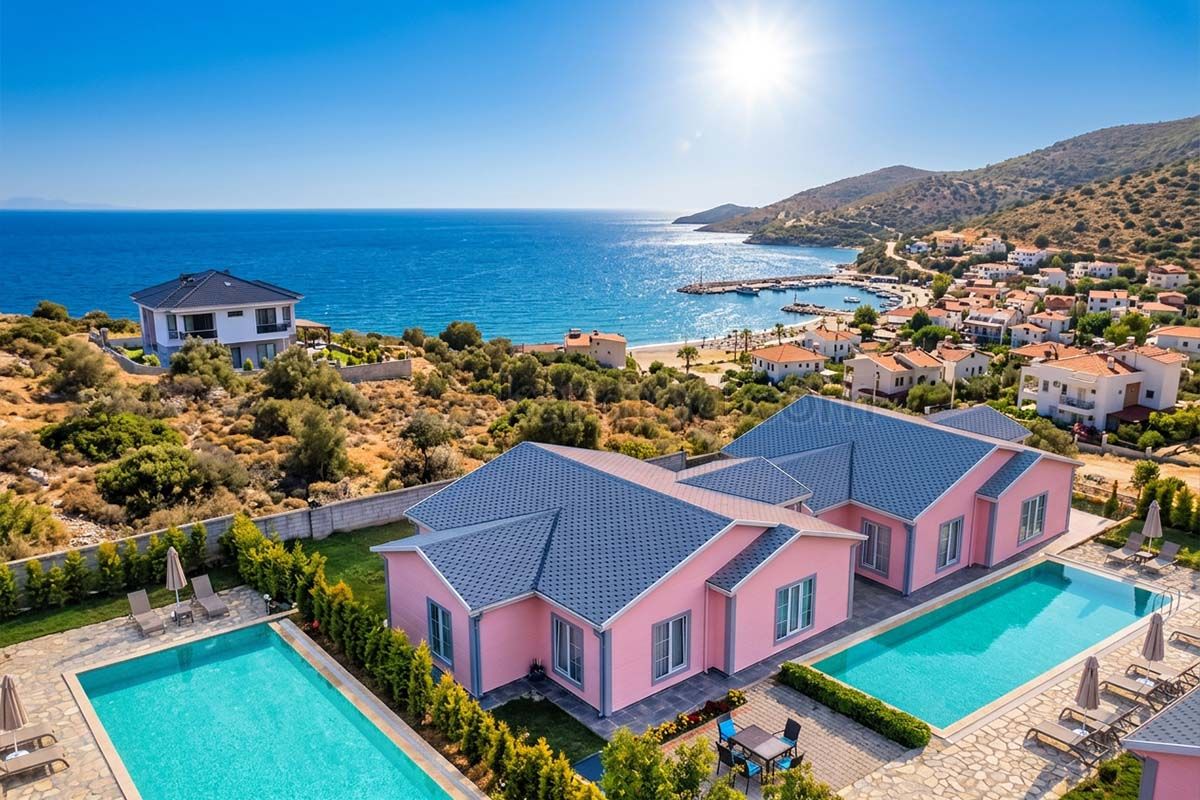
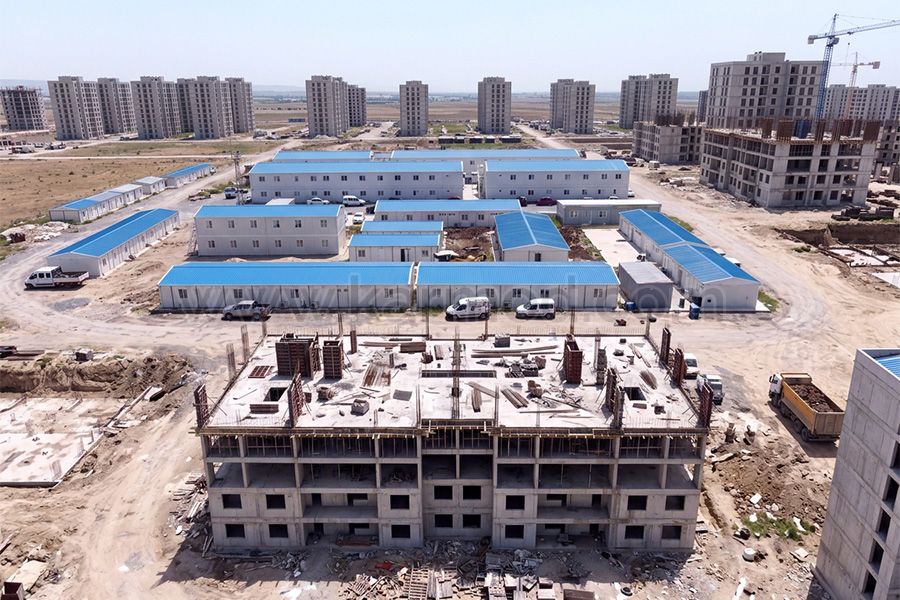
While container systems are often associated with commercial and industrial use, Lithuania’s urban housing discussions increasingly include modular alternatives—especially where speed and affordability are critical. Lithuania container homes can support compact apartment concepts, student-oriented accommodation, or workforce housing where community layouts and shared amenities help make efficient use of limited land.
In housing shortage scenarios, the main challenge is delivering quality at pace without compromising safety or comfort. Container apartments are most successful when they are treated as engineered buildings: sound control, thermal performance, ventilation, and durable interior finishes must be specified for long-term residential use. With the right design approach, climate-resistant container buildings can provide stable, comfortable interiors through Lithuania’s winter months while also performing well during humid transitional seasons.
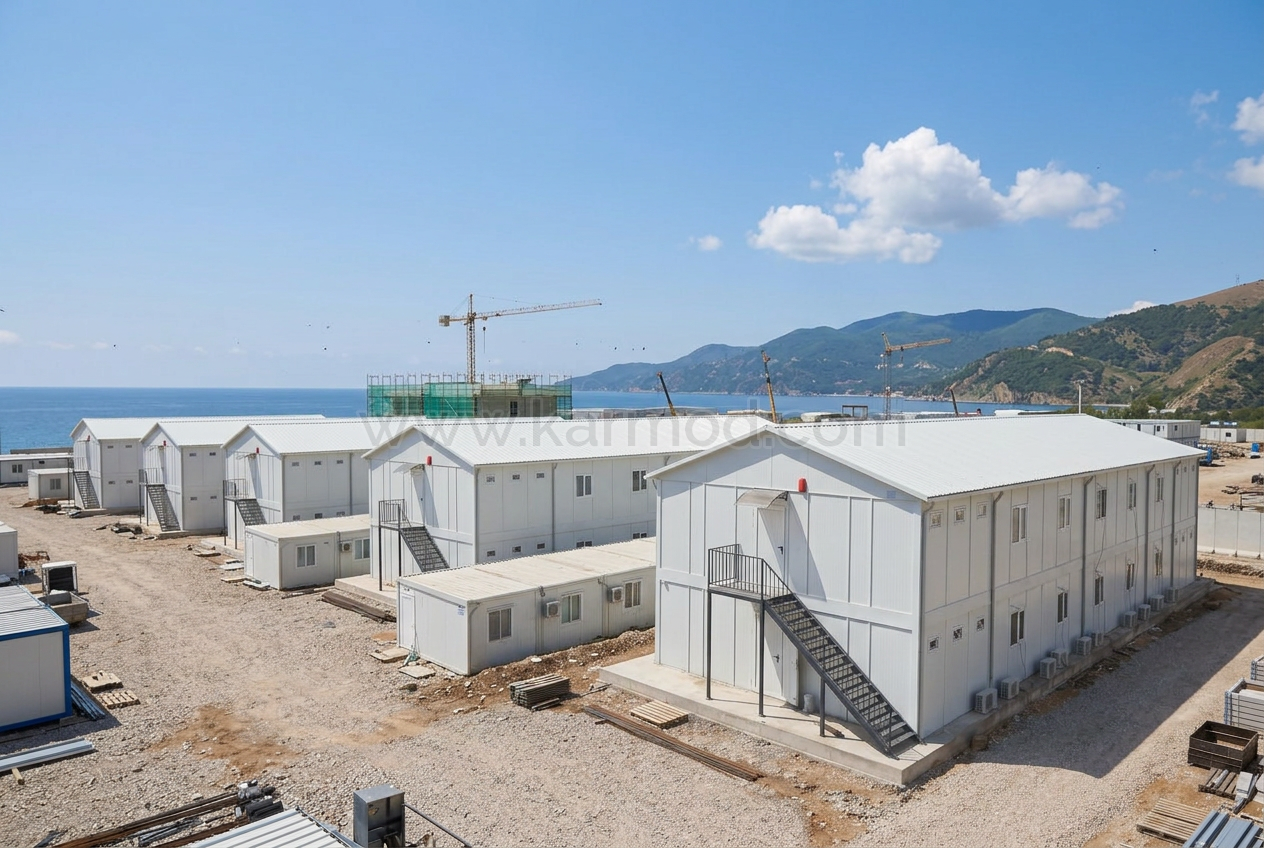
Public and community infrastructure often faces a familiar constraint: urgent need, limited time, and strict operational requirements. Lithuania’s municipalities, institutions, and private partners can leverage container-based solutions for facilities that must be delivered quickly and perform reliably. This is where modular construction becomes not just a building method, but a planning tool—enabling phased growth, relocation, and standardized maintenance.
Beyond housing and offices, Lithuania container buildings can support a wide range of civic functions when designed around user flows, accessibility, and service integration. The emphasis should remain on performance and durability: robust finishes, well-planned MEP integration, and efficient layouts that meet real operational needs.
Whether the priority is speed, phased expansion, or controlled build quality, Lithuania’s market conditions make modular container buildings a practical option for projects that demand consistency. When aligned with Lithuania’s climate realities and operational expectations, prefabricated container systems can deliver dependable, professional results across commercial, industrial, and community-focused applications.
In order to serve you better, if you could kindly send an e-mail to info@karmod.com for questions and details about your theoretical and special architectural plans, projects, and product specifications, your request will be responded to as soon as possible.

From one end of the world to the other, we enable our customers to reach the ready-made construction sector produced with the new technology of the world. We guarantee reliability through technology and innovation, flexible commercial models and smart supply chain solutions that add value for you, following the project production network.
Discover
Karmod is one of the largest prefabricated construction companies in Turkey, with a production of 45,000 m2. produces high quality prefabs and prefab containers