EN
EN 


Located on the eastern shore of the Baltic Sea, Latvia combines a well-connected geography with a cool-temperate climate shaped by coastal winds, seasonal humidity, and long heating periods. Its economy is strongly linked to logistics, manufacturing, forestry, and cross-border trade, with Riga and key transport corridors supporting warehousing, construction, and infrastructure demand across the country.
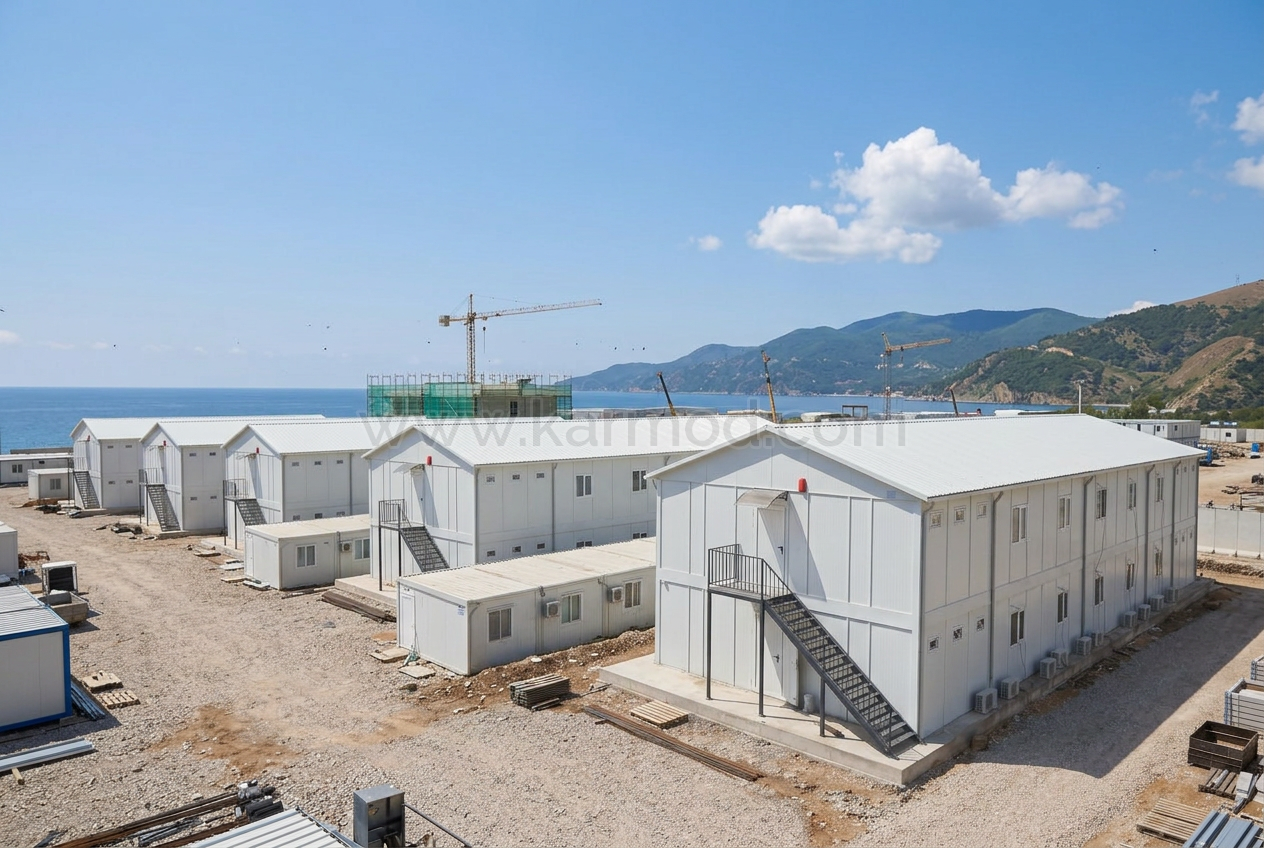
In this environment, container buildings are increasingly valued for speed, predictability, and adaptable planning. Latvia container buildings and container based construction support project teams that need reliable space solutions for housing, offices, storage, and commercial use. From coastal areas exposed to moisture to inland sites facing freeze–thaw cycles, container buildings, Latvia container homes, and modular construction methods offer practical answers for fast deployment without compromising functional standards.


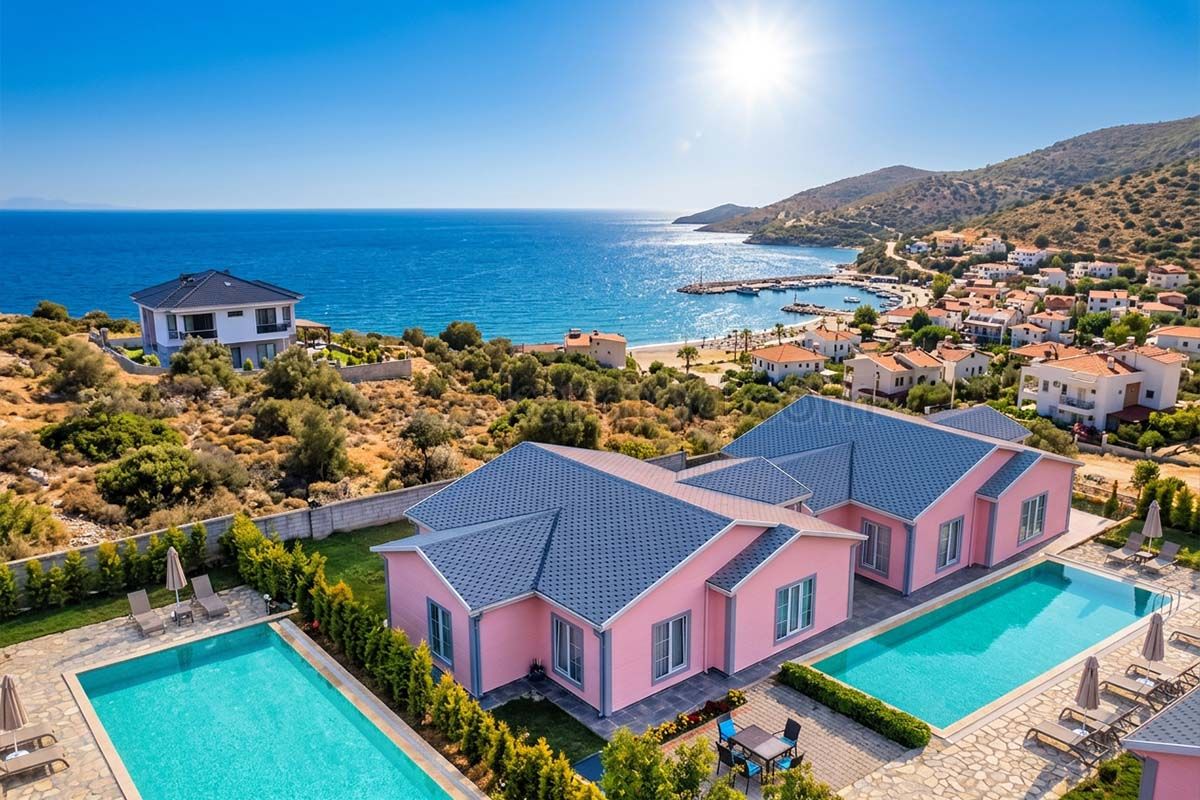
Latvia container homes are designed for efficient living and controlled performance, making them a strong fit for both urban plots and regional developments. As a form of modular construction, container homes can be configured as single units or expanded into multi-module layouts, helping developers and property owners scale the footprint to match land constraints, permitting requirements, and occupancy goals. For organizations managing workforce accommodation or temporary residential needs, modular container buildings provide predictable room planning, repeatable detailing, and faster site readiness than many conventional build paths.
Sustainability is a core reason Latvia container homes and prefabricated container systems are gaining attention. Factory-based production reduces on-site waste, streamlines material usage, and supports consistent workmanship. Reuse-driven construction also aligns with procurement goals where environmental impact matters, especially for projects that require measurable improvements in site efficiency and resource control.
Affordability in container homes is not only about the initial structure; it is also driven by reduced construction time, simplified foundations in many applications, and lower disruption to active sites. For Latvia, where winter conditions can compress traditional building schedules, prefabricated container systems help maintain timelines by shifting most production to controlled environments and minimizing weather-sensitive activities on site.
Flexibility and modularity are central to Latvia container homes. Units can be arranged as compact studios, family-oriented layouts, or community-style clusters with shared circulation and service zones. This modular approach supports phased development: additional rooms, new modules, or expanded amenities can be added with less downtime, which is valuable for operators who expect demand to change over time.
Climate suitability is especially important in the Baltics. Latvia faces cold winters, high humidity near the coast, and frequent temperature shifts that can stress building envelopes. Climate-resistant container buildings rely on durable wall systems, correct vapor control strategies, and dependable insulation performance to support comfort and energy efficiency across seasons. When engineered for Latvia’s conditions, container homes can maintain interior stability while keeping maintenance practical for owners and facility managers.


Latvia container storage solutions support industries that depend on secure space at short notice and in changing locations. With Latvia’s active logistics sector, expanding construction pipeline, and seasonal operations in agriculture and forestry, container storage offers a practical format for equipment protection, inventory buffering, and site organization. Compared to many fixed storage approaches, modular container buildings can be deployed quickly, positioned with minimal disruption, and scaled as operational needs grow.
For mining-related supply chains and extraction-adjacent activities, storage units are often required for tools, consumables, and maintenance stock that must remain protected in variable weather. Latvia container storage solutions can be specified with reinforced access points, controlled ventilation options, and internal fit-outs that support safer handling and cleaner organization. The durability of steel-based frames and protective finishes helps protect assets where moisture and winter conditions would otherwise accelerate wear.
Agriculture and food-related logistics benefit from storage capacity that can follow the season. Container-based storage supports farm equipment, packaging materials, spare parts, and temporary stock holding near collection points. Where needed, units can be arranged into dedicated storage yards, with layout options that improve access for forklifts and vehicles while maintaining clear separation between clean and dirty zones.
In logistics and distribution, Latvia’s role as a regional corridor increases demand for flexible warehousing support. Container storage can function as overflow capacity for high-volume periods, secure holding for high-value goods, or dedicated spaces for returns and spare inventory. When aligned with routing and yard planning, these units improve throughput while reducing the operational pressure on permanent facilities.
Construction sites across Latvia often require secure, relocatable storage for power tools, materials, and safety equipment. Latvia container storage solutions reduce losses and damage by keeping essential assets protected and organized near the workfront. As projects move from one phase to another, the relocation advantage becomes decisive: units can be transported to the next site rather than rebuilt or re-rented, supporting consistent standards across multiple projects.
Choosing a container manufacturer for Latvia is primarily an engineering decision: the build quality must perform reliably through humid coastal conditions, long winters, and frequent thermal cycling. Karmod is recognized for a production approach that emphasizes repeatable detailing, controlled fabrication, and material choices suited for climate-resistant container buildings. For Latvian projects, these fundamentals matter more than surface features because they influence durability, comfort, and long-term operating stability.
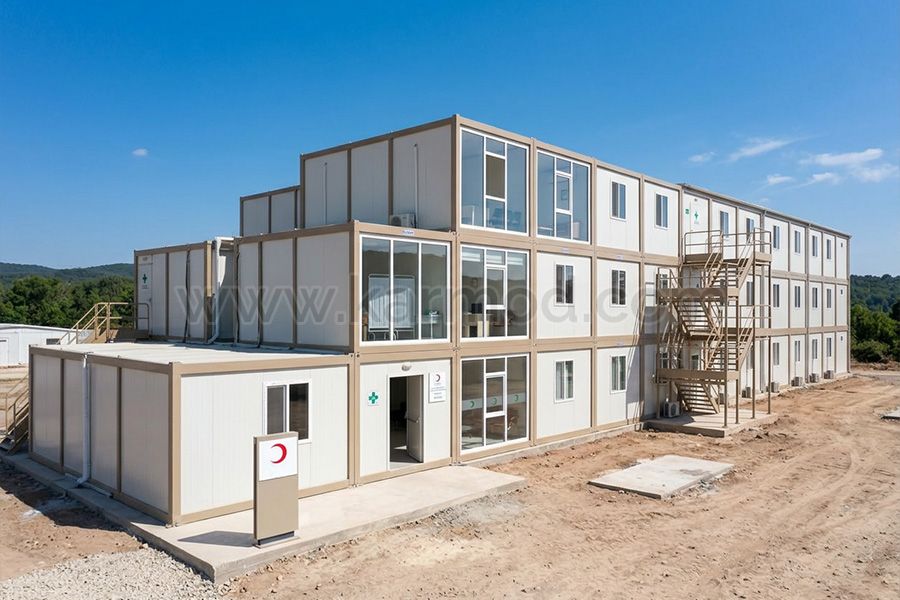
In modular container buildings, structural integrity and envelope performance determine how well units withstand transport, repositioning, and continued use. Karmod’s manufacturing focus centers on consistent assembly tolerances, robust framing logic, and component integration that supports safe handling on site. This is particularly relevant for B2B buyers managing multi-unit deployments, where standardization improves planning, maintenance, and lifecycle cost control.
Customization is often required in Latvia container buildings, whether the use case is workforce accommodation, storage, offices, or commercial modules. A reliable manufacturer should support practical options such as interior zoning, door and window placement, electrical and HVAC readiness, and fit-outs tailored to the operational purpose. In real projects, these choices determine how quickly a unit becomes usable and how effectively it supports day-to-day operations.
Material resilience also matters in Latvia’s environment. Corrosion resistance, moisture management, and insulation compatibility influence whether buildings remain dependable over years of service. For teams that prioritize reliability, the value is in the engineering discipline behind the product: predictable performance, consistent documentation, and build solutions that are ready for repeated deployment across different sites.
Latvia container offices are increasingly used to create practical work environments on active sites, logistics yards, and expansion zones where permanent offices are not yet justified. The primary advantage is speed: with a well-planned modular construction approach, a workspace can be installed quickly and adapted as teams grow. This flexibility is especially useful for projects that run across multiple phases, where office needs shift from planning and procurement to site supervision and operations.
Modern office expectations—thermal comfort, lighting quality, acoustics, and reliable utilities—can be incorporated into container offices when the specification is handled correctly. Businesses benefit from standardized layouts that support meeting space, supervisor rooms, reception points, and secure storage for documents and devices. For many organizations, Latvia container offices also reduce overhead by limiting fit-out complexity and shortening the time between delivery and occupancy.
For companies managing multiple locations, modular container buildings help standardize the working environment across projects. This consistency supports productivity and safety, especially when teams rotate between sites. It also simplifies asset management: units can be relocated, reconfigured, or expanded without the full disruption associated with conventional office builds.
To explore dedicated office solutions, many projects reference container office models that align with temporary and semi-permanent operational needs, including scalable site office clusters and support buildings designed around efficient circulation and fast installation.


Commercial development in Latvia often requires speed, controlled budgets, and the ability to expand without pausing operations. Latvia container buildings meet these needs by enabling modular construction that can be phased: a business can open with a core unit and add modules as demand grows. This approach supports a range of commercial use cases, from service points and showrooms to multi-unit business compounds.
Modular container buildings are also practical for businesses that rely on seasonal traffic or flexible location strategy. Units can be installed where demand is strongest and repositioned when market conditions change. For operators, this improves capital efficiency while keeping the built environment consistent and professional. With prefabricated container systems, the focus shifts from lengthy on-site construction to faster deployment and more predictable outcomes.
Design flexibility is a key benefit for branding and customer experience. Commercial container buildings can accommodate storefront glazing, customer entrances, staff areas, storage rooms, and back-of-house circulation. When combined into planned clusters, container-based business complexes can create cohesive commercial environments with clear wayfinding and scalable tenancy options.
Retailers and entrepreneurs use Latvia container buildings to create distinctive, adaptable formats for pop-up shops, seasonal outlets, and compact retail clusters. This model supports faster opening timelines and allows businesses to test locations without committing to long construction schedules. Latvia container shop innovations also benefit from modular expansion: additional units can be connected to introduce new product zones, storage, or customer flow improvements as performance data becomes clear.
Branding flexibility is another advantage. Container shops can be configured with consistent exterior treatments, signage zones, and interior layouts that reflect brand identity while remaining practical to relocate. For retail clusters, modular container buildings help organize multiple vendors in a compact footprint, supporting shared circulation and coordinated visual standards. This makes the format relevant for events, transit-adjacent retail, and redevelopment areas seeking quick activation.
Urban housing demand and changing affordability pressures are driving interest in new residential formats, including Latvia container homes configured as apartments and multi-unit blocks. In cities such as Riga and growing regional centers, container apartment concepts offer a route to deliver housing faster, particularly when projects require phased rollouts or compact site solutions. When planned with appropriate communal areas, access routes, and utility strategies, container-based apartment layouts can support functional, community-oriented living.
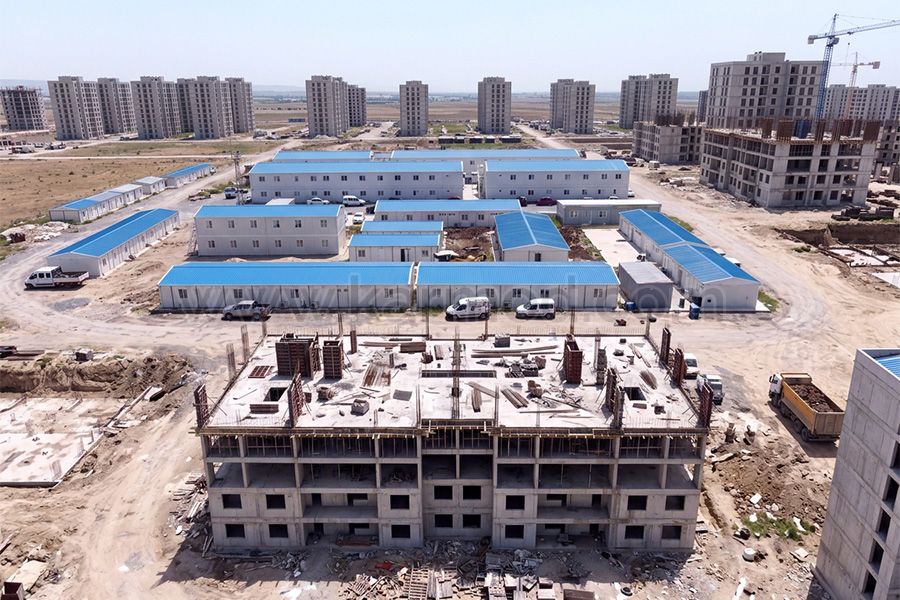
For developers and municipal stakeholders, the appeal lies in repeatable modules and predictable timelines. Prefabricated container systems allow for standardized residential units that can be arranged around shared courtyards, green pockets, or service corridors. This supports community layouts that balance privacy with shared amenity space, and it can be applied to student housing, workforce accommodation, and mixed-income residential initiatives where speed and cost discipline are essential.
As with any residential program, performance requirements matter. Climate-resistant container buildings designed for Latvia should address insulation continuity, condensation control, and durable finishes that can withstand long heating seasons. When engineered correctly, Latvia container homes can offer practical comfort while allowing housing supply to respond more quickly to real demand.
Beyond residential and commercial needs, Latvia container buildings are increasingly considered for public and community infrastructure where fast delivery and adaptable planning are important. Modular construction is well-suited for projects that require quick service continuity, temporary facilities during renovation periods, or scalable capacity in response to population movement and seasonal demand.
Educational use cases include classrooms, training spaces, and support facilities that can be deployed as school populations shift or when a permanent expansion is scheduled later. Healthcare and social services can benefit from clinics, testing points, triage rooms, and administrative units that need reliable interior conditions and practical maintenance. Community centers and municipal service buildings can also be delivered as modular container buildings, supporting local events, information points, and multi-purpose public spaces.
For decision-makers comparing solutions, the common thread is operational clarity: Latvia container offices, Latvia container storage solutions, and Latvia container homes can be planned with repeatable standards, deployed quickly, and expanded in phases. With the right specification and climate-focused engineering, container buildings become a disciplined, scalable option for Latvia’s modern infrastructure needs—supporting resilient development without unnecessary complexity.
In order to serve you better, if you could kindly send an e-mail to info@karmod.com for questions and details about your theoretical and special architectural plans, projects, and product specifications, your request will be responded to as soon as possible.

From one end of the world to the other, we enable our customers to reach the ready-made construction sector produced with the new technology of the world. We guarantee reliability through technology and innovation, flexible commercial models and smart supply chain solutions that add value for you, following the project production network.
Discover
Karmod is one of the largest prefabricated construction companies in Turkey, with a production of 45,000 m2. produces high quality prefabs and prefab containers