EN
EN 


Kazakhstan is accelerating modern construction across a vast geography that spans steppe, desert, and mountain regions, with major activity concentrated around energy, mining, logistics, agriculture, and large-scale infrastructure. The country’s sharply continental climate brings very cold winters, hot summers, and strong winds in many areas, pushing developers and project owners to prioritize building systems that are fast to deploy, predictable in performance, and resilient under extreme conditions.
This is why Kazakhstan container buildings have gained traction across both urban hubs and remote project sites. The format supports rapid delivery for workforce accommodation through Kazakhstan container homes, operational workspaces via Kazakhstan container offices, and secure storage near logistics corridors. With the right engineering, modular construction enables phased expansion, standardized quality, and relocation across changing project timelines. For a clear view of options and use cases, explore containers and the broader range of container buildings developed for commercial deployment.


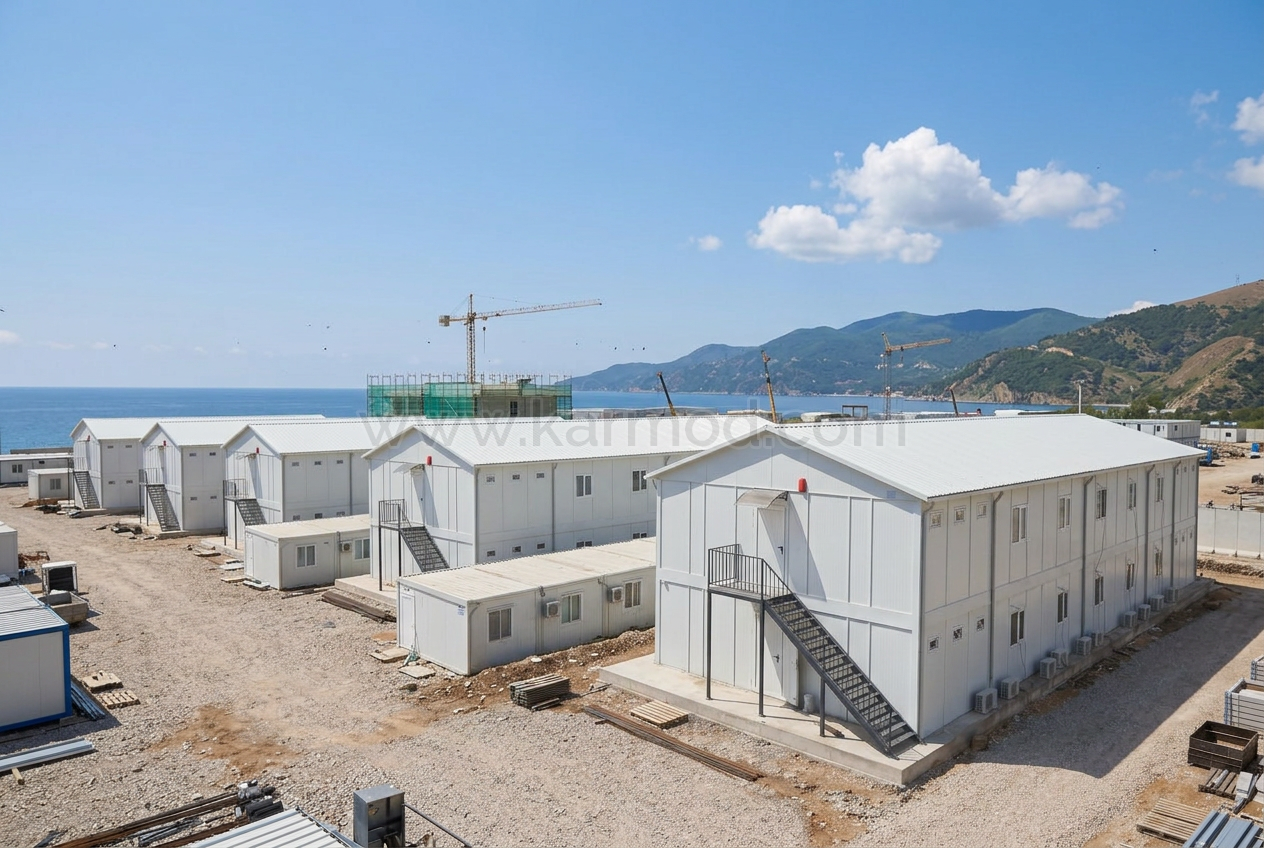
Kazakhstan container homes provide an efficient answer to demanding project environments where speed, repeatability, and thermal performance are critical. As modular container buildings, these units can be delivered in standardized configurations and combined into larger residential layouts, supporting everything from compact single-module units to multi-module compounds with separate living, sleeping, and sanitary zones.
Sustainability is strongest when containers are specified as long-life assets rather than temporary structures. Factory-controlled production can help reduce on-site waste and improve consistency, while modular planning supports reuse and relocation. In Kazakhstan, climate suitability is a defining requirement. Cold winters and wide temperature swings place the focus on insulation strategy, airtightness, thermal bridge control, and reliable heating integration. In hotter periods, solar gain control and ventilation become equally important. Properly designed climate-resistant container buildings address these conditions with engineered wall/roof assemblies, durable finishes, and condensation-aware detailing.
Affordability is largely about predictable cost and schedule. Modular delivery reduces extended on-site labor exposure and enables faster commissioning, while the flexibility of prefabricated container systems allows owners to expand capacity in phases. If staffing levels increase, additional modules can be added; if a site moves, units can be transported and recommissioned, protecting investment and keeping facilities aligned with operational needs.


Kazakhstan’s industrial footprint creates constant demand for secure, relocatable storage across mining operations, agriculture, logistics networks, and construction sites. Kazakhstan container storage solutions bring durable, scalable capacity that can be placed close to workfronts, reducing handling time and improving control of high-value equipment, consumables, and spare parts.
Mining sites benefit from robust storage for tools, safety supplies, and maintenance spares that must be protected from dust, wind, and extreme temperature shifts. In agriculture, storage units support seasonal peaks by holding packaging, fertilizers, maintenance equipment, or processed goods near production areas. Logistics operators use container storage to manage overflow inventory, create staging zones, or support last-mile distribution. On construction sites, containers support tighter site management by keeping materials secure and accessible while operations change week to week.
Durability and security are core requirements in Kazakhstan’s conditions. Reinforced structures, reliable locking hardware, and protective finishing help maintain integrity under harsh weather and frequent relocation. Fit-out options such as shelving, lighting, ventilation, and partitioning can be specified to match operational workflows. The relocation advantage is especially valuable: when projects move, storage can move too, turning a temporary requirement into a reusable asset.
For Kazakhstan, supplier selection often centers on engineering reliability, material suitability, and consistent production quality. Karmod’s positioning is grounded in controlled manufacturing and disciplined detailing that supports repeat deployment across multiple sites and sectors, including energy, mining, construction, and logistics.
Kazakhstan’s climate requires careful attention to thermal performance and durability. Karmod’s focus on insulation options, climate-resistant materials, and robust finishing supports climate-resistant container buildings designed for cold winters, hot summers, and high-wind exposure. Customization is delivered as an engineered process rather than an improvised modification: layouts, openings, MEP integration, and interior planning can be adapted to operational needs while maintaining structural logic and build consistency.
For stakeholders, the practical benefit is reduced project risk. Standardized production, predictable assembly, and consistent component quality make prefabricated container systems easier to plan, procure, and maintain over the full lifecycle of the asset.
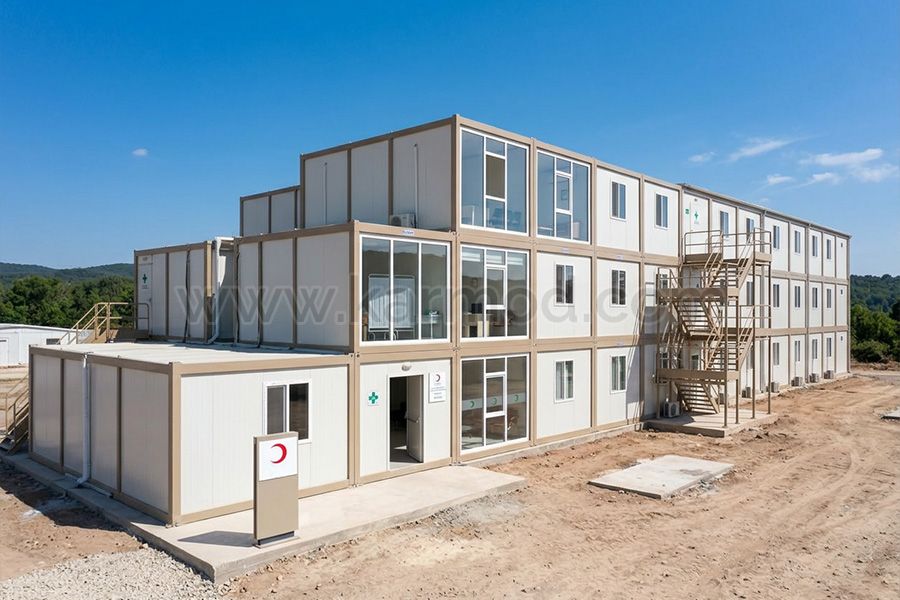
Kazakhstan container offices are increasingly used to establish professional work environments quickly, particularly on remote sites and fast-moving infrastructure projects. These offices can be configured for management teams, engineering rooms, meeting areas, and welfare functions, offering a more controlled and comfortable alternative to ad-hoc site structures. For dedicated solutions and configurations, see Container offices.
Office flexibility is a key advantage. Modular layouts allow businesses to start with a compact footprint and scale into multi-module campuses as staffing and operations grow. The modular format also supports standardization across multiple sites, helping procurement and operations teams maintain consistent workplace quality. Cost advantage typically comes from rapid deployment, reduced site labor exposure, and the ability to relocate and reuse office modules as projects shift.


Commercial development in Kazakhstan often requires speed-to-operation and adaptability, especially in emerging districts, industrial zones, and project-driven service markets. Container-based building formats enable phased delivery: businesses can open quickly with a core module set and expand later through modular additions without lengthy disruption.
Modular container buildings can support commercial buildings, service points, operational hubs, and larger business complexes by combining multiple modules into coherent layouts. With suitable insulation, glazing strategy, and internal planning, these structures can deliver comfortable customer-facing spaces alongside functional back-of-house zones. For investors and operators, modular expansion reduces the risk of overbuilding and allows capacity to follow demand.
Retail formats in Kazakhstan benefit from structures that can launch quickly, adapt to changing footfall, and scale into clusters. Container shops are well suited for pop-up concepts, roadside retail, and curated retail parks where speed and flexibility matter.
Branding flexibility is a practical advantage. Facades can be tailored with cladding, lighting, glazing, and signage to align with tenant identity, while interior layouts can support efficient merchandising and storage. For retail clusters, modular planning enables cohesive placement and staged expansion as occupancy grows.
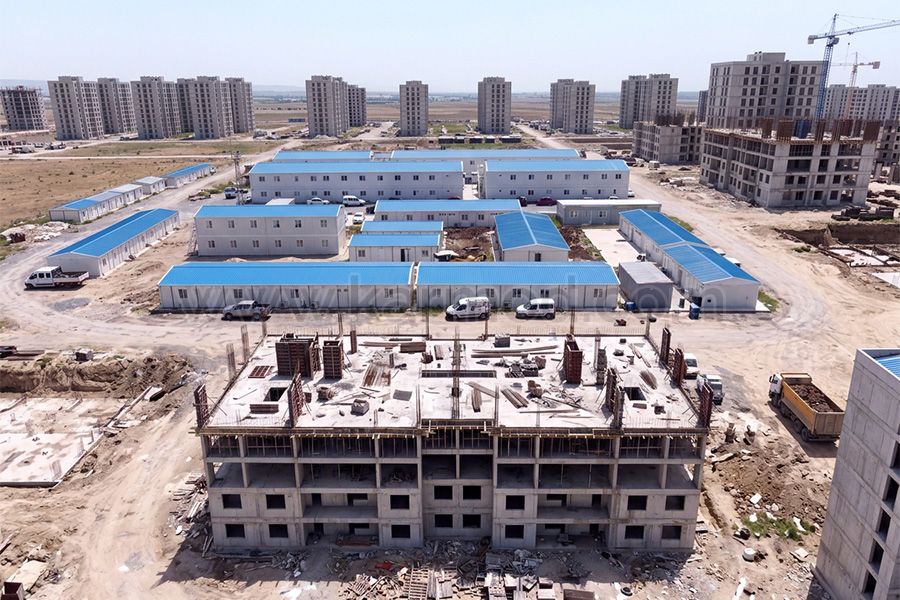
As Kazakhstan’s urban centers expand, demand continues for housing formats that can be delivered efficiently while maintaining consistent standards. Container-based apartment concepts can support workforce accommodation near industrial zones, student housing, and compact residential communities where phased delivery is preferred.
Successful projects depend on specification and planning: thermal comfort, acoustic control, and moisture management must reflect Kazakhstan’s temperature extremes. Community layouts can be designed around shared courtyards, circulation corridors, and amenity blocks, supporting livability and operational efficiency. The modular approach also allows capacity to grow in stages, aligning delivery with budget and demand.
Container-based solutions also offer a reliable way to deliver public and community infrastructure in Kazakhstan, especially in remote areas or rapidly developing zones. Prefabricated container systems can support schools, clinics, community centers, and operational public service points where speed, transportability, and repeatable quality are essential.
Schools can be developed as modular classroom blocks that expand over time, while clinics can be configured for efficient patient flow and functional separation of clean/utility zones. Community centers can provide multi-purpose space for training, municipal services, and local programs. Across these use cases, the core advantage remains consistent: durable, adaptable, and climate-resistant container buildings that meet modern requirements with predictable delivery.
In order to serve you better, if you could kindly send an e-mail to info@karmod.com for questions and details about your theoretical and special architectural plans, projects, and product specifications, your request will be responded to as soon as possible.

From one end of the world to the other, we enable our customers to reach the ready-made construction sector produced with the new technology of the world. We guarantee reliability through technology and innovation, flexible commercial models and smart supply chain solutions that add value for you, following the project production network.
Discover
Karmod is one of the largest prefabricated construction companies in Turkey, with a production of 45,000 m2. produces high quality prefabs and prefab containers