EN
EN 


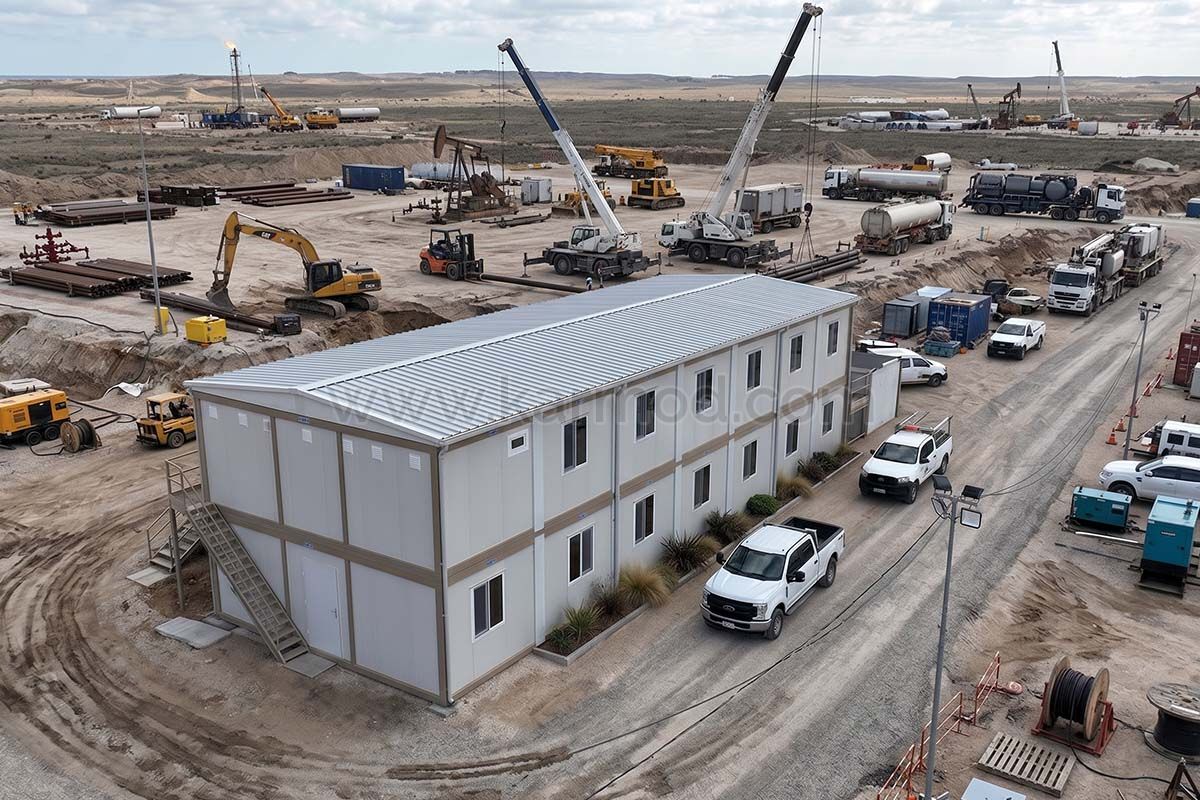
Energy projects do not always begin in places where roads, housing, offices, and daily facilities are already available. Many oil, gas, solar, wind, and power plant projects are developed in remote fields, industrial zones, deserts, mountains, coastal areas, or large open lands. In these locations, companies need more than equipment and machinery. They also need a practical living and working environment for the people who keep the project moving.
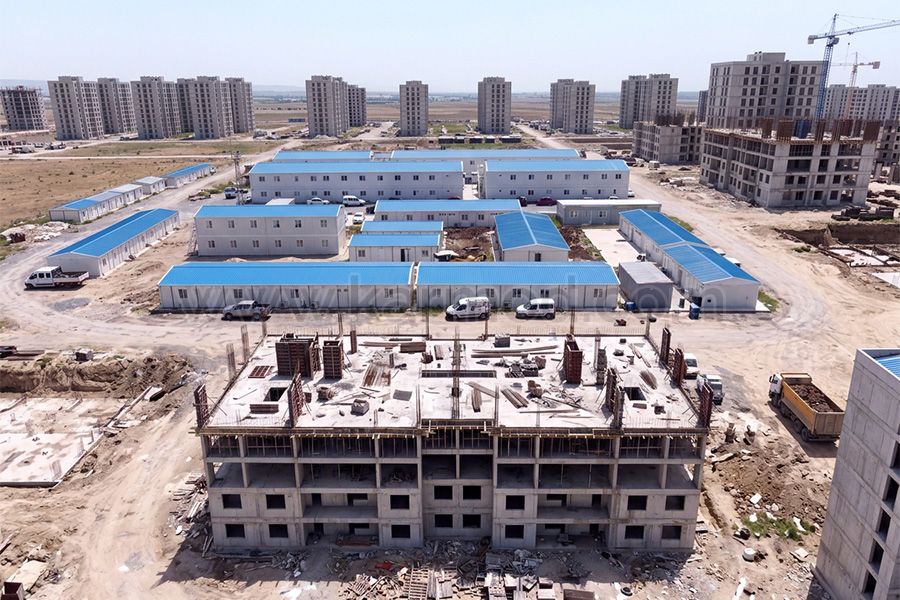
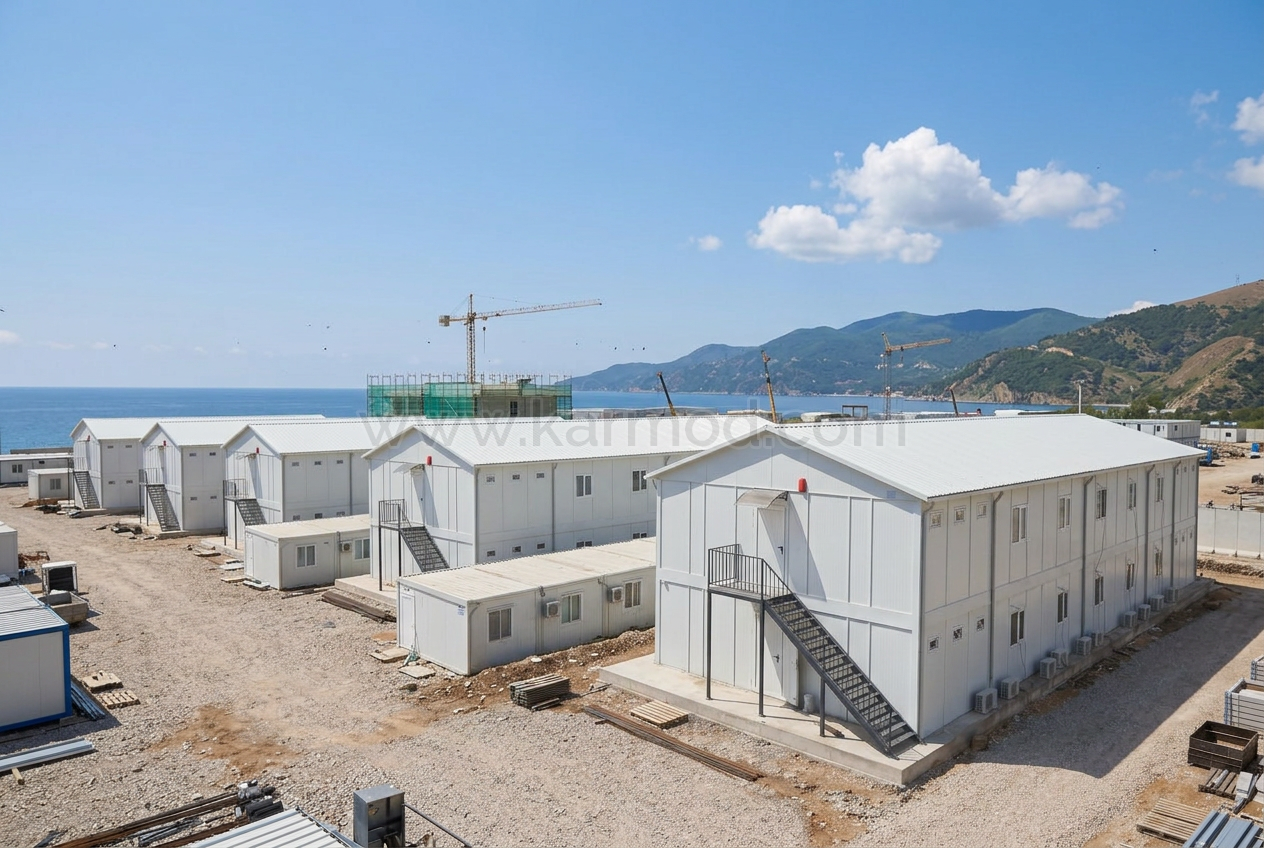
Energy sector worker camp containers are designed for this exact need. They help create organized, transportable, and functional camps where workers can sleep, eat, rest, shower, work, and coordinate daily operations close to the project site. Instead of waiting for permanent construction, project teams can use modular container units to build a complete camp in a shorter time.
Energy sites often operate under strict deadlines. Delays in accommodation, offices, or basic site facilities can slow down the entire project. A container camp gives companies a faster way to prepare the site for workers, engineers, supervisors, and technical teams.
An energy camp modular building can be planned according to the number of workers, the project duration, and the conditions of the site. For example, a small exploration team may only need a few accommodation and office units, while a large power plant project may require sleeping quarters, dining areas, sanitary units, laundry rooms, medical rooms, security cabins, and management offices.
The main advantage is that the camp does not have to be built piece by piece on site. Many container units can be produced in advance, transported to the location, and installed according to a prepared layout. This makes the setup process more predictable and easier to manage.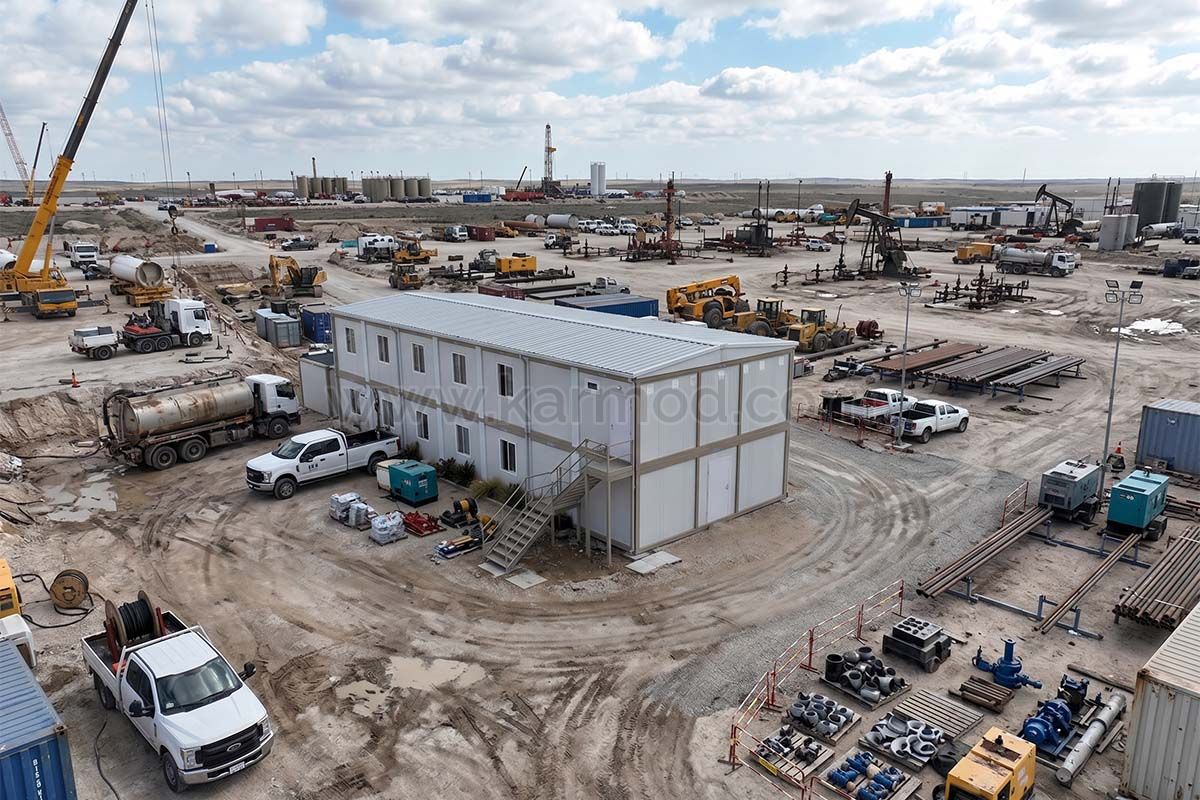
Comfortable accommodation is important on energy sites because workers may stay far from city centers for weeks or months. Poor living conditions can affect morale, rest quality, and work performance. For this reason, power plant worker accommodation and other energy camp housing units should be planned as more than simple sleeping spaces.
Container accommodation units can be designed with beds, wardrobes, lighting, ventilation, heating, cooling, electrical systems, and bathroom options. Depending on the project, rooms may be arranged for single occupancy, shared use, or team-based accommodation.
Energy project housing should also support daily routines. Workers need clean sanitary areas, dining facilities, relaxation spaces, and safe circulation between units. A well-planned container camp can separate living zones from work zones, storage areas, vehicle routes, and technical areas. This improves both comfort and safety inside the camp.
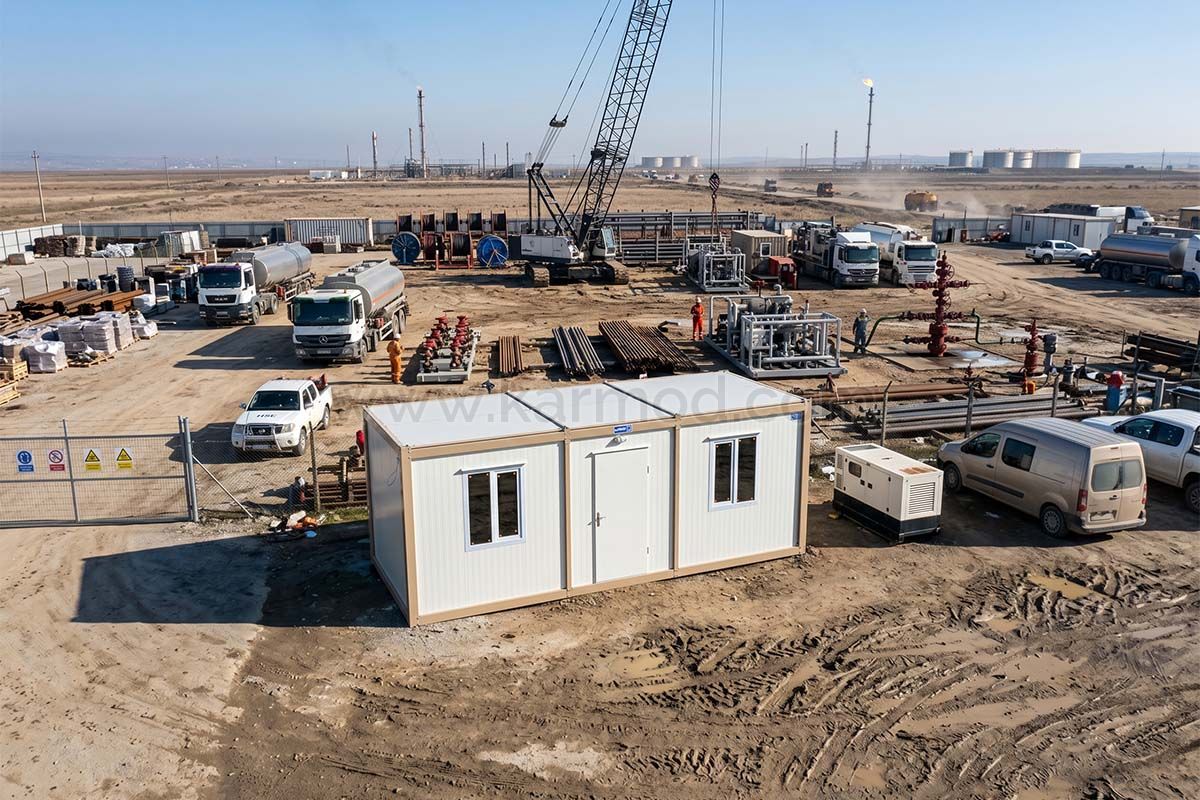
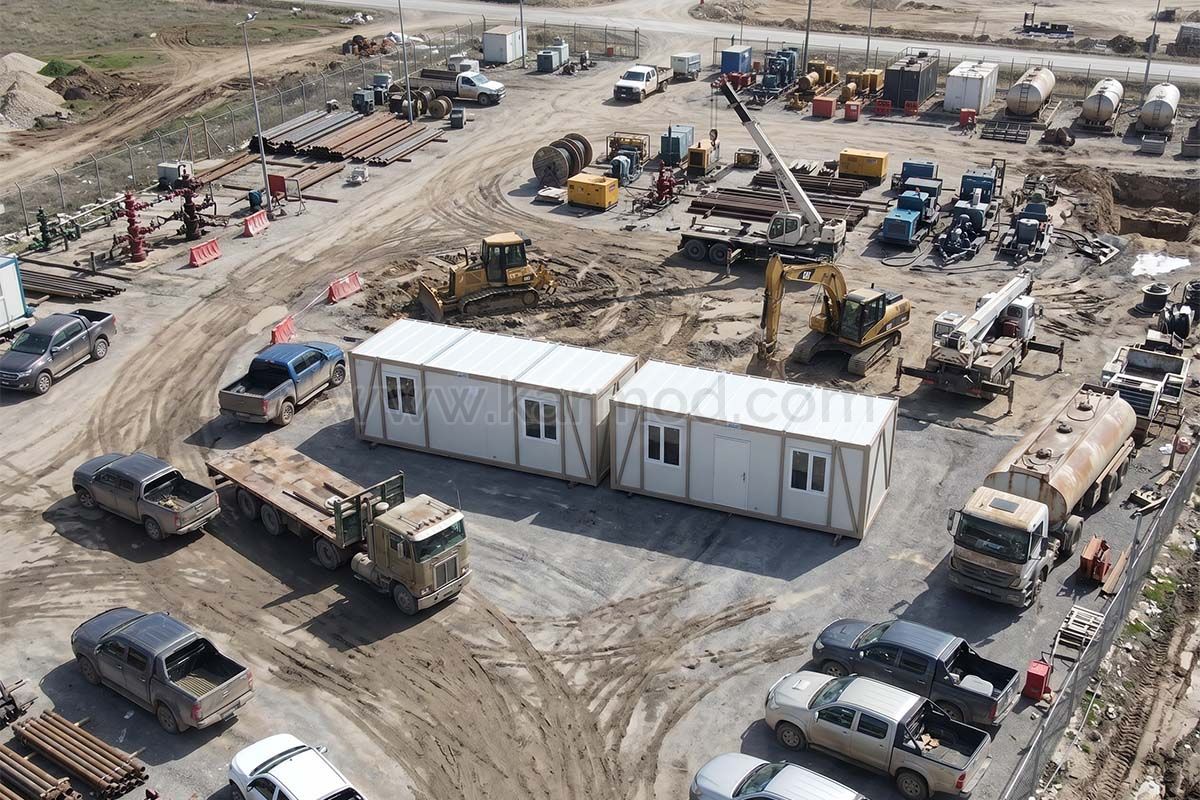
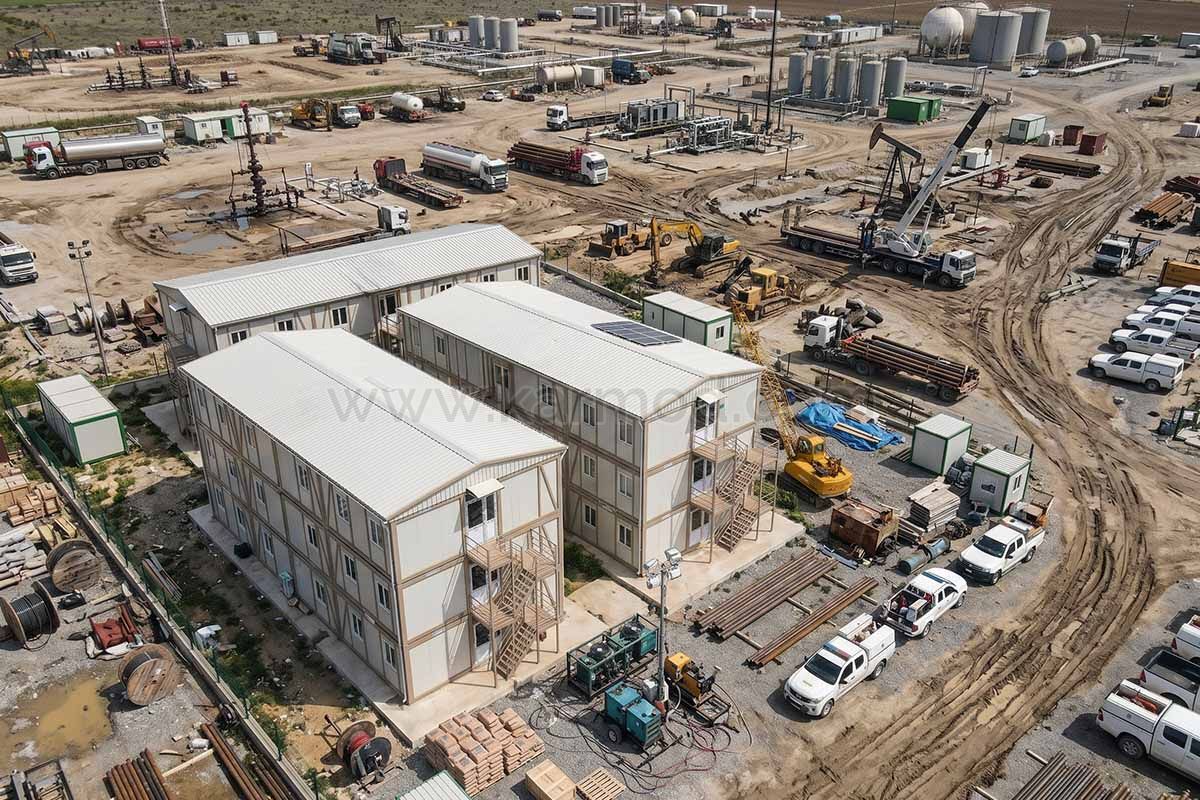
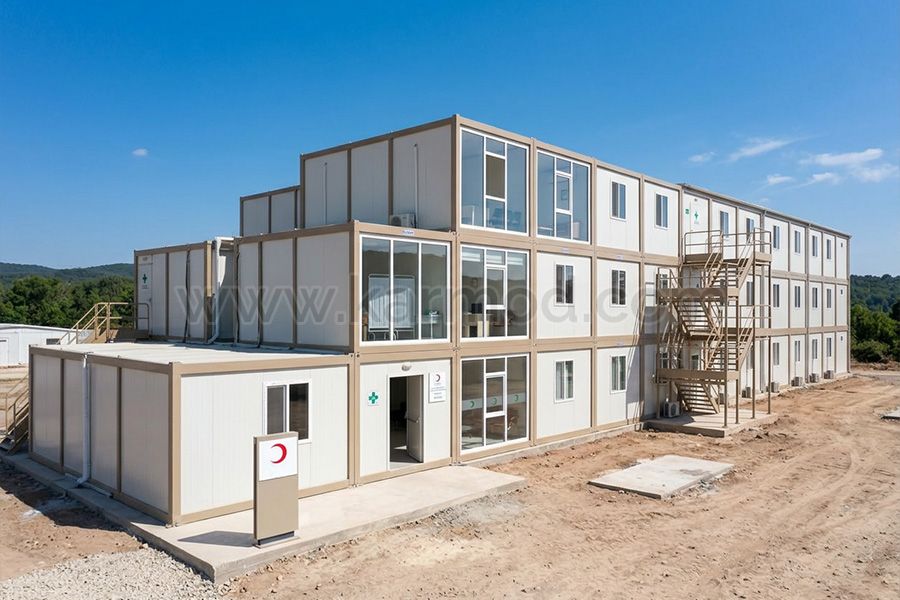
Energy projects require constant coordination between engineers, contractors, safety teams, logistics staff, and site managers. For this reason, office containers are a key part of many worker camps.
A solar farm site office, for example, can be used for site planning, documentation, staff meetings, monitoring activities, and daily reporting. Since solar projects are usually spread across large land areas, having an office directly on site helps teams respond faster to operational needs.
A wind farm camp may require similar office and support spaces, especially when turbines are installed across remote or difficult terrain. In these projects, containers can serve as meeting rooms, maintenance offices, technician rest areas, control points, or storage spaces for tools and safety equipment.
For power plants, modular offices may be used by project managers, quality control teams, engineers, administrative staff, and security personnel. These offices can be combined with accommodation and service units to create a complete site base.
Energy projects are not always fixed in one place for a long period. Some works move from one zone to another as installation, exploration, maintenance, or infrastructure phases progress. This is where a portable camp energy sector solution becomes especially useful.
Container camps can be dismantled, transported, and reused in another location. This gives companies more flexibility compared to permanent buildings. If the workforce increases, new units can be added. If the project becomes smaller, some units can be removed or relocated.
The layout can also be adjusted according to the site. For example, accommodation units can be grouped in one area, while offices and meeting rooms can be placed closer to the work zone. Sanitary units, dining halls, kitchens, storage containers, and security cabins can be positioned to support daily movement inside the camp.
This flexible design is useful for oil and gas fields, pipeline projects, power plant construction sites, solar farms, wind farms, and temporary maintenance operations.
Energy sites may face strong wind, dust, heat, cold, rain, snow, or high humidity. Therefore, worker camp containers must be designed with both durability and comfort in mind.
Container structures can include insulated wall panels, reinforced steel frames, weather-resistant exterior surfaces, double-glazed windows, strong doors, and efficient heating or cooling systems. These features help create a more stable indoor environment for workers.
In hot regions, air conditioning, sun-resistant exterior materials, and proper ventilation are important. In cold regions, thermal insulation, heating systems, and sealed openings help protect interior comfort. For coastal or humid areas, anti-corrosion protection can extend the service life of the units.
A reliable camp is not only about strength. It is also about creating a space where workers can recover after long shifts. Better indoor comfort can support healthier rest, better focus, and smoother daily operations.
Permanent buildings can be useful for long-term facilities, but they may not be the most practical choice for temporary or semi-permanent energy projects. Traditional construction usually requires more time, more on-site labor, and more complex site preparation.
Container camps offer a different approach. Since the units are modular and transportable, companies can control time, layout, and expansion more easily. A camp can be prepared for one project and later reused in another project, which increases long-term value.
Another benefit is operational control. When workers live close to the project area, transportation time can be reduced. Site managers can organize shifts more efficiently, and teams can access offices, dining areas, rest spaces, and service units without leaving the camp.
For companies managing multiple energy projects, container camps can become a reusable infrastructure investment rather than a one-time construction cost.
In order to serve you better, if you could kindly send an e-mail to info@karmod.com for questions and details about your theoretical and special architectural plans, projects, and product specifications, your request will be responded to as soon as possible.

From one end of the world to the other, we enable our customers to reach the ready-made construction sector produced with the new technology of the world. We guarantee reliability through technology and innovation, flexible commercial models and smart supply chain solutions that add value for you, following the project production network.
Discover
Karmod is one of the largest prefabricated construction companies in Turkey, with a production of 45,000 m2. produces high quality prefabs and prefab containers