EN
EN 


China’s rapid urban growth and technological leadership have created strong demand for efficient, design-driven housing solutions. Within this landscape, container homes stand out as a practical and contemporary alternative. Built from reinforced steel shipping units, these residences transform industrial structures into refined living environments suited to modern Chinese lifestyles. From dense metropolitan districts to developing suburban zones, a well-designed container home offers durability, adaptability, and architectural character. At Karmod, we develop engineered container houses that balance structural performance with everyday comfort.
Shipping container homes provide a robust structural base capable of meeting the demands of China’s varied climate conditions. From the cold winters of the north to the humid subtropical regions in the south, proper insulation, ventilation, and moisture control are essential. Karmod integrates advanced thermal solutions and corrosion protection systems to ensure long-term reliability. Each container-based housing project is designed with flexibility in mind, allowing layouts to evolve according to personal or commercial needs.
To explore alternative structural systems, you may also visit our modular homes. Every project is developed according to client specifications, enabling customized floor plans and finish selections that align with your vision.


For larger residential concepts or villa-style layouts, feel free to review our prefabricated villas. Our team is available to guide you through planning, production, and delivery, ensuring a seamless path from concept to completion.
Container home designs in China range from compact urban studios to expansive multi-container residences. As land use efficiency becomes increasingly important in major cities such as Shanghai, Beijing, and Shenzhen, container houses provide a practical way to optimize limited plots without sacrificing architectural identity.


Modern container house models can be configured horizontally or vertically, allowing creative façade compositions and functional interior zoning. Multi-level arrangements are particularly attractive for urban infill projects, while single-level layouts suit rural developments and tourism-based investments.
Interior planning focuses on spatial efficiency and comfort. Large glazing panels maximize natural light, while open-plan kitchens and integrated storage enhance usability. In colder northern provinces, enhanced insulation systems ensure thermal stability, whereas in southern regions, optimized airflow and shading solutions maintain indoor comfort.


Customization is central to container-based housing. Layout configurations, exterior cladding, roofing systems, and interior finishes can be tailored to suit residential, commercial, or mixed-use purposes. Whether designed as a permanent family home or a short-term rental unit, container homes adapt to diverse lifestyle requirements across China.
Karmod engineers each project with structural precision, ensuring consistent manufacturing quality before on-site installation. This controlled production approach improves build accuracy and reduces construction uncertainties.
Container home prices in China vary according to size, configuration, technical specifications, and site conditions. A compact single-unit container house typically represents the most accessible investment level, while multi-container homes with customized interiors and advanced energy systems require a larger budget.
Key cost factors include transportation distance, foundation preparation, insulation grade suited to regional climate, and selected finishing materials. Additional features such as solar panels, smart home systems, or reinforced glazing will influence overall pricing. Urban projects may also involve different logistical considerations compared to rural developments.
Because shipping container homes are largely manufactured off-site, labor duration at the construction location is reduced. This streamlined process can help control overall project expenses while maintaining high structural standards. Clear specification planning from the outset ensures that the final investment aligns with functional expectations and financial goals.
Constructing a container home in China requires coordinated planning between design professionals, engineers, and local authorities. Site analysis is the first step, including soil conditions, access routes, and climate exposure. These factors directly affect foundation design and insulation requirements.
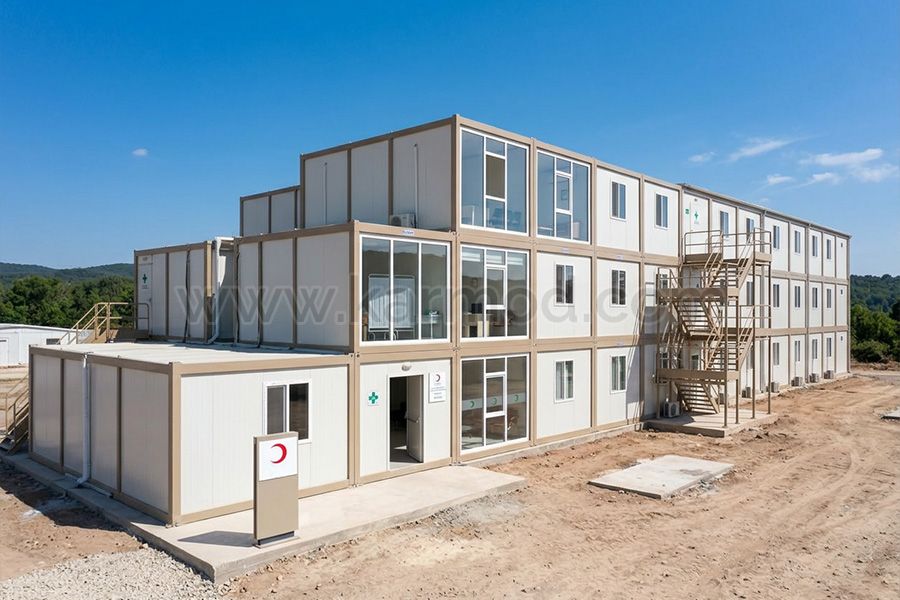
Shipping container homes are produced in controlled manufacturing facilities and transported ready for installation. Once foundations are prepared, on-site assembly progresses efficiently. This approach is especially beneficial in densely populated cities where minimizing disruption is essential.
Steel container houses offer high structural strength and resistance to pests, making them suitable for long-term residential use. With proper anti-corrosion treatment and thermal protection, they perform reliably across China’s diverse environmental zones, from coastal humidity to inland temperature variations.
Container homes can also be equipped with renewable energy systems and water-saving technologies, supporting sustainability goals that are increasingly important in Chinese construction planning. Thoughtful design ensures these systems integrate seamlessly into the overall structure.
Karmod provides technical guidance throughout the building process, ensuring that each container-based housing project is executed with attention to safety, durability, and architectural integrity.
Before beginning a container home project in China, it is essential to review local zoning regulations and construction approval procedures. Building requirements may differ between provinces and municipalities, particularly in urban development zones.
Architectural and structural drawings must comply with applicable national and regional standards. Licensed professionals typically prepare and review these documents to ensure alignment with safety and performance requirements. Early coordination with local authorities can streamline approval timelines.
Fire safety measures, structural load calculations, and insulation standards are critical components of compliance. In colder regions, energy performance requirements may be more stringent, while coastal areas may emphasize corrosion resistance and wind load performance.
Environmental considerations may also apply, particularly for projects located near protected land or agricultural zones. Drainage systems, waste management solutions, and energy efficiency strategies should be incorporated during the planning phase.
By integrating compliant engineering solutions from the beginning, container houses can be developed efficiently and responsibly. With informed planning and professional execution, container homes in China offer a durable, adaptable, and forward-thinking housing option suited to evolving residential needs.
In order to serve you better, if you could kindly send an e-mail to info@karmod.com for questions and details about your theoretical and special architectural plans, projects, and product specifications, your request will be responded to as soon as possible.

From one end of the world to the other, we enable our customers to reach the ready-made construction sector produced with the new technology of the world. We guarantee reliability through technology and innovation, flexible commercial models and smart supply chain solutions that add value for you, following the project production network.
Discover
Karmod is one of the largest prefabricated construction companies in Turkey, with a production of 45,000 m2. produces high quality prefabs and prefab containers