EN
EN 


Across Morocco’s diverse regions, where long-established traditions intersect with rapid urban development, the demand for affordable social housing for low-income families remains a central public concern. Modular and prefab homes have emerged as practical construction models capable of responding to this challenge with speed, cost control, and consistent quality. Within this context, Karmod has contributed to redefining how public and social housing projects can be planned and delivered, supporting housing affordability without compromising durability or livability. Its modular homes offer a viable pathway for public authorities and housing providers seeking scalable solutions adapted to Moroccan conditions.
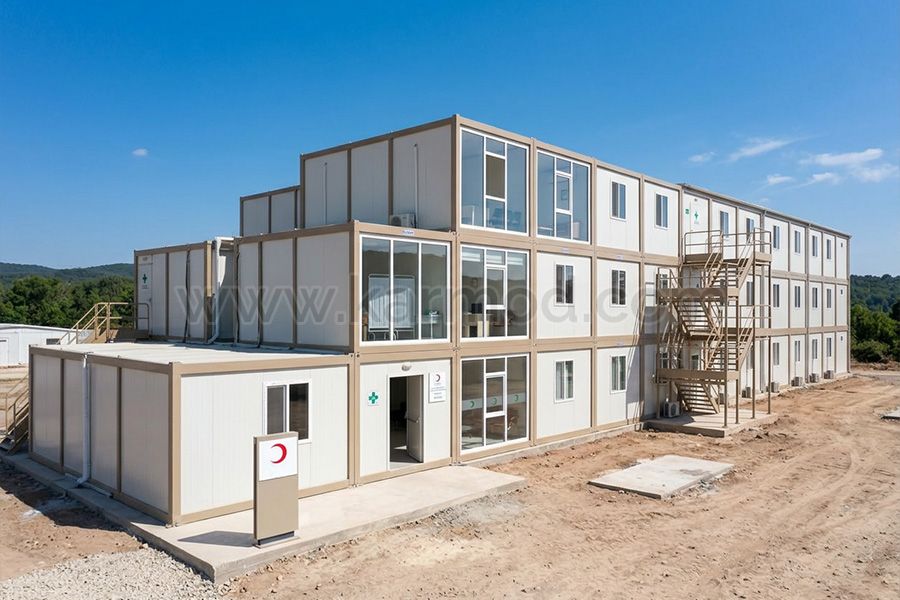
The strength of modular housing lies in its methodical construction process. Housing units are produced in controlled factory environments, then transported and assembled on-site. This approach shortens construction timelines, reduces material waste, and limits disruptions at the building location. Prefab homes follow similar principles, allowing entire units or structural sections to be manufactured in advance. For large-scale low-income housing developments, this factory-based production ensures predictable quality standards and mitigates many of the logistical challenges associated with conventional construction.
Morocco’s varied climate zones and settlement patterns require housing solutions that balance affordability with resilience. From dense urban neighborhoods to remote or mountainous areas, modular and prefab homes can be adapted to local environmental conditions while respecting regional architectural expectations. Their structural systems are designed to perform reliably across different climates, contributing to long-term housing stability and reduced maintenance demands.


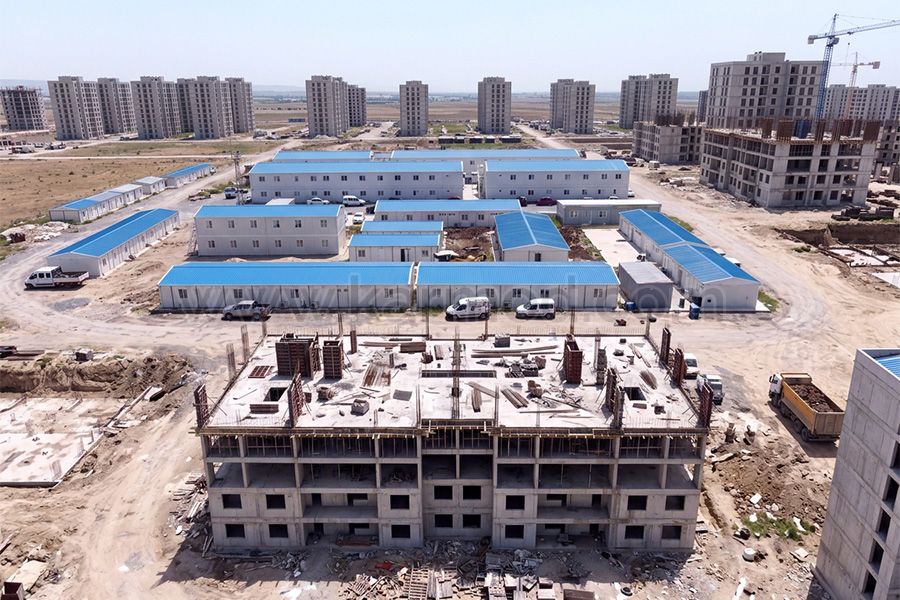
Affordable social housing extends beyond the delivery of individual housing units. Karmod’s approach reflects a broader understanding of community development, where housing projects are integrated with essential infrastructure and shared services. This perspective supports the creation of functional neighborhoods rather than isolated dwellings, aligning with Morocco’s objectives for socially inclusive housing programs that enhance everyday living conditions.
By integrating modular and prefab construction into social housing strategies, Morocco demonstrates how modern building methods can support equitable access to housing while remaining culturally and environmentally sensitive. These delivery models provide public institutions and housing stakeholders with flexible tools to address housing shortages in a structured and sustainable manner.


Modular social housing represents a structured response to Morocco’s ongoing housing affordability pressures. By combining industrialized construction with thoughtful planning, modular housing supports the delivery of low-income housing at scale while maintaining cost transparency and predictable timelines. These characteristics are particularly relevant for public housing authorities seeking efficient delivery models aligned with long-term urban development strategies.


Prefab low-income housing projects in Morocco offer a practical framework for delivering safe and durable homes within constrained budgets. These projects rely on standardized construction systems that simplify planning, procurement, and execution, making them suitable for both urban and regional housing initiatives.
Through the structured application of modular and prefab construction, Morocco continues to expand its capacity to deliver affordable housing that supports stable, well-integrated communities.
Modular housing construction is reshaping how affordable housing projects are planned and executed across Morocco. By integrating industrial production techniques with local site requirements, modular construction delivers cost-efficient housing solutions that respond to diverse demographic needs while supporting long-term sustainability objectives.
Morocco’s social housing framework incorporates both temporary and permanent solutions to address varying housing needs. Modular construction supports this dual approach by enabling rapid deployment for short-term accommodation while also delivering durable housing for long-term residency.
This balanced approach allows Morocco to respond to immediate housing challenges while investing in stable, long-term housing infrastructure.
Karmod plays an active role in Morocco’s affordable housing landscape, particularly through mobile and modular housing solutions designed for flexibility and cost efficiency. Its production model supports public housing initiatives that require rapid delivery without sacrificing structural integrity or resident comfort.
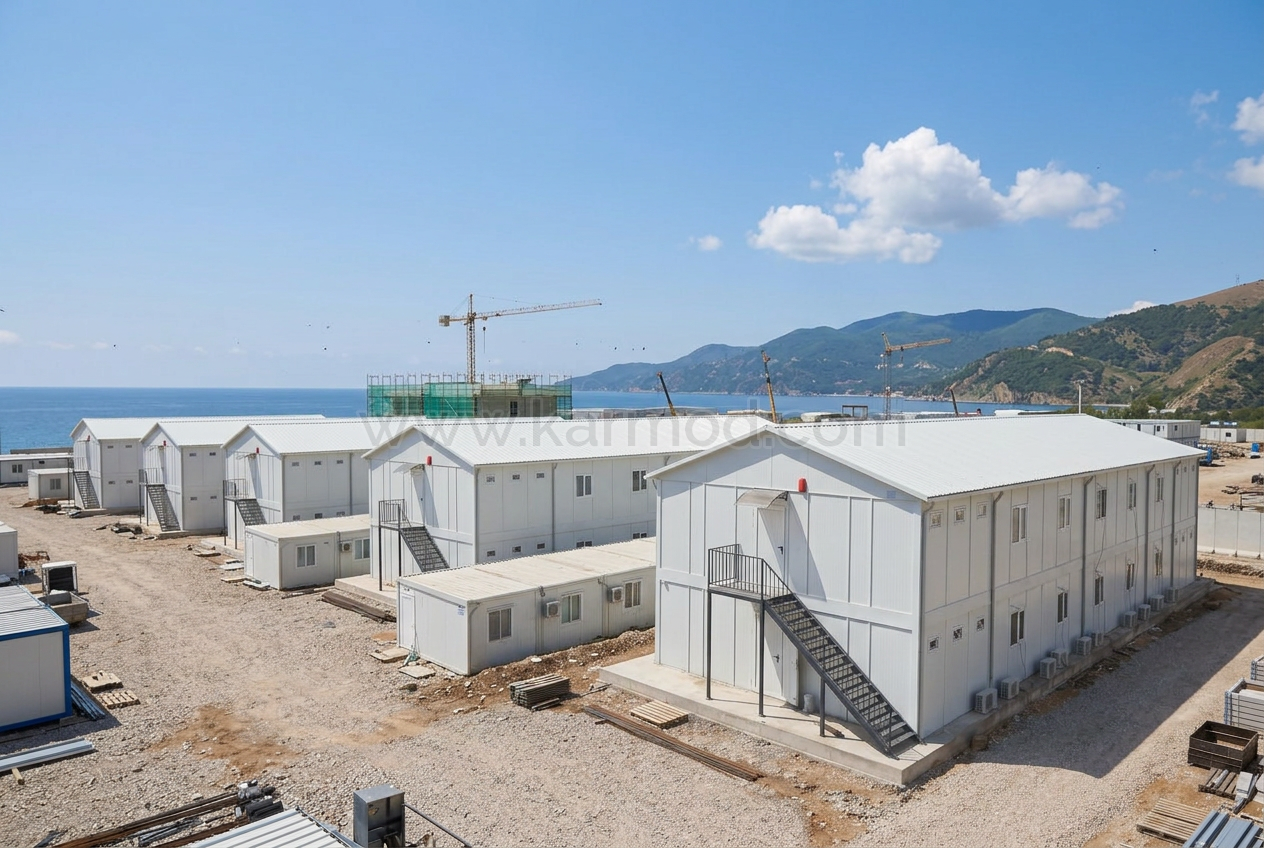
For temporary housing applications, modular construction offers a reliable balance between speed, safety, and cost control. This method allows public authorities to deploy housing units efficiently while maintaining standards suitable for dignified living conditions.
By leveraging modular construction for temporary housing, Morocco strengthens its ability to respond to housing needs in a manner that is efficient, inclusive, and aligned with broader social development objectives.
In order to serve you better, if you could kindly send an e-mail to info@karmod.com for questions and details about your theoretical and special architectural plans, projects, and product specifications, your request will be responded to as soon as possible.

From one end of the world to the other, we enable our customers to reach the ready-made construction sector produced with the new technology of the world. We guarantee reliability through technology and innovation, flexible commercial models and smart supply chain solutions that add value for you, following the project production network.
Discover
Karmod is one of the largest prefabricated construction companies in Turkey, with a production of 45,000 m2. produces high quality prefabs and prefab containers