EN
EN 


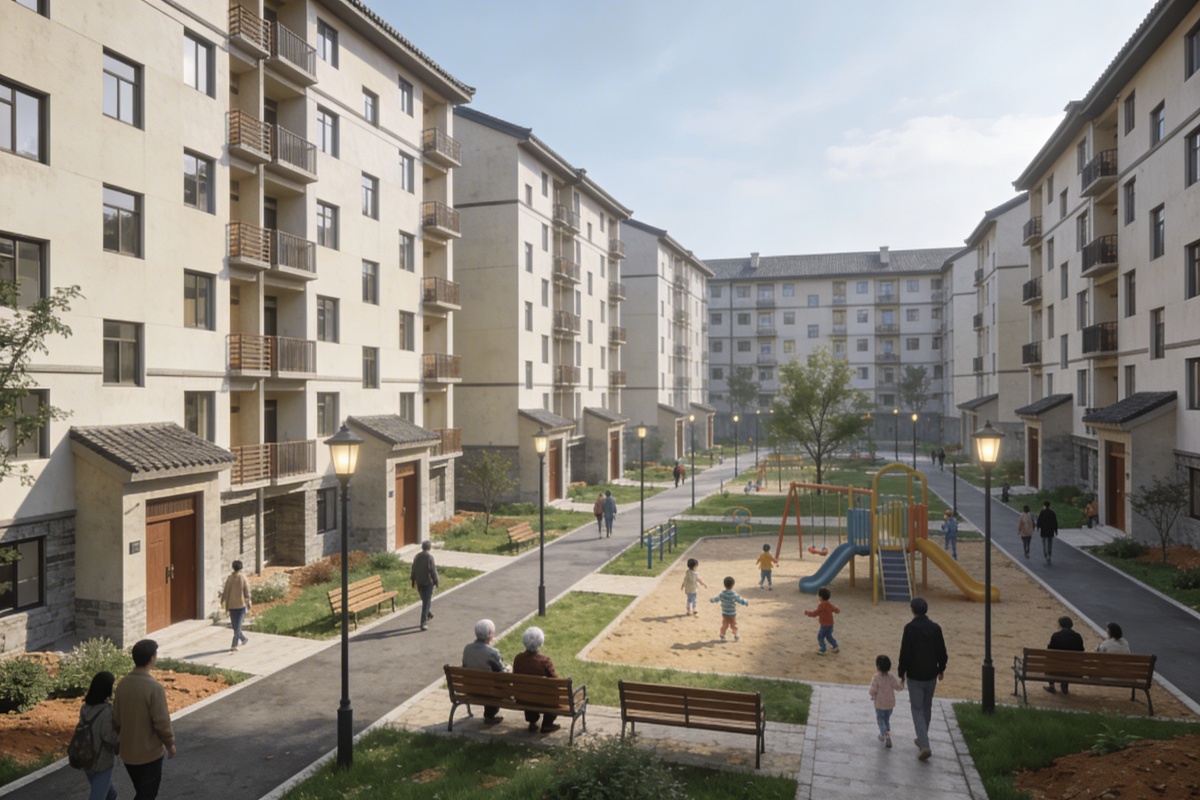
Across China’s fast-growing cities and expansive rural regions, affordable social housing remains a central priority for local administrations and institutional housing providers. Housing demand can shift quickly with migration, employment patterns, and redevelopment cycles, creating pressure for delivery models that are both scalable and financially disciplined. Within this context, Karmod contributes modular and prefab building systems designed to support low-income housing outcomes with predictable timelines and controlled costs. The focus is practical: deliver homes that can be planned, produced, and maintained reliably, while supporting long-term sustainability and community stability.
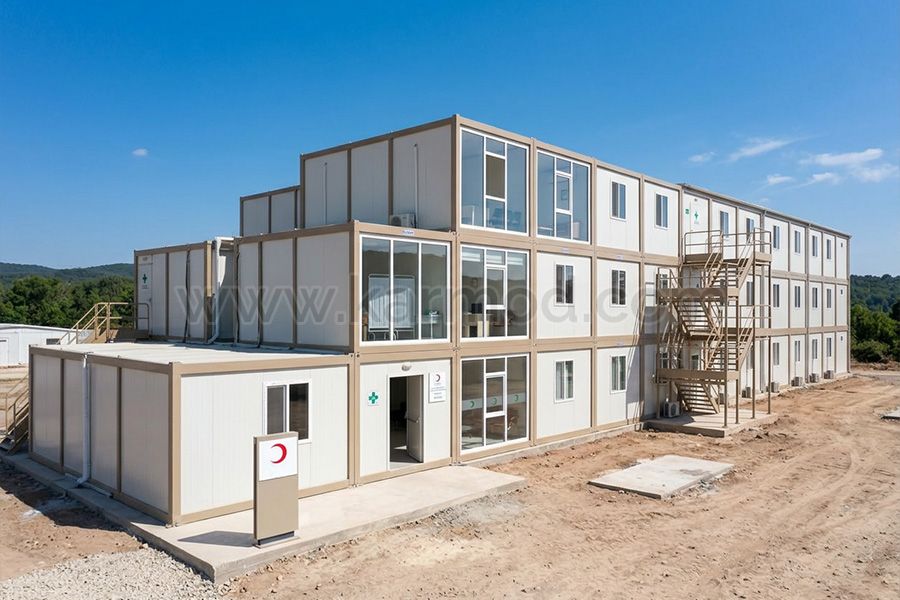
modular homes have become an important tool for meeting housing affordability goals in China because they streamline project delivery without lowering standards. Modular units are produced as sections in a factory environment, where consistent fabrication and repeatable specifications help reduce defects and material waste. Once transported, modules are assembled on site into complete residences or multi-unit buildings. For public housing projects, this approach can ease scheduling, limit neighborhood disruption, and reduce exposure to weather-related delays—particularly valuable across China’s diverse climates and logistical conditions.
Prefab homes advance the same objective through a slightly different pathway: higher completion off-site and faster installation on arrival. Prefabrication supports more standardized quality control and can shorten the gap between construction start and occupancy. For low income households, that speed matters when temporary arrangements are unstable or when new housing supply is urgently needed. Prefab delivery can also support adaptable layouts, helping housing providers align unit types with local needs, site constraints, and operational priorities.


Karmod’s involvement in China’s affordable social housing landscape centers on repeatable building systems that can be deployed across different regions and site profiles. The aim is not only to build quickly, but to deliver housing that performs well over time—supporting resident comfort, durability, and manageable operating costs. For public authorities and partner organizations, these attributes strengthen planning confidence and improve lifecycle value, which is essential when resources must serve large populations over many years.
By applying modular and prefab methods, Karmod supports housing delivery that can scale with demand while remaining aligned with long-term sustainability and social inclusion. The outcome is housing that does more than add units to the market: it helps create stable neighborhoods, strengthens community integration, and improves access to secure homes for low income families.


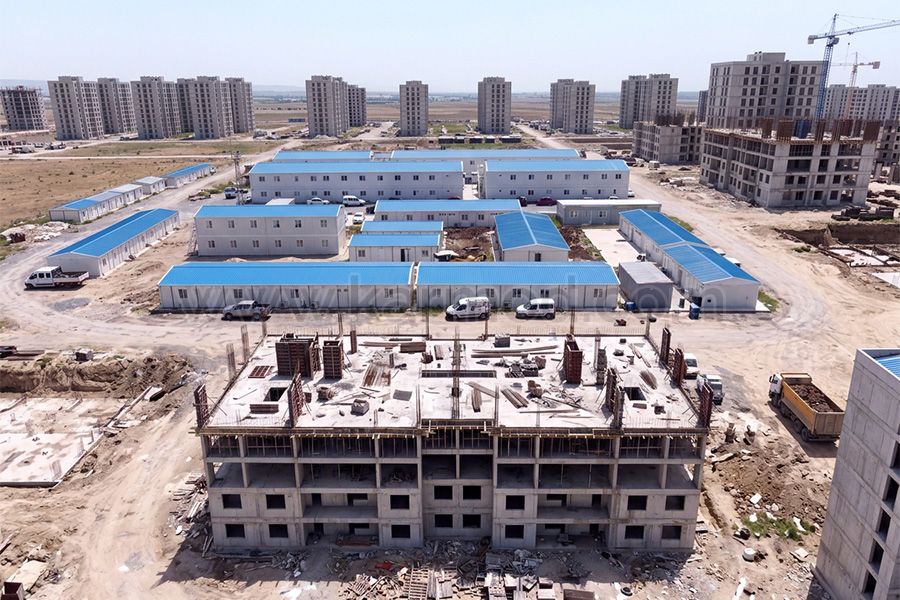
China’s housing programs often require delivery methods that can keep pace with urban expansion, renewal projects, and regional development goals. Modular social housing supports this requirement by shifting major construction activities into controlled production environments and reducing on-site work. Factory-built modules can be assembled efficiently on location, helping housing providers shorten construction periods and manage budgets more predictably. For affordable housing for low income communities, this can translate into faster access to stable homes and clearer oversight for project stakeholders.
Modular delivery also supports more structured low cost housing plans. Projects can be standardized where it improves cost control, while still allowing adjustments for local site conditions and community needs. This balance helps public authorities and NGOs coordinate housing delivery with utilities, transport links, and public services. When modular systems are planned with maintenance in mind, they can also support long-term sustainability through durable materials, simplified repairs, and clearer management pathways.


Prefab low income housing projects in China are often shaped by one essential objective: expand supply efficiently while maintaining consistent building quality. Prefabrication supports this by producing key building components—or complete units—off-site with repeatable specifications. This can reduce rework, improve schedule certainty, and make project delivery less dependent on variable site conditions. For low income social housing initiatives, these operational advantages help stakeholders move from procurement to occupancy with fewer delays.
Prefab delivery can also support a range of housing formats, from compact urban solutions to community-scale developments that require phased expansion. When paired with clear low cost housing ideas, prefab projects can integrate practical features that matter to residents, such as efficient layouts, durable finishes, and housing that is easier to maintain. This focus supports housing affordability over time, not only at the moment of delivery.
As modular housing construction and prefab approaches continue to expand, China strengthens its capacity to deploy sustainable housing solutions at scale. The priority remains outcomes that are measurable and durable: faster delivery, predictable costs, and homes that perform reliably across different climates and geographic contexts.
Affordable modular housing construction in China reflects a shift toward delivery models that support both speed and long-term housing performance. By building sections in controlled environments, modular systems can reduce waste and improve workmanship consistency. This helps public housing projects maintain standards while managing cost pressures—an important factor when developments must serve large numbers of households over long time horizons.
Modular housing also supports practical rollout across multiple sites, especially when housing demand is uneven across provinces and cities. Standardized components can simplify procurement and reduce design repetition, while local adaptation can address site constraints and community integration needs. For institutions responsible for low-income housing, modular construction offers a pathway to scale supply without undermining lifecycle value.
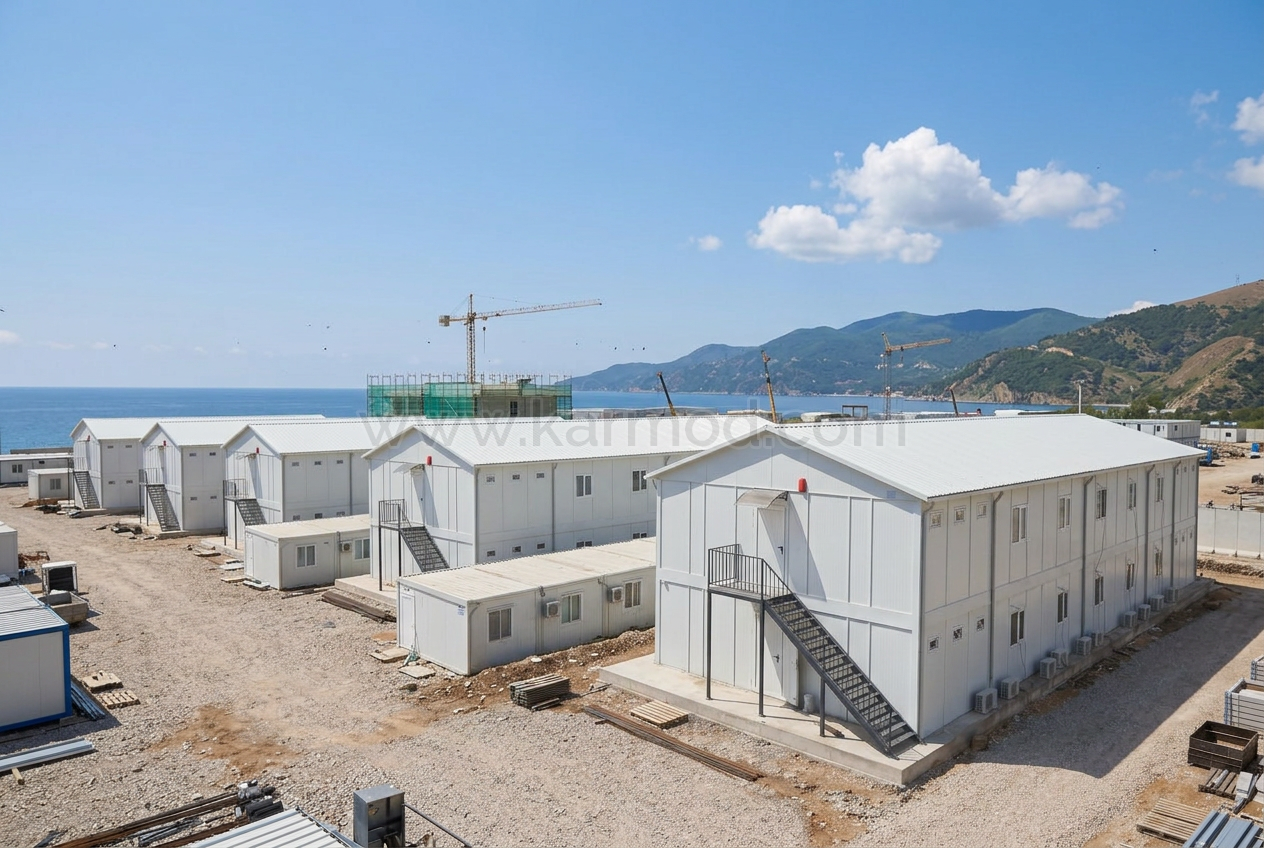
China’s housing needs can require both temporary accommodation and permanent social housing stock, depending on local conditions and demand patterns. Low cost social housing strategies increasingly rely on scalable construction methods that can be deployed quickly but remain suitable for long-term use. Modular systems, including mobile affordable housing units where appropriate, can support transition housing as well as durable neighborhoods designed for stable residency.
Incorporating Key Elements for Success:
Karmod contributes to China’s affordable social housing efforts as a mobile affordable housing manufacturer with experience in modular delivery systems. Mobility can be valuable for transitional accommodation, phased developments, and circumstances where housing demand changes quickly. For housing providers, mobile solutions can also support better resource use by allowing units to be redeployed rather than replaced.
Alongside mobility, Karmod’s modular housing construction approach emphasizes controlled production, predictable timelines, and practical performance. This supports low income social housing delivery by reducing on-site uncertainty and strengthening quality consistency. For public sector stakeholders, the benefit is clearer oversight—from procurement through installation—while residents benefit from homes designed for durability and day-to-day usability.
Temporary housing programs in China often require rapid deployment, straightforward site installation, and predictable operational management. Mobile and modular solutions address these needs by enabling standardized units to be produced efficiently and installed with less on-site complexity. This is particularly relevant in settings where households need immediate accommodation while permanent options are being developed or allocated.
Effective temporary housing must also protect resident dignity and wellbeing. Modular systems can be configured to support comfort, safety, and practical living standards, while planning frameworks can ensure access to transport, services, and community facilities. When mobile affordable housing is integrated into a broader housing strategy, units can be repurposed or relocated, supporting long-term sustainability and better use of public resources.
By combining mobile affordable housing with modular housing construction, stakeholders in China can deliver temporary housing that is fast to implement yet aligned with long-term housing affordability goals. This approach supports flexible response capability while reinforcing the broader objective of stable, inclusive, and sustainable affordable social housing.
In order to serve you better, if you could kindly send an e-mail to info@karmod.com for questions and details about your theoretical and special architectural plans, projects, and product specifications, your request will be responded to as soon as possible.

From one end of the world to the other, we enable our customers to reach the ready-made construction sector produced with the new technology of the world. We guarantee reliability through technology and innovation, flexible commercial models and smart supply chain solutions that add value for you, following the project production network.
Discover
Karmod is one of the largest prefabricated construction companies in Turkey, with a production of 45,000 m2. produces high quality prefabs and prefab containers