EN
EN 


In Sri Lanka, the vision of accessible social housing for underserved communities is steadily taking shape, supported by the innovative efforts of companies such as Karmod. This commitment goes beyond basic construction; it focuses on delivering affordable social housing that provides every Sri Lankan family with a safe, dignified, and resilient living environment. With specialized expertise in modular and prefab systems, Karmod contributes to public housing projects that are cost-efficient, environmentally responsible, and rapidly deployable—an essential combination in a country facing ongoing housing demand.
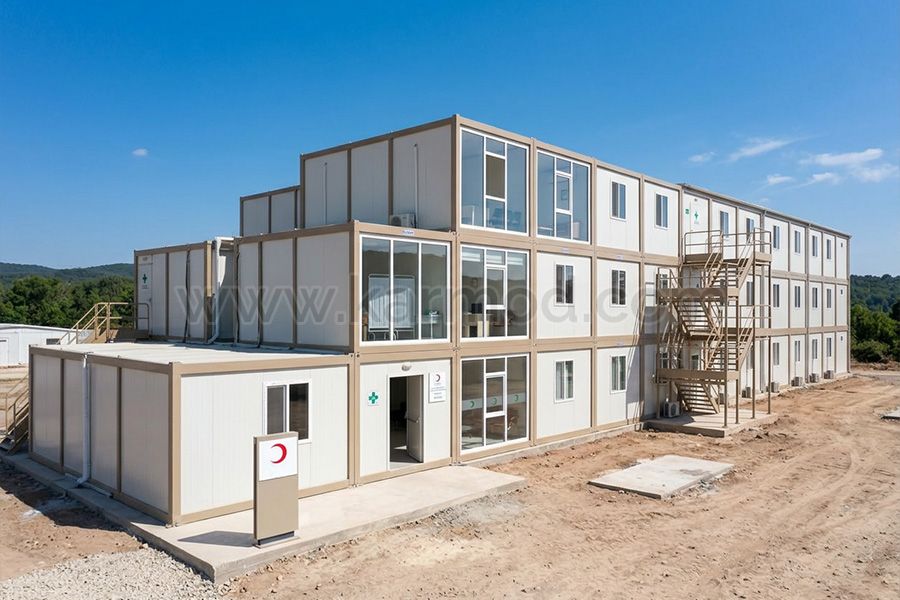
Modular homes, a core component of Karmod's portfolio, are redefining how affordable housing is delivered in Sri Lanka. Built in precision-controlled factory settings, these homes are manufactured in sections to reduce material waste, improve quality control, and shorten project timelines. Once completed, the modules are transported and assembled on-site into fully functional residences. This streamlined delivery model supports municipalities, NGOs, and housing authorities seeking scalable low-income housing solutions while maintaining strict control over operating costs and construction budgets.
Prefab homes follow a similar off-site construction approach while offering flexibility in layout and architectural design. Manufactured in controlled environments, these homes ensure consistent structural performance and material efficiency. Once transported and installed, they form durable residential units suitable for both urban and rural settings across Sri Lanka. Their adaptability allows public housing planners to address varied family sizes, land conditions, and climate considerations, from coastal humidity to inland heat.


Karmod’s approach to affordable social housing in Sri Lanka is grounded in long-term sustainability. By integrating advanced materials and efficient construction systems, these housing solutions reduce lifecycle maintenance needs while improving thermal comfort and structural durability. This is particularly relevant in Sri Lanka’s tropical climate, where ventilation, moisture resistance, and energy efficiency directly influence operating costs for residents and housing authorities. Through carefully developed low-cost housing plans, projects can respond to housing shortages without compromising structural integrity or community cohesion.
The path toward housing affordability in Sri Lanka requires practical, scalable strategies. Modular and prefabricated construction supports rapid project rollout, helping public institutions expand access to safe housing while maintaining fiscal responsibility. By aligning innovation with social responsibility, affordable housing initiatives contribute to stable communities and broader national development objectives.


Sri Lanka continues to explore efficient construction models to expand access to dignified housing for lower-income populations. Modular building systems offer a practical framework for accelerating delivery timelines while maintaining quality standards. By assembling pre-manufactured structural components on-site, housing projects can be completed faster than conventional construction methods, reducing financial exposure and administrative complexity for public authorities.
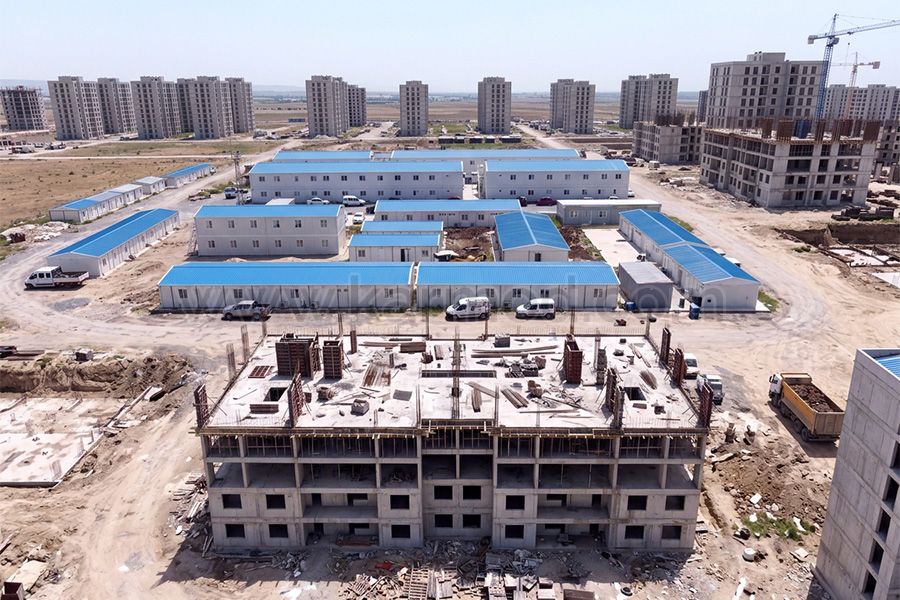
This strategy supports the development of scalable public housing projects that can be replicated across districts. Careful site planning ensures that residential areas integrate with existing infrastructure, transport routes, and essential services. Well-designed modular communities prioritize safe circulation areas, shared open spaces, and functional layouts that encourage community integration while maintaining privacy for households. The result is not only housing provision but neighborhood formation.


Collaboration between government institutions, local contractors, and private-sector manufacturers plays a central role in expanding affordable housing supply. By combining technical expertise with structured planning frameworks, Sri Lanka can strengthen housing resilience while ensuring that projects remain financially sustainable over the long term.
Prefabricated construction presents a strategic response to Sri Lanka’s demand for affordable social housing. By producing housing components off-site and assembling them at their final destination, project timelines are reduced and quality control is enhanced. This method allows housing authorities to deliver consistent, repeatable units that meet performance standards while remaining within budgetary constraints.
Prefab low-income housing projects can be configured in multiple layouts, from compact single-family units to clustered residential blocks. Design flexibility enables planners to adapt to diverse topographies, whether coastal zones, semi-urban areas, or developing municipal districts. Thoughtful planning integrates shared amenities, pedestrian pathways, and green spaces to strengthen social cohesion and encourage long-term community stability.
Effective delivery models rely on coordinated partnerships between public stakeholders and experienced manufacturers. Through structured procurement and phased project implementation, affordable housing developments can be delivered in manageable stages, ensuring quality oversight and sustainable growth.
By applying prefabricated systems to public housing initiatives, Sri Lanka demonstrates that housing affordability and construction efficiency can align. These projects contribute to long-term sustainability by minimizing material waste, reducing environmental impact, and optimizing energy performance—key considerations in the national housing agenda.
Modular housing construction offers Sri Lanka a balanced solution that addresses cost, speed, and structural performance simultaneously. Off-site manufacturing reduces exposure to weather-related delays and improves material precision, allowing projects to move forward with predictable timelines. For housing authorities managing limited budgets, this predictability supports better financial planning and controlled operating costs.
The adaptability of modular systems makes them suitable for Sri Lanka’s varied geographic conditions. Structural components can be engineered to enhance ventilation, manage humidity, and improve thermal insulation—factors that directly influence indoor comfort and long-term maintenance requirements. By prioritizing durability and energy efficiency, affordable housing developments remain viable for decades rather than serving as short-term fixes.
Importantly, these projects are designed to cultivate stable residential environments. Community-oriented layouts, safe access points, and essential infrastructure contribute to long-term neighborhood development. In this way, modular public housing projects strengthen social infrastructure alongside physical construction.
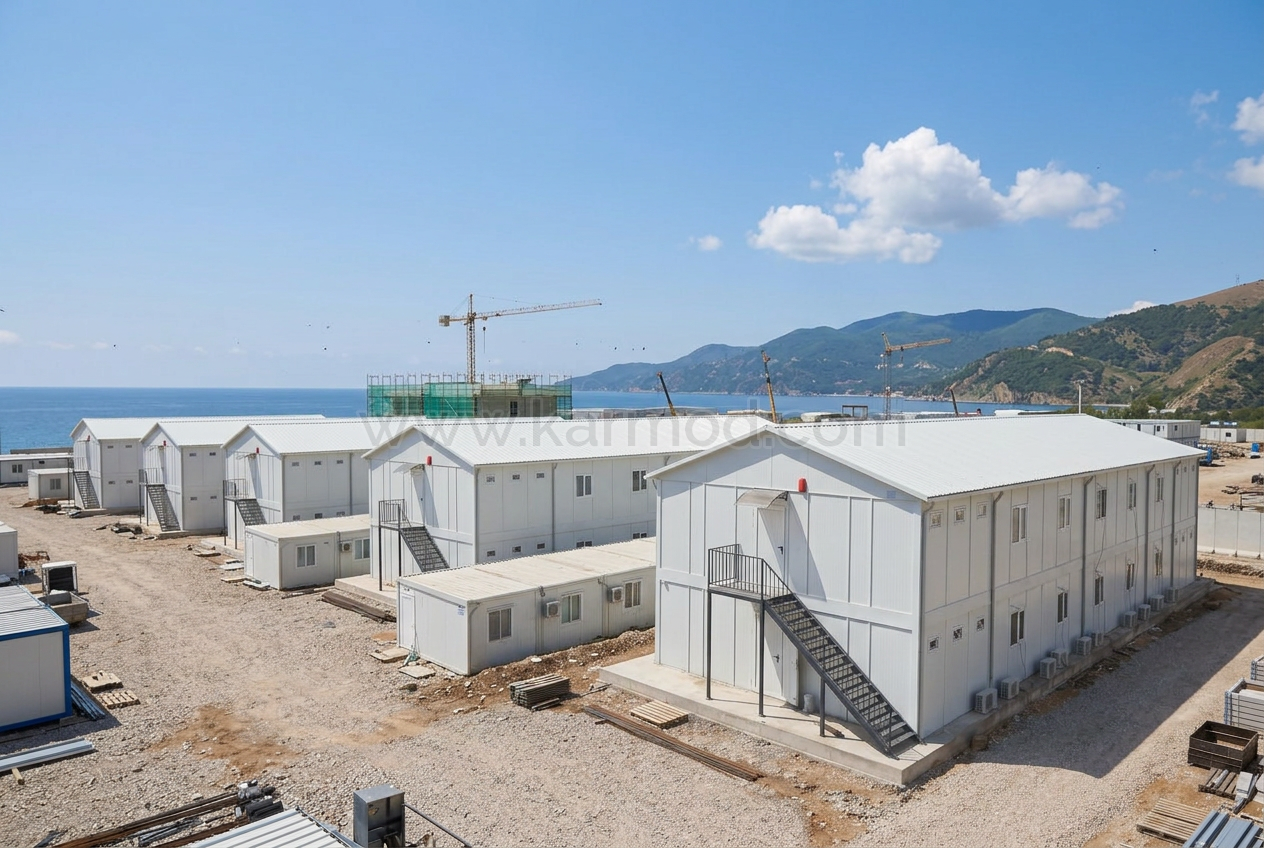
Sri Lanka’s housing strategy increasingly recognizes the need for both temporary and permanent affordable social housing solutions. While permanent housing developments address long-term demand, temporary units provide rapid shelter in emergency situations or during phased urban redevelopment projects. A flexible construction approach ensures that resources are deployed efficiently across both scenarios.
Through this balanced framework, Sri Lanka advances toward a housing model that combines emergency responsiveness with durable, long-term residential development.
Karmod contributes to Sri Lanka’s affordable housing landscape through mobile and modular housing systems engineered for rapid installation and long-term performance. As a manufacturer focused on cost-efficient production methods, Karmod supports housing authorities and development partners seeking scalable solutions for low-income housing and public housing projects.
Using advanced production techniques, the company delivers units that can be transported and installed across diverse regions, including remote or infrastructure-limited areas. These housing systems are designed to maintain structural integrity under Sri Lanka’s climatic conditions while offering functional interior layouts suitable for family living. By combining speed, durability, and economic efficiency, Karmod reinforces efforts to reduce housing insecurity nationwide.
Identifying the most effective method for temporary housing in Sri Lanka requires a construction model that prioritizes speed, safety, and adaptability. Modular building systems provide a structured solution, enabling rapid assembly without sacrificing quality. This approach is particularly relevant in situations involving natural hazards or urgent relocation needs.
By applying these principles, Sri Lanka can strengthen its capacity to provide temporary low-cost social housing while laying the groundwork for resilient, permanent community development. This integrated approach supports long-term housing sustainability and reinforces national social infrastructure.
In order to serve you better, if you could kindly send an e-mail to info@karmod.com for questions and details about your theoretical and special architectural plans, projects, and product specifications, your request will be responded to as soon as possible.

From one end of the world to the other, we enable our customers to reach the ready-made construction sector produced with the new technology of the world. We guarantee reliability through technology and innovation, flexible commercial models and smart supply chain solutions that add value for you, following the project production network.
Discover
Karmod is one of the largest prefabricated construction companies in Turkey, with a production of 45,000 m2. produces high quality prefabs and prefab containers