EN
EN 


Across Spain’s major cities and smaller municipalities, affordable social housing remains a practical necessity as well as a social commitment. The pressure of housing affordability is felt in areas with strong employment demand, seasonal population shifts, and limited housing supply, all of which can place low income families at greater risk of instability. In this setting, Karmod supports delivery models aimed at shortening project timelines and improving cost control while maintaining dignified living standards. The objective is straightforward: expand low-income housing capacity with solutions that are reliable, repeatable, and appropriate for long-term community integration.
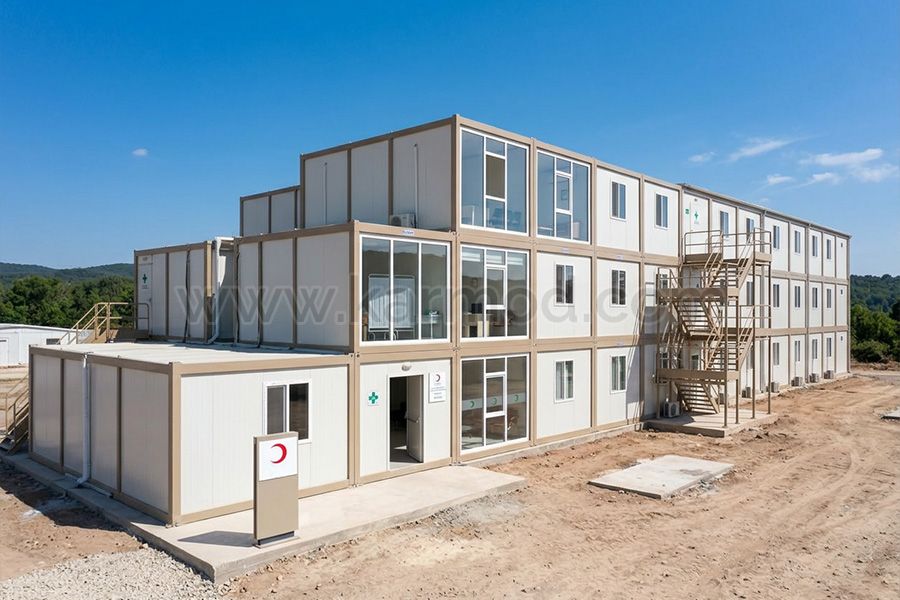
Karmod’s approach relies on modern construction systems that reduce uncertainty for public housing projects and institutional partners. Modular homes are produced as sections in a controlled manufacturing environment and then assembled on site, helping to limit weather-related delays and streamline coordination between trades. In Spain’s varied climates—from humid coastal zones to hotter inland regions—shorter on-site construction periods can be a practical advantage. This method can also support clearer scheduling and budgeting, which is essential when housing is delivered through public authorities, municipalities, or social housing providers working within defined funding cycles.
Prefab homes, built largely in factory conditions and transported for installation, strengthen the same goal through efficient delivery and consistent workmanship. By reducing on-site activity, prefabrication can decrease disruption in dense neighborhoods and improve predictability in multi-site programs. This approach also supports quality control and better material management, helping housing providers keep costs disciplined without lowering baseline expectations for safety, comfort, and durability. For low income families, faster handover can mean quicker access to stable housing, with fewer interim moves and less reliance on temporary arrangements.


Karmod’s focus on sustainable, affordable, and quickly deliverable housing aligns with how Spanish stakeholders increasingly evaluate social housing: not only by construction cost, but by whole-life performance. Housing that is easier to maintain, efficient to operate, and designed for long-term use supports public value over time. By concentrating on modular and prefab homes, Karmod contributes to affordable social housing solutions that can scale across regions while still supporting neighborhood cohesion and resident wellbeing. The outcome is a practical pathway for Spain to expand accessible housing options with methods suited to modern delivery expectations.
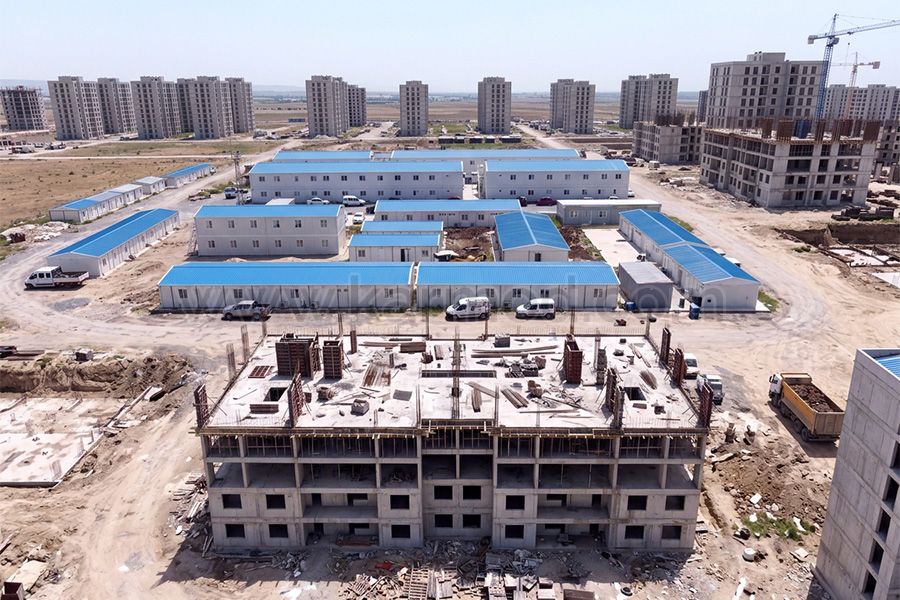
Spain’s modular social housing programs are increasingly shaped by the need to deliver homes faster while maintaining accountability and consistent standards. Modular housing construction supports this by shifting key production steps into controlled environments, then assembling units efficiently on-site. For municipalities and public bodies, this can improve timeline certainty, reduce coordination complexity, and help align delivery with infrastructure planning—such as transport links, schools, and health services—so projects function as livable communities rather than isolated developments.


The emphasis on modular delivery is also connected to sustainability and operating costs. Controlled manufacturing can reduce construction waste and support more consistent building performance, which can help housing providers manage energy use and maintenance over time. In Spain, where housing projects must respond to different local conditions, modular systems can be configured to meet varying site requirements while keeping core efficiencies intact. This balance supports housing affordability not only at delivery, but across the full lifecycle of the building.
Spain’s modular social housing development reflects a broader commitment to practical innovation in public housing projects. With the involvement of public stakeholders and experienced private sector partners such as Karmod, modular systems can be used to expand low-income housing capacity while maintaining durable build standards and responsible resource use. The goal is measurable delivery: homes produced with predictable schedules, clear scopes, and performance characteristics that support long-term sustainability.


Prefab low income housing in Spain is often pursued for one reason above all: it enables faster delivery while maintaining consistent quality. Prefabricated homes are produced with repeatable specifications in controlled settings, then installed on site with reduced disruption. This can be especially useful in municipalities that need to expand housing supply without prolonging construction impacts on surrounding neighborhoods.
Prefabrication also supports flexible project planning. Unit types can be adjusted to respond to local demand, whether the priority is smaller apartments, family-sized homes, or mixed layouts within the same development. When prefab systems are combined with thoughtful site planning, projects can support community integration by aligning with services and public space, rather than simply adding units. This approach helps shift the focus from short-term delivery to long-term neighborhood viability.
Collaborations between public institutions and experienced delivery partners play a key role in making these projects work. With clear low cost housing plans and practical procurement pathways, prefab solutions can help Spain strengthen its affordable social housing pipeline. The most effective projects prioritize resident outcomes—comfort, durability, and manageable operating costs—while keeping delivery predictable for stakeholders.
By advancing modular and prefab housing methods, Spain expands its toolkit for addressing housing affordability in a way that supports inclusion and stability. The emphasis is not on novelty, but on building systems that can be repeated, improved, and scaled to match real demand across different regions.
Affordable modular housing construction is helping Spain respond to shortages with delivery models that are faster and more cost-controlled than many traditional approaches. By producing key elements off-site, modular projects can reduce schedule risk, strengthen quality consistency, and improve cost predictability for public housing projects. This is particularly important in areas where demand is acute and housing providers need dependable timelines to support allocation and community planning.
Spain’s modular housing approach also supports adaptability. Standardization can keep budgets disciplined, while configurable layouts allow projects to respond to site constraints and local needs. Controlled production can help reduce waste and improve workmanship consistency, contributing to long-term sustainability and better building performance. For housing providers and municipalities, these benefits support both short-term delivery and long-term operational management.
Well-executed modular social housing projects can integrate effectively into existing communities or serve as anchors for new neighborhoods. When planning includes access to services, transport, and public space, modular housing supports community integration rather than isolating residents—an essential consideration for inclusive low-income housing policy.
Spain’s housing strategies frequently need to address both immediate housing gaps and long-term affordability. Temporary solutions can be essential in emergencies or transitional periods, while permanent social housing strengthens stability and reduces pressure on the wider rental market. Low cost social housing delivery works best when construction methods, management capacity, and community integration are planned together, ensuring projects remain functional and sustainable after handover.
Spain’s use of modular and low cost housing methods demonstrates how affordability, flexibility, and quality can be aligned. By focusing on delivery models that support speed and long-term sustainability, stakeholders can address urgent needs while strengthening the foundation for more inclusive, resilient communities.
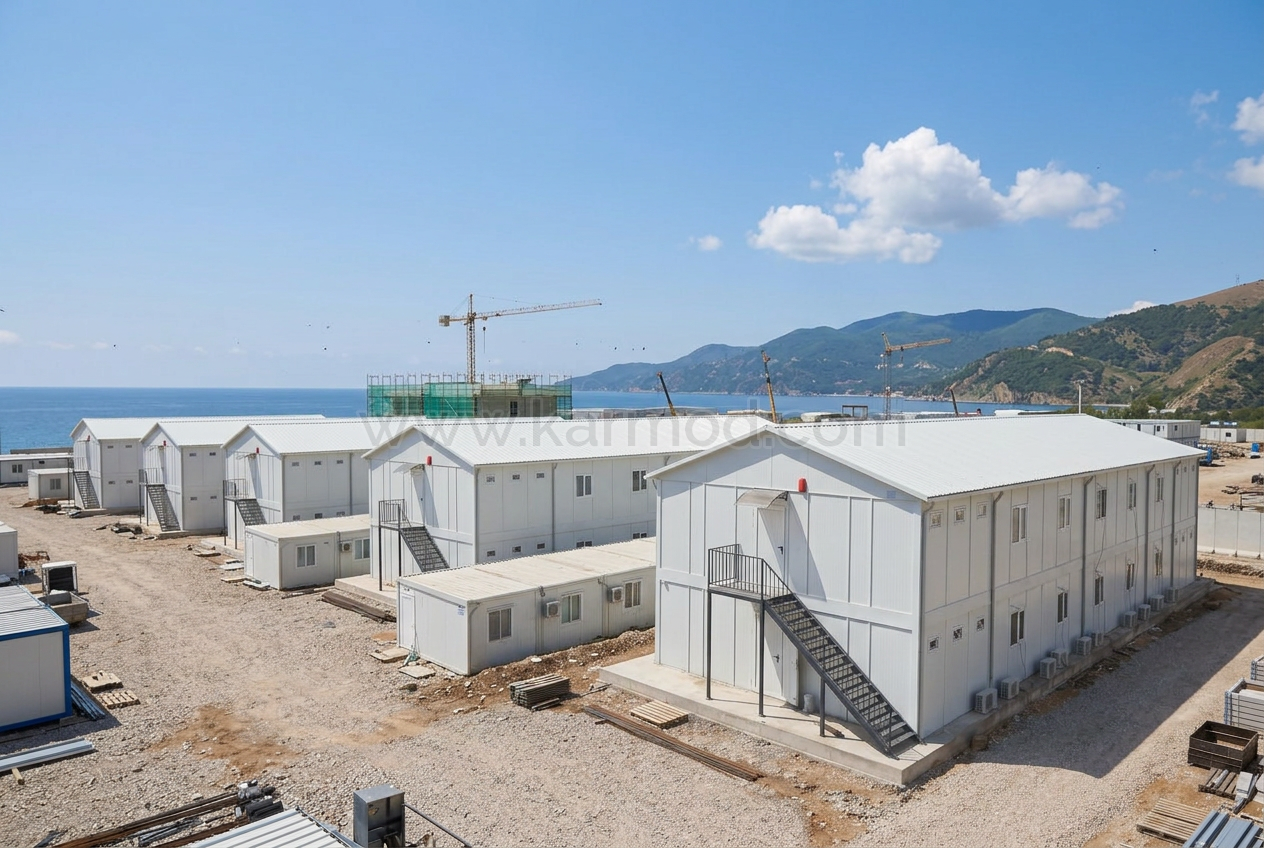
Within Spain’s affordable housing landscape, Karmod operates as a manufacturer of mobile affordable housing solutions that can support rapid response and transitional accommodation. Mobility can be valuable where housing demand changes quickly or where temporary capacity is required while permanent developments are underway. For municipalities and institutional partners, mobile solutions can also help protect public value by allowing units to be redeployed rather than replaced.
Karmod’s use of modular housing construction principles supports consistent production and practical performance. This approach can help keep projects within scope, reduce on-site complexity, and maintain dependable build standards—qualities that matter for low income social housing delivery. When mobile units are combined with suitable site planning and service access, they can offer dignified living conditions rather than minimal shelter, supporting wellbeing and community stability during transitional periods.
Spain’s temporary housing needs can arise from a range of situations, including displacement, redevelopment phases, and sudden local supply shortages. The most effective delivery model balances speed with resident dignity and operational practicality. Modular construction supports this by enabling units to be produced efficiently and installed with limited on-site disruption, while low cost housing plans clarify deployment, management responsibilities, and integration with local services.
Spain’s approach to temporary and low cost social housing demonstrates that speed does not need to undermine quality. By combining modular delivery with thoughtful planning and mobile flexibility where appropriate, stakeholders can provide rapid accommodation while reinforcing long-term goals for housing affordability, community integration, and social inclusion.
In order to serve you better, if you could kindly send an e-mail to info@karmod.com for questions and details about your theoretical and special architectural plans, projects, and product specifications, your request will be responded to as soon as possible.

From one end of the world to the other, we enable our customers to reach the ready-made construction sector produced with the new technology of the world. We guarantee reliability through technology and innovation, flexible commercial models and smart supply chain solutions that add value for you, following the project production network.
Discover
Karmod is one of the largest prefabricated construction companies in Turkey, with a production of 45,000 m2. produces high quality prefabs and prefab containers