EN
EN 


In Iraq, expanding access to affordable social housing for low-income families remains a national priority shaped by rapid urban growth, post-conflict reconstruction, and demographic pressure. Karmod plays a central role in this transformation, delivering structured, cost-conscious housing solutions designed for long-term resilience. Rather than offering temporary fixes, the company focuses on scalable public housing projects that balance affordability, structural durability, and efficient delivery. Through modular systems and prefab homes, Karmod supports Iraq’s efforts to strengthen housing affordability while improving construction standards across both urban and regional areas.
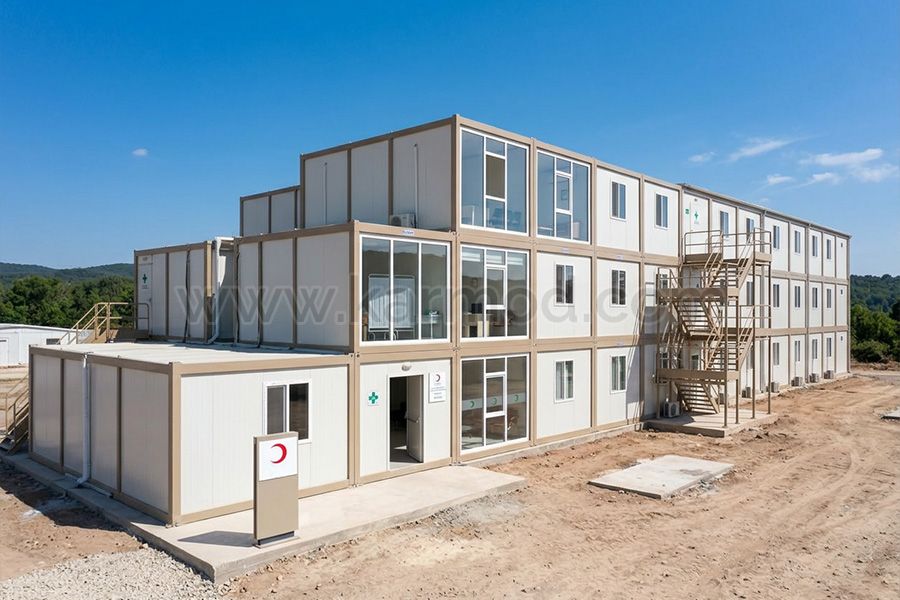
Modular construction is reshaping how affordable housing is delivered throughout Iraq. Built in precision-controlled production facilities, housing units are manufactured as engineered components and then transported for on-site assembly. This method reduces material waste, shortens construction timelines, and ensures consistent structural performance. For municipalities and housing authorities managing limited budgets, modular homes provide a predictable and efficient delivery model capable of accelerating low-income housing development without compromising quality.
Prefab homes further expand the options available within Iraq’s affordable housing framework. Designed with flexibility in mind, prefabricated systems accommodate varying household sizes, land conditions, and settlement densities. The controlled manufacturing process enhances quality assurance while improving energy performance and durability—essential factors in Iraq’s hot summers and temperature fluctuations. These housing solutions help lower long-term operating costs while maintaining structural integrity and indoor comfort.


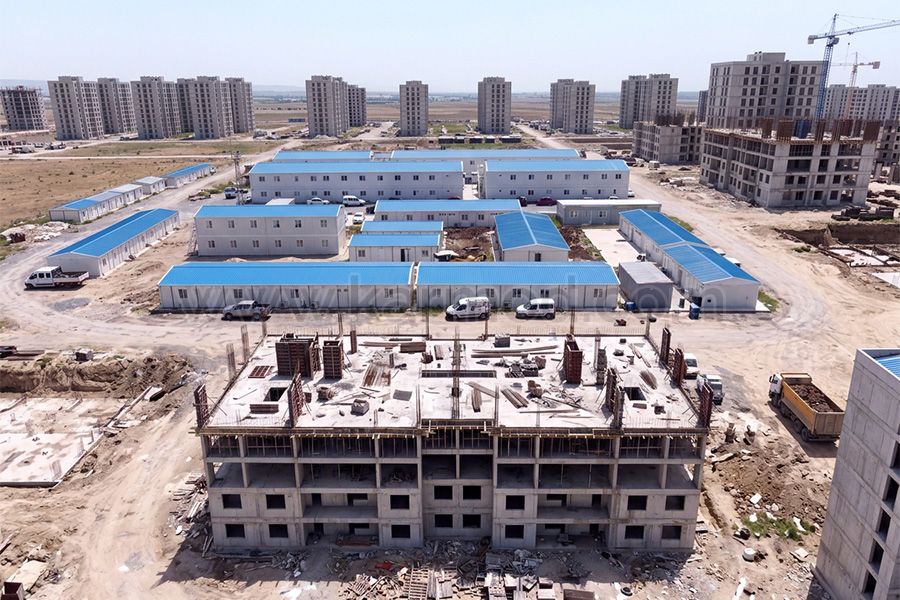
Karmod’s contribution to affordable social housing in Iraq reflects a broader commitment to sustainable development and responsible construction. By applying modular and prefab technologies, projects can be delivered more efficiently while supporting long-term urban regeneration. This approach not only addresses housing shortages but also reinforces the stability of neighborhoods by creating well-planned residential environments that integrate infrastructure, access roads, and communal spaces.
The challenge of delivering affordable housing at scale in Iraq requires innovation, coordination, and technical reliability. Modular and prefabricated systems provide a practical pathway toward expanding access to secure homes, enabling public institutions to respond effectively to growing demand while safeguarding long-term sustainability.


Developing modular social housing in Iraq provides a structured response to increasing demand for low-income housing across expanding cities and recovering regions. Modular systems allow housing units to be produced in parallel with site preparation, reducing total project timelines and enabling faster occupancy. This efficiency is particularly valuable for public housing programs that must deliver results within defined fiscal cycles.
Well-planned modular developments prioritize durability, thermal performance, and adaptability. Housing layouts can be configured as single units, row housing, or clustered community blocks, depending on land availability and infrastructure capacity. By optimizing standardized components, construction costs remain controlled while maintaining consistent quality standards suitable for long-term residential use.


Modular social housing also supports community integration. Projects can incorporate shared courtyards, pedestrian circulation routes, and essential service access points, helping transform housing sites into cohesive residential neighborhoods. This integrated approach strengthens social infrastructure alongside physical construction.
Prefabricated low-income housing projects in Iraq demonstrate how structured design and industrialized construction can improve housing affordability. Off-site manufacturing enables precise engineering, efficient material use, and improved quality control. Once transported and assembled, these units provide durable housing suitable for both permanent settlement and phased development plans.
Prefab housing ideas extend beyond individual units to encompass complete community planning. Developments can include modular sanitation facilities, educational buildings, and communal service areas to support comprehensive residential environments. By aligning design flexibility with standardized production, projects remain adaptable to different geographic conditions, from dense urban districts to semi-rural settlements.
This model also strengthens delivery capacity for government agencies and development partners. Through coordinated planning and phased construction, prefab systems allow housing programs to expand incrementally while maintaining budget transparency and operational oversight.
Affordable modular housing construction provides Iraq with a practical framework for addressing housing deficits without overstretching financial resources. By manufacturing structural components in controlled facilities, project risks associated with material delays or site disruptions are reduced. This predictability supports long-term cost planning and enhances overall project efficiency.
Modular systems can be engineered to enhance ventilation, improve insulation, and resist environmental stress, ensuring that homes remain functional under Iraq’s climatic conditions. Reducing maintenance requirements and improving energy efficiency directly benefits both residents and public authorities responsible for ongoing management.
Scalability remains a defining advantage of modular construction. Housing programs can be expanded as demand evolves, enabling flexible responses to demographic shifts while maintaining structural consistency across developments.
Iraq’s housing strategy increasingly combines temporary accommodation solutions with permanent low-cost social housing development. This dual-track approach enables authorities to respond to immediate shelter needs while maintaining a long-term vision for stable residential communities.
Balancing temporary and permanent solutions strengthens Iraq’s capacity to respond to evolving housing pressures while reinforcing long-term social stability.
Karmod supports Iraq’s affordable housing initiatives through the production of mobile and modular housing systems engineered for rapid installation and extended service life. As a manufacturer specializing in industrialized construction, the company works with public stakeholders and development partners to deliver structured housing solutions aligned with national housing priorities.
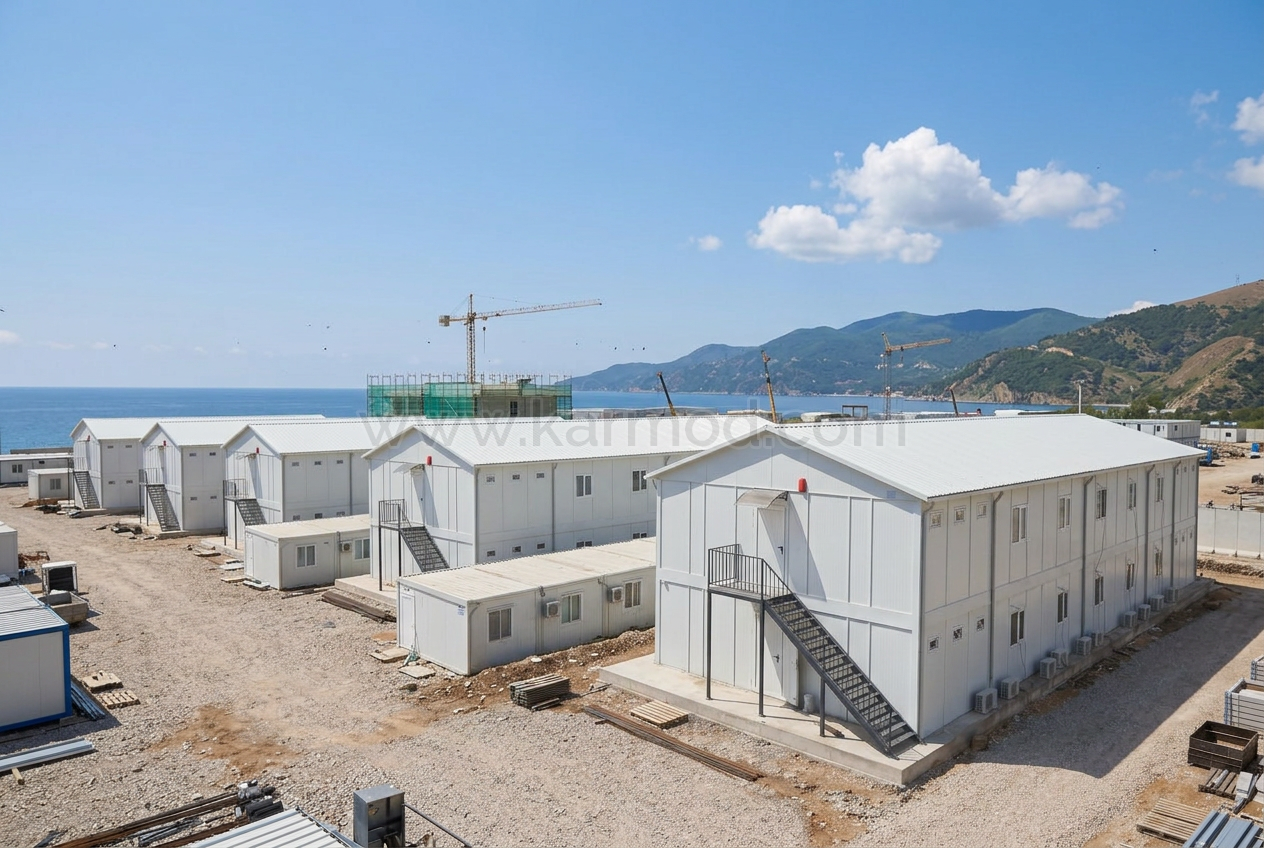
Mobile affordable housing units provide flexibility for both emergency accommodation and transitional settlement planning. Built using advanced production techniques, these units maintain consistent quality standards while enabling fast on-site assembly. This approach strengthens delivery capacity in regions requiring immediate intervention or phased redevelopment.
Karmod’s experience in modular housing construction ensures that projects remain scalable and adaptable. By combining technical precision with practical design, the company contributes to expanding access to safe, cost-effective housing across Iraq.
Effective temporary housing solutions in Iraq must prioritize rapid deployment, structural reliability, and cost control. Modular construction provides a structured method for achieving these objectives, enabling authorities to deliver shelter quickly while maintaining safety and comfort standards.
Transportable housing units can be assembled efficiently in various terrains, offering immediate accommodation where infrastructure may be limited. Their adaptable configuration allows for reorganization or relocation as community needs evolve.
Integrating affordable housing principles into temporary projects ensures that solutions remain financially accessible while supporting dignified living conditions. When designed with future expansion in mind, temporary units can form the foundation for permanent low-income housing developments, creating continuity between short-term relief and long-term urban planning.
Through strategic planning and modern construction methods, Iraq can strengthen its ability to provide responsive, sustainable housing solutions that meet both urgent and enduring social needs.
In order to serve you better, if you could kindly send an e-mail to info@karmod.com for questions and details about your theoretical and special architectural plans, projects, and product specifications, your request will be responded to as soon as possible.

From one end of the world to the other, we enable our customers to reach the ready-made construction sector produced with the new technology of the world. We guarantee reliability through technology and innovation, flexible commercial models and smart supply chain solutions that add value for you, following the project production network.
Discover
Karmod is one of the largest prefabricated construction companies in Turkey, with a production of 45,000 m2. produces high quality prefabs and prefab containers