EN
EN 


Affordable Social Housing for Low Income in India is central to the country’s ongoing urban and social development agenda. Rapid urbanization, internal migration, and sustained population growth continue to place pressure on housing supply across metropolitan regions and emerging cities alike. For public authorities, municipalities, and development partners, the challenge is not only to build more homes, but to deliver affordable, durable, and scalable housing solutions that support long-term community stability.
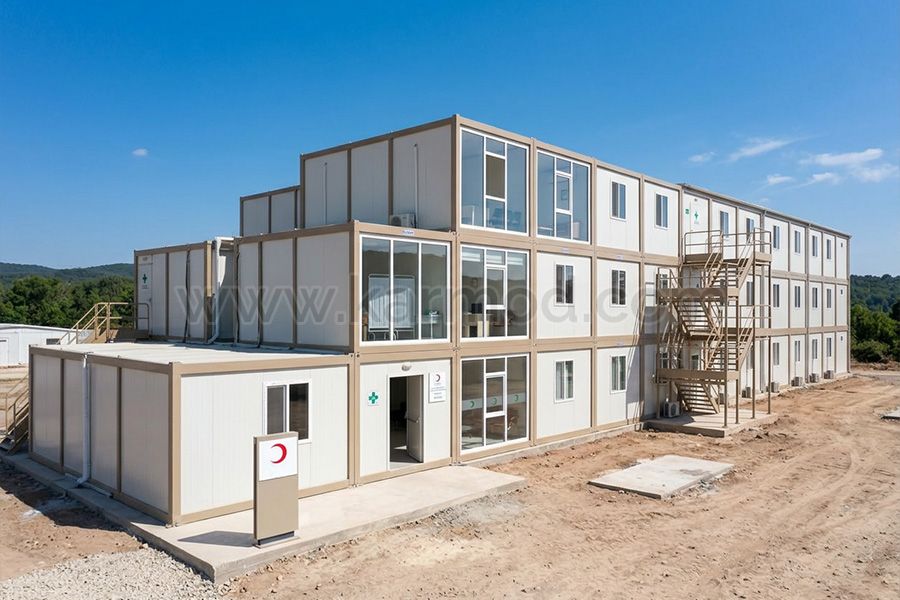
Karmod contributes to this transformation through its expertise in modular homes and prefab homes, offering structured construction systems designed for efficiency and sustainability. Built in controlled factory environments, these homes reduce material waste, improve quality consistency, and shorten construction timelines compared to conventional building methods. For low-income housing projects, this translates into improved cost management and faster delivery without compromising structural reliability.
What distinguishes Karmod within India’s affordable social housing landscape is its focus on balancing cost efficiency with long-term performance. Each housing unit is engineered to respond to local climatic conditions, including high temperatures, monsoon rainfall, and varying regional geographies. From design to installation, projects are developed with attention to durability, energy efficiency, and adaptability—ensuring that low-income families gain access to secure and dignified housing aligned with their financial capacity.


As the gap between housing demand and supply remains a structural challenge in India, industrialized construction methods play an increasingly important role in expanding access to low-income housing. By integrating modular and prefab technologies into affordable housing strategies, stakeholders can deliver quality residential environments at scale. This approach supports sustainable urban growth while strengthening the foundations of inclusive community development.
Across India’s diverse urban and rural landscapes, modular social housing is emerging as a practical response to housing affordability pressures. Rather than relying solely on time-intensive traditional construction, modular systems introduce a predictable, factory-based production model that supports faster implementation of public housing projects.


The modular method involves manufacturing structural components off-site and assembling them efficiently at the project location. This significantly reduces on-site labor demands and exposure to weather-related delays. For large-scale affordable housing for low income communities, such predictability enhances project planning, budget control, and delivery timelines—critical elements in publicly supported housing initiatives.
Equally important is flexibility. Modular low cost housing plans can be configured to reflect regional architectural preferences, household sizes, and land availability. This adaptability ensures that social housing developments are not standardized in a rigid way, but instead respond to the cultural and spatial realities of different Indian states and communities.


As India continues to urbanize, modular social housing offers a structured pathway toward expanding safe, affordable, and resilient housing stock. By combining speed, scalability, and long-term durability, it strengthens the country’s capacity to meet rising housing demand responsibly.
Prefab housing has become an increasingly strategic component of India’s affordable housing framework. By producing building elements in controlled facilities and transporting them for assembly on-site, prefabrication streamlines construction workflows and reduces overall project costs. This efficiency directly supports the expansion of low income social housing across both metropolitan and secondary cities.
Prefab housing projects in India range from compact single-family dwellings to multi-unit residential blocks designed for higher-density developments. Such versatility enables planners and developers to align low cost housing construction with available land, infrastructure capacity, and community requirements. The result is a more adaptable and scalable housing delivery model.
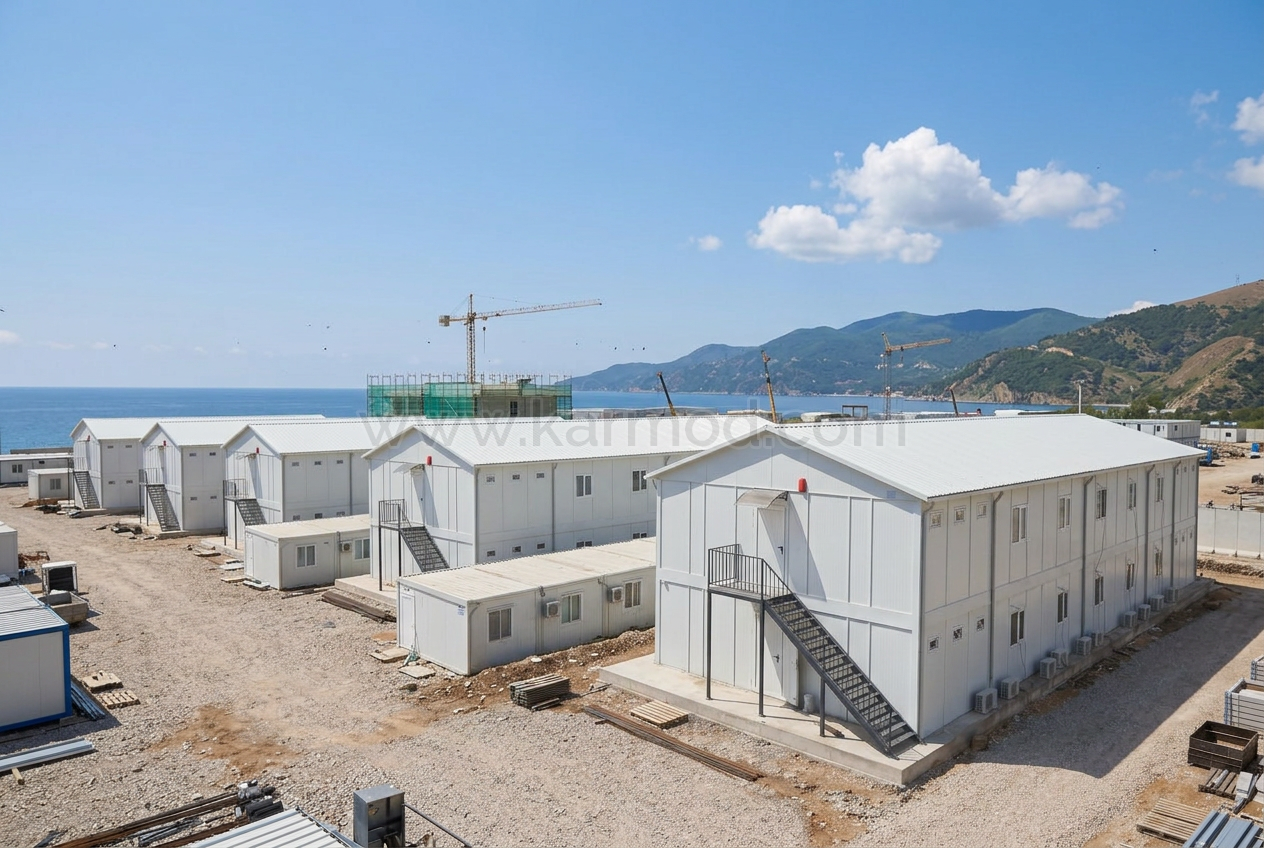
Mobile affordable housing concepts also benefit from prefab systems. In regions affected by natural disasters, seasonal migration, or temporary workforce demands, relocatable housing units provide practical and dignified accommodation. Their resilience and controlled production standards enhance safety while maintaining cost efficiency.
By incorporating prefab technology into affordable social housing programs, India advances toward a housing model that prioritizes operational efficiency, structural durability, and long-term affordability—key pillars of sustainable community development.
Modular housing construction is strengthening India’s response to housing affordability challenges by introducing standardized yet flexible delivery systems. Its impact can be observed across several critical dimensions of low-income housing development:
Addressing India’s housing needs requires solutions that accommodate both immediate and long-term scenarios. Modular construction provides a framework capable of delivering temporary shelter as well as permanent residential developments within a coherent strategy.
Through structured planning and industrialized construction methods, India is strengthening its capacity to deliver safe, affordable, and sustainable housing at scale. Modular systems contribute not only to addressing current shortages but also to establishing resilient housing infrastructure for future generations.
Karmod plays a strategic role in India’s modular housing sector by manufacturing mobile and prefab housing solutions aligned with the requirements of low-income and public housing projects. The company’s production-driven model emphasizes engineering precision, quality control, and adaptability—core components of effective affordable housing delivery.
By integrating low cost housing ideas and modular housing construction principles, Karmod develops residential units that respond to India’s climatic diversity and urban density challenges. Attention to ventilation, insulation, and structural stability ensures that operating costs remain manageable for residents over time, reinforcing long-term affordability.
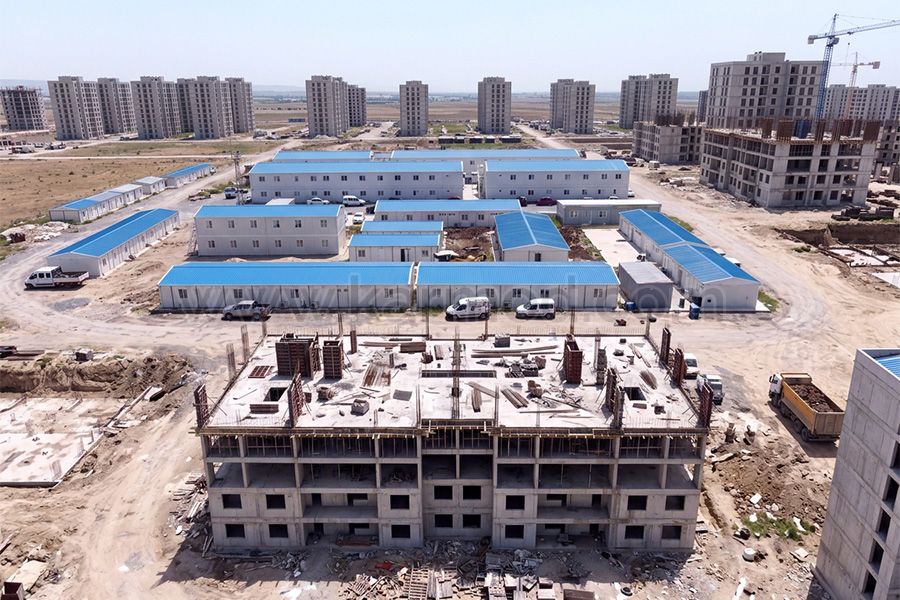
Karmod’s mobile affordable housing projects support the creation of stable residential communities rather than isolated structures. Through scalable design and efficient deployment, the company contributes to broader social housing objectives centered on accessibility, resilience, and community integration.
For temporary housing needs in India, modular construction provides a structured and efficient solution. Its ability to deliver standardized units quickly makes it suitable for emergency relief, workforce accommodation, and transitional settlement programs.
The principal advantage lies in its scalability. Housing clusters can be expanded or reduced according to demand, enabling authorities to manage resources effectively. The cost-efficiency associated with modular construction also supports the rapid implementation of low cost housing construction initiatives without compromising essential safety and quality standards.
Sustainability remains a defining feature. Controlled production processes reduce material waste and improve quality assurance, while thoughtful design supports thermal comfort in India’s varied climate conditions. This ensures that temporary housing solutions remain safe, practical, and economically viable.
Modular housing construction offers a reliable pathway for addressing temporary housing challenges while reinforcing broader affordable social housing objectives. By combining speed, durability, and financial predictability, it supports India’s ongoing efforts to expand access to safe and dignified housing for low-income communities.
In order to serve you better, if you could kindly send an e-mail to info@karmod.com for questions and details about your theoretical and special architectural plans, projects, and product specifications, your request will be responded to as soon as possible.

From one end of the world to the other, we enable our customers to reach the ready-made construction sector produced with the new technology of the world. We guarantee reliability through technology and innovation, flexible commercial models and smart supply chain solutions that add value for you, following the project production network.
Discover
Karmod is one of the largest prefabricated construction companies in Turkey, with a production of 45,000 m2. produces high quality prefabs and prefab containers