EN
EN 


Vanuatu is an archipelago in the South Pacific made up of many islands spread across a wide maritime area. Its remote geography, tropical humidity, and salt-laden coastal air shape how buildings should be designed and maintained. The country also sits in a seismically active zone and experiences seasonal cyclones, which makes structural resilience and fast recovery planning important for both residential and community developments.
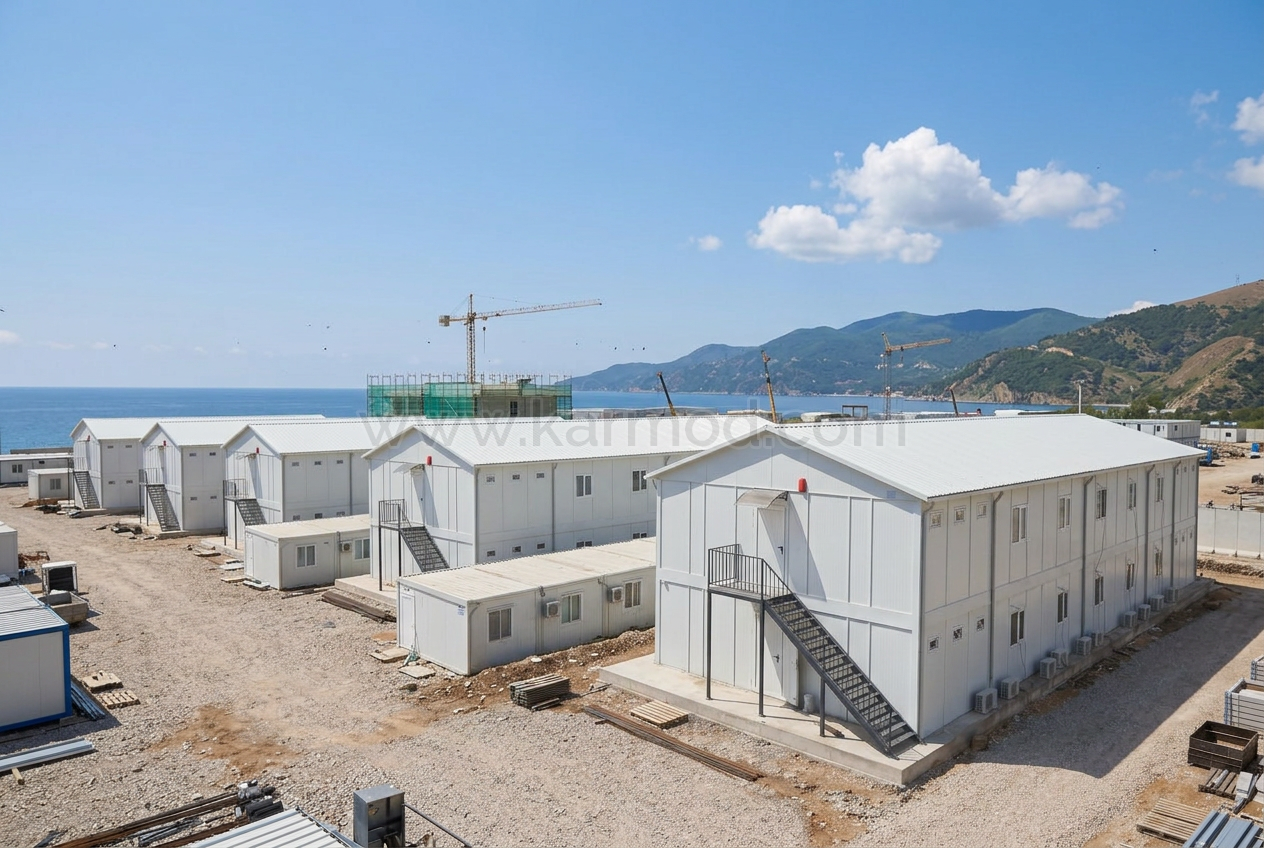
In this context, a prefab house in Vanuatu can be a practical building approach because major components are produced in controlled conditions and assembled on-site with a predictable scope of work. This helps reduce exposure to weather delays, improves consistency, and supports construction on islands where skilled labor and material supply chains can vary. Prefab homes in Vanuatu also align well with modular housing solutions and modular construction systems, enabling phased delivery, simpler logistics, and scalable projects for remote or climate-based construction needs.


Vanuatu’s warm, humid climate and coastal exposure mean building envelopes should be planned for moisture control, ventilation, and long-term durability. Prefabricated housing solutions can be specified with appropriate roof geometry for heavy rain, corrosion-aware detailing for marine environments, and construction assemblies that help manage heat and humidity. In cyclone-prone periods, attention to connections, anchoring, and overall structural continuity is a key part of planning.
Island-to-island delivery and limited inland transport routes can make conventional construction procurement complex. Modular construction systems support more organized shipping because many elements arrive as planned packages rather than many separate materials. For a multi-island country like Vanuatu, this can reduce site storage pressure, help coordinate deliveries through ports, and simplify work on remote plots where availability of materials may fluctuate.
Shorter on-site build periods can be valuable when weather patterns change quickly or when accommodation is needed on a fixed schedule. With modular housing solutions, assembly can be planned around transport windows and local site readiness. This approach is often relevant for housing, staff accommodation, and recovery-related construction where rapid deployment is a priority.
Prefab homes prices in Vanuatu are usually influenced by the home’s size, specification level, structural requirements for local hazards, and the chosen finish package. Because site conditions and island logistics can vary, pricing is typically most accurate when evaluated at the project level rather than as a single fixed number for all scenarios.
Cost generally reflects the base unit configuration (plan, structure, and core systems) plus selections such as interior finish level, roofing type, glazing, and optional features. A structured scope is one of the advantages of prefabricated housing solutions: it becomes easier to compare like-for-like packages and understand what is included versus what is optional.
Transport is a meaningful component of total cost in a remote island setting. Shipping to Vanuatu, port handling, inter-island transfers (if needed), road access to the site, and equipment requirements for offloading or lifting can all change the final budget. Projects on smaller islands or locations with limited access may require additional planning for delivery and installation.
A project-based quotation approach helps align expectations with real site and logistics conditions. This typically considers module dimensions, shipment strategy, site access, foundation readiness, installation plan, and timeline. It also supports clearer scheduling and reduces surprises during delivery and assembly.
A low cost prefab house in Vanuatu is often achievable by choosing efficient layouts, standard module dimensions, and a clear specification focused on essentials. Keeping the footprint compact and limiting complex architectural features can support affordability while maintaining structural reliability.
Modular cost control also comes from modular construction systems: repeatable components, reduced waste, and fewer unpredictable on-site variables. Where budgets are tight, a phased strategy can work well—prioritizing the core living spaces first and planning future extensions as needs and resources change.
For reference options, Karmod provides a range of low-cost prefab houses and other prefab homes that can be configured based on project scope, site constraints, and intended use.
Social housing projects in Vanuatu may involve community developments, workforce housing, and recovery or relocation accommodation following severe weather events. In these cases, standardization can help deliver consistent living conditions while still allowing adaptation to local site constraints and community needs.
Modular housing solutions can support faster deployment and repeatable unit planning across multiple locations. For public or government projects, prefabricated housing solutions may help align delivery with procurement cycles and reduce prolonged on-site disruption—particularly important in densely used community areas.
Fast deployment benefits are also relevant for emergency or interim housing, where time-to-occupancy can directly affect community stability. Modular construction systems can enable phased expansion as funding and land availability evolve.
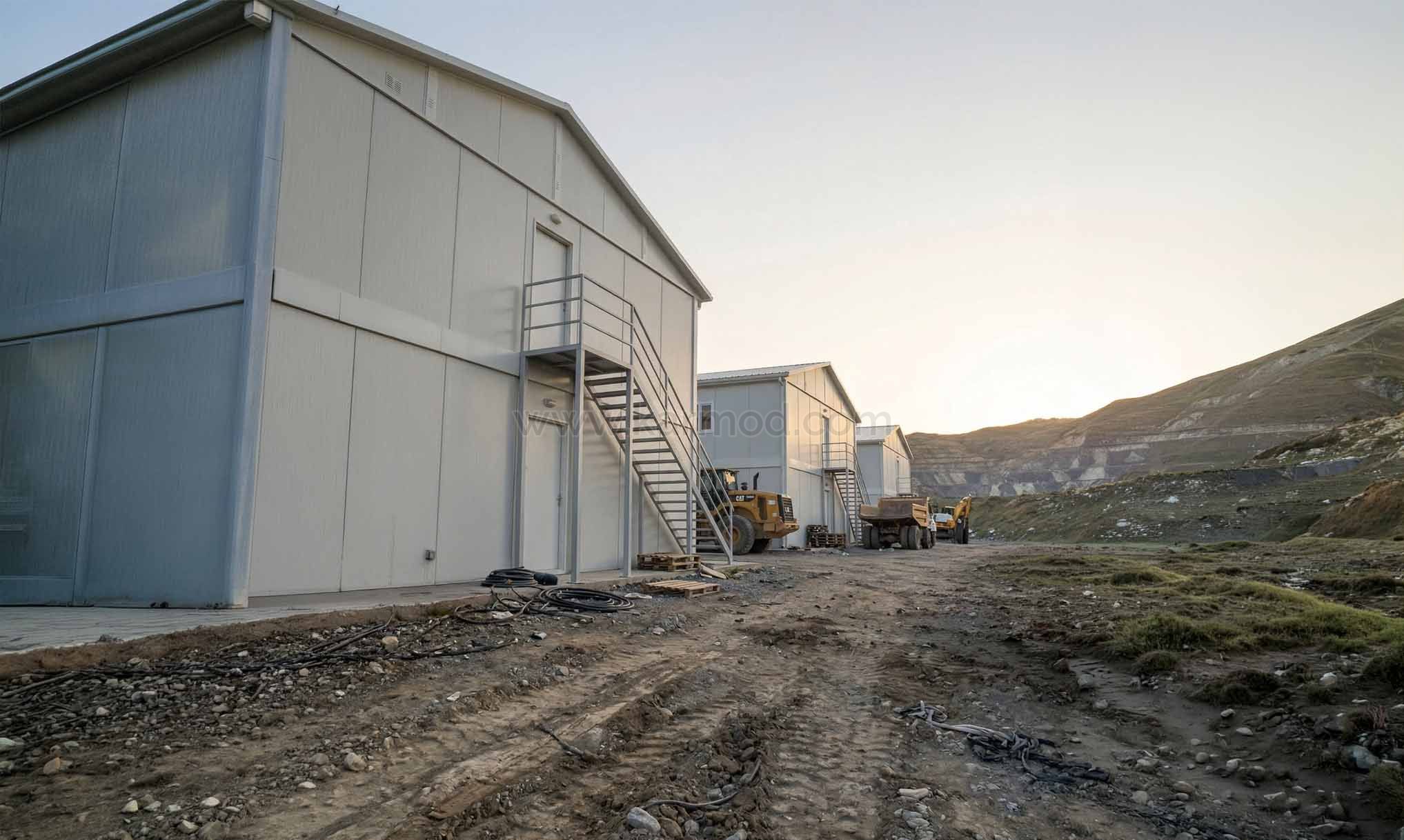
Prefab steel buildings in Vanuatu are commonly considered when long-term durability and structural consistency are priorities. Steel systems can be engineered for demanding weather conditions and, with appropriate detailing, can be suitable for marine environments where corrosion control is important. They are often used for storage, operations, and other functional buildings that require predictable performance over time.
Karmod offers prefab steel buildings that can be planned for wind exposure, heavy rain, and long-term use, depending on the application and site conditions.
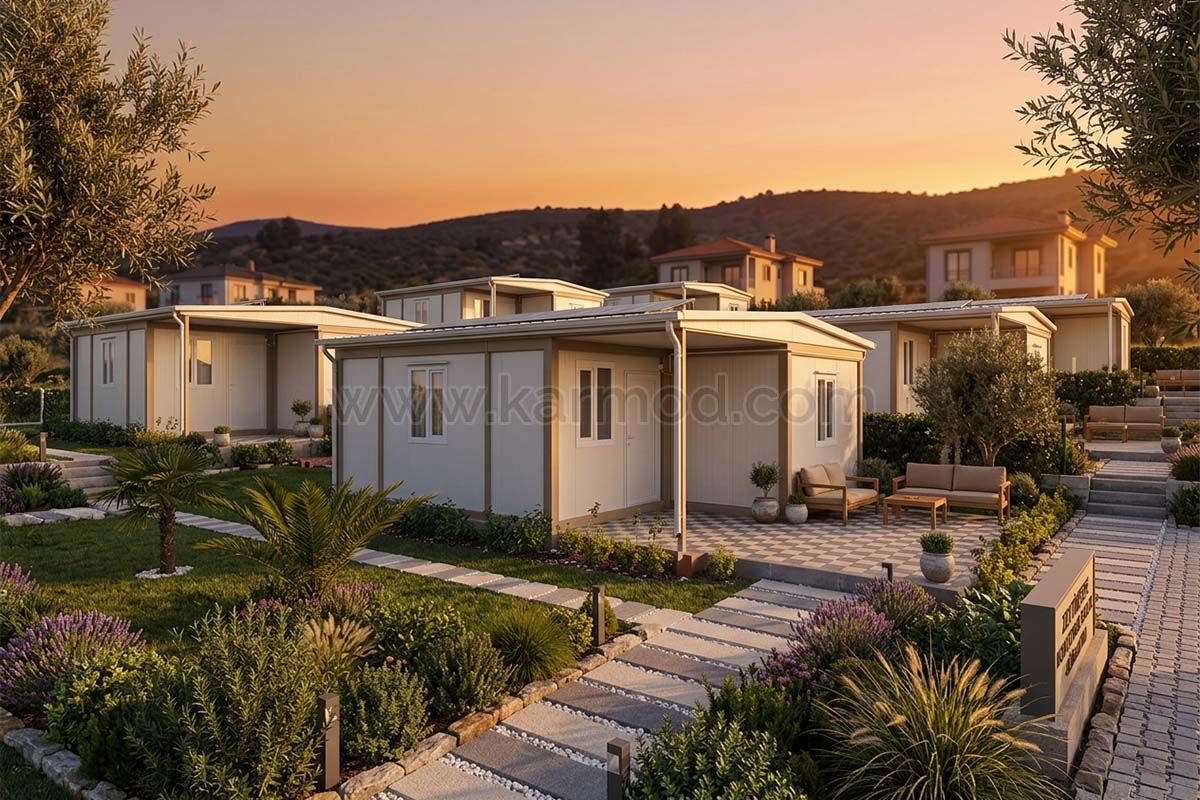
Modular homes in Vanuatu provide a structured way to plan housing when site access, climate, and supply constraints make conventional construction challenging. Designs can be adapted for island living, from compact primary residences to vacation-oriented layouts, while maintaining a controlled production approach.
Customization may include room count, shaded outdoor areas, storage, and service spaces appropriate for tropical use. Expandability is a key advantage: modular housing solutions can be designed to grow, allowing additional rooms or modules to be added later as household needs change or as project stages progress.
This supports long-term planning, especially in locations where future needs or budget availability may evolve over time.
Mobile homes in Vanuatu are often used for temporary accommodation, project-based housing, and relocatable needs across different sites or islands. They can serve as interim housing during construction, staff accommodation for short-term projects, or flexible units for seasonal usage.
Relocatable solutions can be particularly useful when land tenure, project duration, or site availability changes. In practice, suitability is best assessed through a project-based plan that accounts for intended use period, transport route, setup requirements, and local weather exposure during occupancy.
In order to serve you better, if you could kindly send an e-mail to info@karmod.com for questions and details about your theoretical and special architectural plans, projects, and product specifications, your request will be responded to as soon as possible.

From one end of the world to the other, we enable our customers to reach the ready-made construction sector produced with the new technology of the world. We guarantee reliability through technology and innovation, flexible commercial models and smart supply chain solutions that add value for you, following the project production network.
Discover
Karmod is one of the largest prefabricated construction companies in Turkey, with a production of 45,000 m2. produces high quality prefabs and prefab containers