EN
EN 


Container homes have become a practical housing option across the United States, especially for buyers who want faster project timelines, durable construction, and design flexibility. Built from shipping containers, these homes can deliver a clean, modern aesthetic while supporting efficient space planning. At Karmod, we design and manufacture container homes that balance structural performance with everyday comfort—whether the goal is a primary residence, a guest unit, or an investment build.
From compact cabins to multi-container family layouts, shipping container homes can be configured to suit different climates and site conditions. With the right insulation, ventilation strategy, and moisture protection, container houses can perform well in hot, cold, humid, and coastal environments across the U.S. Their format also supports phased expansion, so homeowners can add rooms or levels over time as needs change. You can also explore our modular homes to compare alternative building approaches.
Choosing a steel container home also supports material efficiency by repurposing existing steel structures. Beyond sustainability, the core advantage is strength: steel construction offers a solid base for residential performance when properly engineered and finished. For additional steel-based solutions, our steel houses provide another option with a different structural approach.


For projects that require larger living areas and a higher-end finish level, we also provide prefabricated villas as an alternative category for spacious residential needs.
If you are evaluating container-based housing, the most important first step is defining how the home will be used—full-time living, short-term rental, remote work space, or multi-unit development. With clear goals, the design, insulation package, and site plan can be matched to your location and expectations. Karmod supports clients throughout planning, production, and delivery so the process stays predictable from concept to completion.


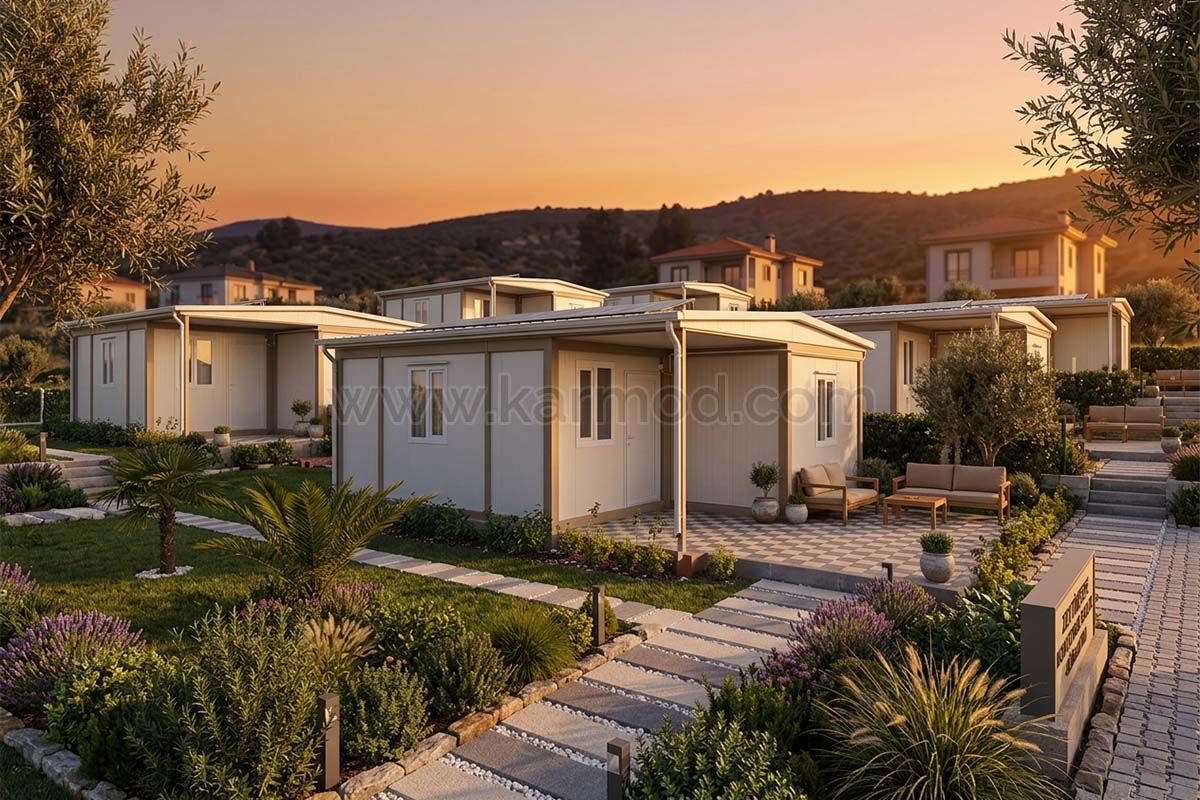
Container home designs in the United States typically fall into a few common categories: single-container studios, double-container layouts with expanded living zones, and multi-container homes with separated private and shared areas. In urban or suburban settings, compact footprints and efficient layouts are often prioritized, while rural builds frequently include larger decks, covered outdoor areas, and flexible utility rooms.
Modern container house design choices can include open-plan kitchens, dedicated home office corners, larger glazing for natural light, and exterior treatments that shift the look from industrial to residential. Depending on the site, designs can be single-story for easier access or stacked to maximize smaller plots. Rooftop terraces and shaded patios are also popular in regions where outdoor living is part of the lifestyle.


Beyond aesthetics, strong design planning focuses on comfort and performance. In colder states, thermal insulation, air sealing, and window specifications become central. In warmer or humid areas, ventilation and moisture management are critical for long-term durability. Karmod designs container homes with these climate realities in mind so the home feels comfortable, not “converted.”
Whether you are building a compact retreat, a full-time residence, or a property designed for rental income, choosing the right layout and finish level early helps keep the process efficient and the results consistent.
In the U.S., container houses are often used for ADU-style projects, backyard guest suites, remote work studios, and short-term rentals where speed and space efficiency matter. For family living, multi-container configurations make it easier to create separation between bedrooms and shared living areas, improving privacy and day-to-day flow.
Design flexibility also supports future changes. A home can begin as a single-unit layout and later expand with an added container to create a second bedroom, office, or utility space. This approach allows buyers to align the initial build with today’s needs while keeping options open for tomorrow.
Interior planning typically works best with simple circulation, built-in storage, and strong daylight strategies. Thoughtful window placement and shading can improve comfort while reducing reliance on mechanical cooling or heating.
Container home costs in the United States vary based on size, configuration, interior specifications, site preparation, and the distance to the delivery location. A compact single-container home will have a different cost profile than a multi-container family residence with upgraded finishes, additional bathrooms, or expanded glazing.
Beyond the home itself, project budgets often include foundation work, utility connections, permits, and site access improvements. Location matters: factors such as labor availability, inspection requirements, and transport logistics can affect the total investment. A clear scope—layout, insulation package, and finish level—helps keep pricing predictable.
Optional upgrades like advanced insulation, energy-efficient windows, solar readiness, or enhanced exterior cladding can increase upfront cost while improving long-term comfort and operating efficiency. Karmod supports clients with detailed specifications so cost decisions are made with full visibility.
For many buyers, the value of a container home comes from combining durable steel construction with efficient planning and a streamlined build process.
Building a container home in the U.S. starts with the site. Soil conditions, slope, drainage, and access for delivery equipment determine the right foundation approach and installation plan. Early planning also includes utility strategy—electric, water, wastewater, and internet—especially for rural locations or off-grid-style use cases.
After the layout and specifications are finalized, container units are prepared with structural modifications, insulation, interior wall systems, and mechanical rough-ins. Completing much of this work before delivery reduces on-site complexity and helps keep timelines stable. Installation then focuses on setting the units, securing connections, and completing finishing work.
Choosing experienced container home builders is important for structural integrity, especially when combining containers, adding large openings, or stacking units. Quality execution ensures the home performs as a permanent residence, not a temporary structure.
Container homes can also support energy-conscious setups such as solar integration, efficient HVAC systems, and water-saving fixtures. These choices are especially relevant in areas with high energy costs or variable utility availability.
With proper design coordination and a clear build plan, container houses can be delivered as durable, comfortable homes suited to a wide range of U.S. lifestyles and locations.
Container home interiors in the U.S. often prioritize clean lines, efficient storage, and flexible living zones. Open-plan layouts help compact footprints feel larger, while built-in shelving and closet systems improve everyday usability. Large windows, sliding doors, and carefully planned lighting can make a container house feel bright and spacious.
Design styles range from minimalist modern to warmer, natural finishes. Wood accents, textured wall panels, and durable flooring options can soften the industrial origins of the structure. For colder climates, interior comfort benefits from strong insulation performance and thoughtful HVAC zoning; in warmer regions, shading and ventilation planning become equally important.
Space-saving solutions—such as multi-functional furniture, pocket doors, and concealed storage—work especially well in smaller layouts. With the right planning, container home interiors can feel refined, comfortable, and highly livable.
If you want interior ideas tailored to your layout and location, Karmod can align material choices and space planning with the way you intend to use the home.
Container home regulations in the United States depend heavily on state, county, and city requirements. Zoning rules, minimum size standards, foundation requirements, and inspection processes can differ widely—even between neighboring jurisdictions. Reviewing local requirements early helps avoid design changes later in the project.
Most projects require documentation such as architectural drawings, structural details, and information about utility connections. Depending on the location and intended use, additional reviews may apply for energy efficiency, wind loads, seismic design, or fire safety considerations.
Working with knowledgeable professionals helps ensure the container home plans align with local codes and inspection expectations. This includes coordinating foundation details, anchoring strategy, and electrical and plumbing compliance based on the jurisdiction.
With correct planning and permitting support, container houses can be successfully approved and built across many U.S. regions as durable, modern residential solutions.
In order to serve you better, if you could kindly send an e-mail to info@karmod.com for questions and details about your theoretical and special architectural plans, projects, and product specifications, your request will be responded to as soon as possible.

From one end of the world to the other, we enable our customers to reach the ready-made construction sector produced with the new technology of the world. We guarantee reliability through technology and innovation, flexible commercial models and smart supply chain solutions that add value for you, following the project production network.
Discover
Karmod is one of the largest prefabricated construction companies in Turkey, with a production of 45,000 m2. produces high quality prefabs and prefab containers