EN
EN 


In Nigeria, the demand for affordable social housing for low-income families continues to intensify as urban centers expand and housing costs rise beyond the reach of many households. Public authorities, municipalities, and development partners are seeking delivery models that can close the housing gap without compromising durability or long-term sustainability. Within this context, modular and prefab homes are emerging as practical, scalable solutions, with Karmod contributing to the transformation of Nigeria’s housing landscape. These systems combine cost control, faster delivery, and consistent quality—key requirements for sustainable living environments in both urban and peri-urban areas.
Modular homes, constructed in segments within a controlled factory environment and then assembled on-site, offer a structured and predictable construction process. This approach significantly reduces build time and labor intensity compared to conventional methods, while improving cost transparency—an essential factor in public housing projects. Karmod’s expertise in modular housing construction supports the development of housing units that are affordable, durable, and adaptable to Nigeria’s varied climatic conditions, from humid coastal regions to hotter inland zones.
Beyond individual housing units, these modern systems enable scalable development. Entire low-income housing communities can be delivered in phases, aligned with municipal budgets and infrastructure readiness. With Karmod’s focus on quality control and engineering precision, modular and prefab homes contribute to Nigeria’s broader affordable housing strategy by offering low-cost housing ideas, practical floor plans, and efficient construction methodologies designed for long-term performance.


Karmod’s contribution to Nigeria’s housing sector reflects a broader shift toward structured, industrialized building systems that improve housing affordability while maintaining structural reliability. By integrating modular and prefab solutions into social housing programs, Nigeria strengthens its capacity to deliver comfortable, safe, and economically sustainable homes—supporting inclusive urban development and long-term community resilience.
Nigeria is advancing toward a more structured approach to affordable social housing delivery, with modular construction playing a central role. As population growth and rural-to-urban migration continue to increase pressure on housing supply, public housing projects must be delivered faster and more efficiently. Modular social housing offers a method that aligns with these realities, combining controlled production processes with rapid on-site assembly.


The advantages of modular construction in Nigeria extend beyond speed. Factory-based production ensures consistent building standards and reduces exposure to weather-related delays during the construction phase. For municipalities managing large-scale affordable housing developments, this predictability improves planning accuracy and budget management. In addition, modular systems allow housing layouts to be adjusted according to household size, cultural preferences, and land availability.
By prioritizing affordable housing for low-income communities and integrating modular solutions into national and local strategies, Nigeria strengthens its capacity to deliver safe, resilient homes while managing construction costs and long-term operating expenses.


Nigeria’s response to housing affordability challenges increasingly incorporates prefab low-income housing models. Prefabrication enables the production of building components in standardized formats, reducing material waste and shortening project timelines. For public authorities and non-governmental organizations working within defined funding frameworks, this efficiency is essential.
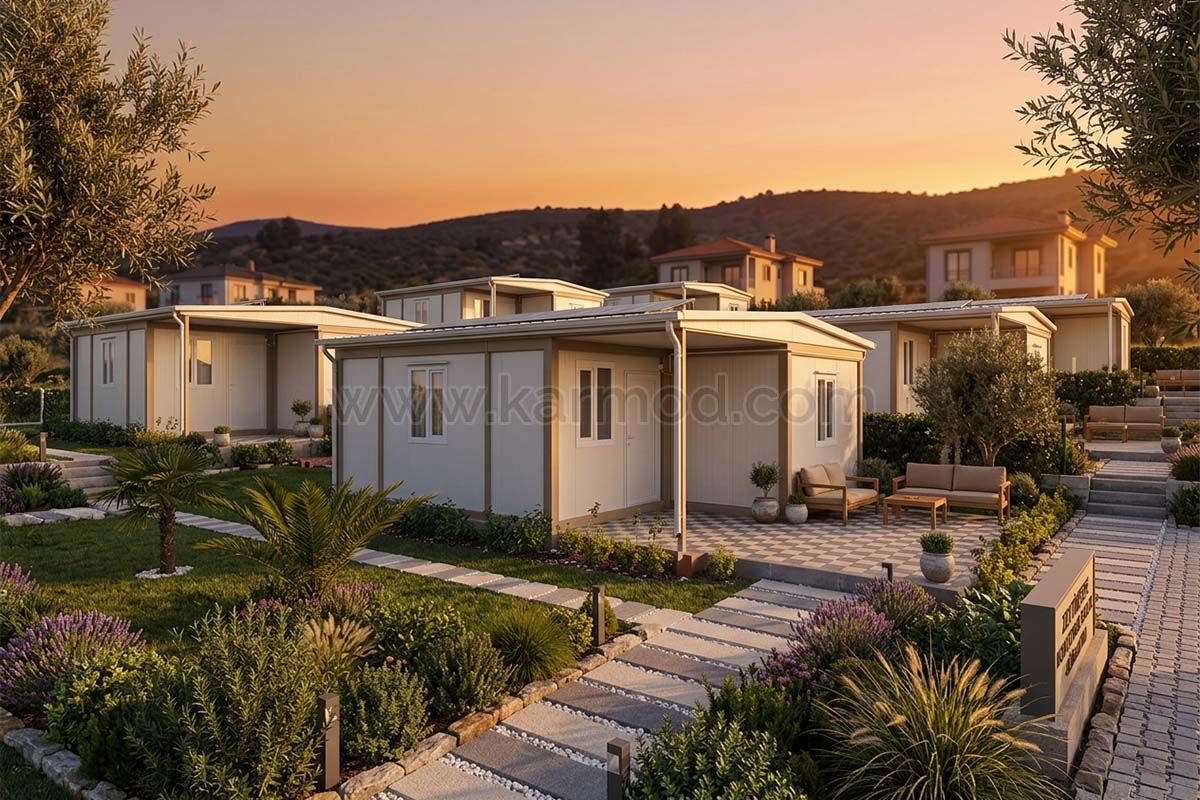
Across the country, prefab housing projects demonstrate how industrialized construction can support both small-scale community developments and larger public housing schemes. These initiatives focus on practical, cost-effective housing designs that optimize internal space, natural ventilation, and structural durability—factors that directly influence long-term living standards and maintenance costs.
Prefab systems are also adaptable to Nigeria’s diverse geographic and social conditions. Whether addressing transitional housing needs in rapidly expanding urban districts or providing structured settlements in emerging communities, these systems can be configured to match infrastructure capacity and local development plans. The potential for phased expansion ensures that projects remain flexible as population needs evolve.
By leveraging low-cost housing plans and modular housing construction, Nigeria moves toward a more sustainable housing delivery model—one that balances affordability, construction efficiency, and long-term community integration.
The drive to improve housing affordability in Nigeria has encouraged the adoption of innovative building technologies that reduce initial capital costs while supporting long-term sustainability. Modular construction stands out for its ability to deliver consistent quality within controlled budgets, making it particularly suitable for low-income social housing programs.
Nigeria’s affordable social housing strategy must address both immediate and long-term needs. Rapid deployment is often required in situations involving displacement, workforce accommodation, or sudden population shifts, while permanent housing solutions are essential for stable community development.
By integrating both temporary and permanent modular solutions into public housing frameworks, Nigeria strengthens its capacity to deliver affordable, resilient housing aligned with national development objectives.
Across Nigeria’s major cities and developing regions, Karmod plays a significant role in advancing modular and mobile affordable housing solutions. The company’s manufacturing approach emphasizes controlled production, engineering reliability, and adaptability—qualities that are essential for large-scale low-income housing initiatives.
Karmod’s modular housing construction systems are designed with attention to Nigeria’s environmental conditions and community requirements. Structural durability, ventilation performance, and efficient space planning are integrated into each project, ensuring that homes remain practical and affordable to maintain over time. This alignment between design and local context supports long-term sustainability within public housing developments.
Through its work in low-income social housing, Karmod contributes to broader goals of inclusive growth and community stability. By delivering affordable housing for low-income families using efficient delivery models, the company supports housing programs that prioritize accessibility, safety, and long-term viability over short-term construction gains.
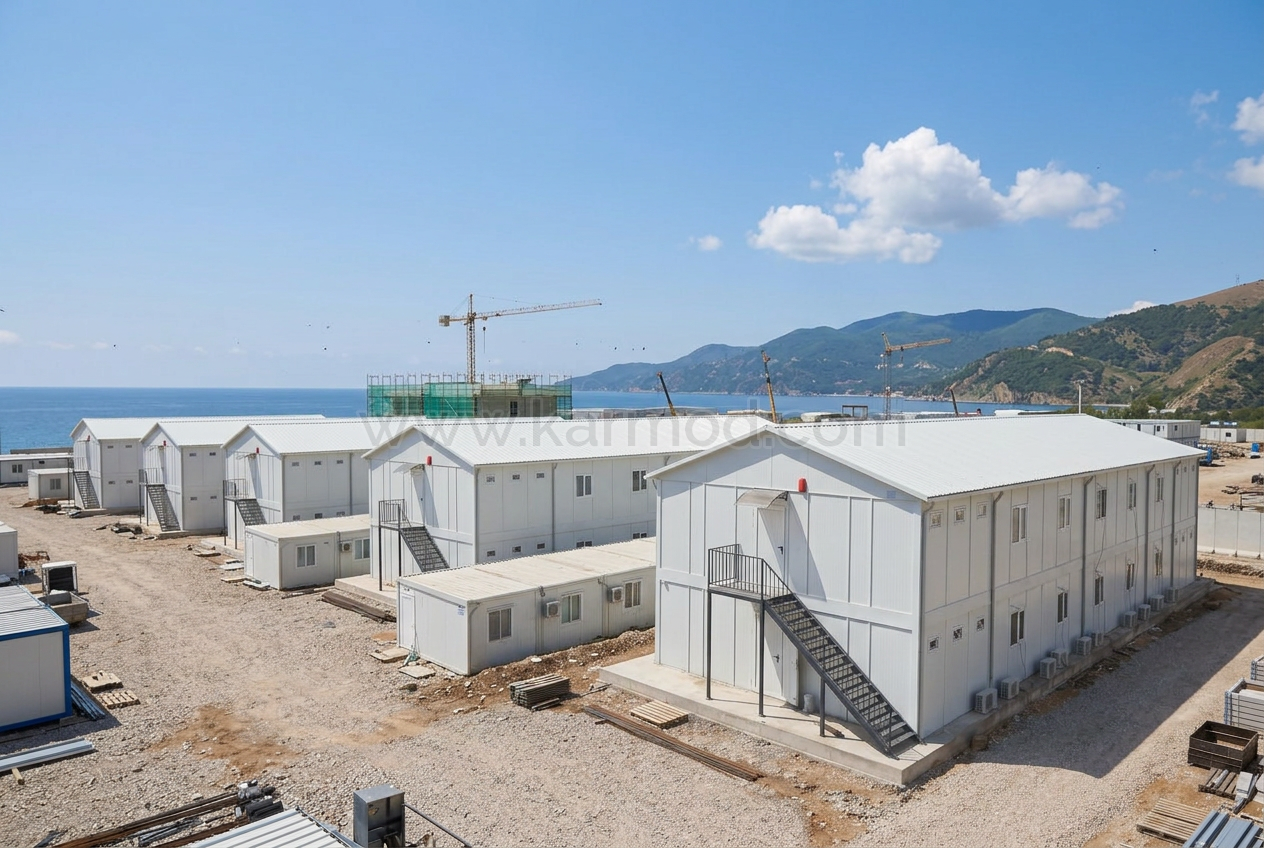
For temporary housing delivery in Nigeria, modular construction provides a structured and efficient framework. The ability to manufacture standardized units in advance and assemble them rapidly on-site allows authorities to respond to urgent housing needs with speed and reliability. This method is particularly relevant for emergency accommodation, workforce housing, and transitional settlement programs.
Cost-effectiveness remains a central advantage. By reducing construction waste and limiting weather-related delays, modular systems help maintain budget discipline while ensuring consistent build quality. Factory-controlled production enhances quality assurance, supporting safe and durable structures even in challenging environments.
Scalability further strengthens modular construction as a preferred approach. Projects can begin with a limited number of units and expand as funding, infrastructure, or demand increases. This phased development capability is well suited to Nigeria’s dynamic urban growth patterns and evolving community requirements.
Both Karmod’s mobile affordable housing initiatives and Nigeria’s broader adoption of modular construction techniques demonstrate a practical pathway toward resolving housing affordability challenges. Through structured planning, efficient construction, and sustainable design principles, Nigeria advances toward a future in which safe, affordable social housing is accessible to a wider share of its population.
In order to serve you better, if you could kindly send an e-mail to info@karmod.com for questions and details about your theoretical and special architectural plans, projects, and product specifications, your request will be responded to as soon as possible.

From one end of the world to the other, we enable our customers to reach the ready-made construction sector produced with the new technology of the world. We guarantee reliability through technology and innovation, flexible commercial models and smart supply chain solutions that add value for you, following the project production network.
Discover
Karmod is one of the largest prefabricated construction companies in Turkey, with a production of 45,000 m2. produces high quality prefabs and prefab containers